
再灌注对心肌梗死后时间免疫细胞动力学的影响。
Impact of Reperfusion on Temporal Immune Cell Dynamics After Myocardial Infarction.
机构信息
School of Medical Sciences University of New South Wales Sydney New South Wales.
出版信息
J Am Heart Assoc. 2023 Feb 21;12(4):e027600. doi: 10.1161/JAHA.122.027600. Epub 2023 Feb 15.
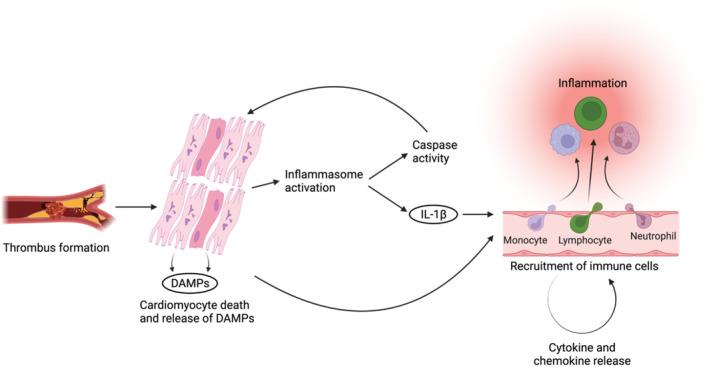
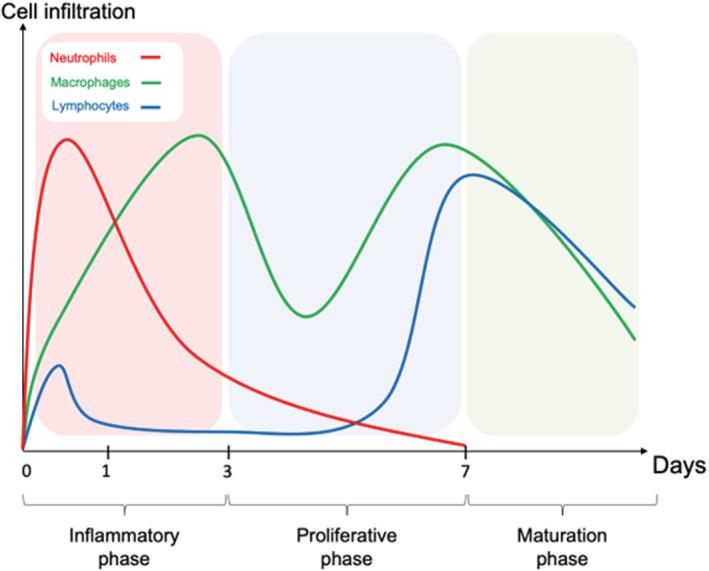
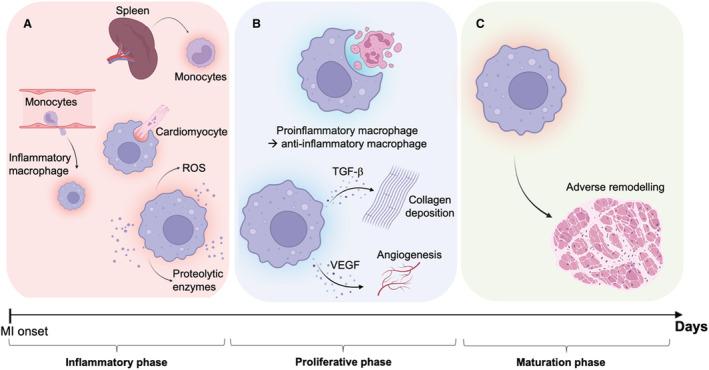
Excessive inflammation and impaired healing of cardiac tissue following a myocardial infarction (MI) can drive the development of heart failure. Cardiac repair begins immediately after the onset of MI and continues for months. The repair process can be divided into the following 3 overlapping phases, each having distinct functions and sequelae: the inflammatory phase, the proliferative phase, and the maturation phase. Macrophages, neutrophils, and lymphocytes are present in the myocardium throughout the repair process and govern the duration and function of each of these phases. However, changes in the functions of these cell types across each phase are poorly characterized. Numerous immunomodulatory therapies that specifically target inflammation have been developed for promoting cardiac repair and preventing heart failure after MI. However, these treatments have been largely unsuccessful in large-scale clinical randomized controlled trials. A potential explanation for this failure is the lack of a thorough understanding of the time-dependent evolution of the functions of immune cells after a major cardiovascular event. Failure to account for this temporal plasticity in cell function may reduce the efficacy of immunomodulatory approaches that target cardiac repair. This review is concerned with how the functions of different immune cells change with time following an MI. Improved understanding of the temporal changes in immune cell function is important for the future development of effective and targeted treatments for preventing heart failure after MI.
心肌梗死后过度的炎症反应和受损的心肌组织修复会导致心力衰竭的发生。心肌梗死后,心脏修复即刻启动,并持续数月。修复过程可分为以下 3 个重叠阶段,每个阶段都具有不同的功能和后果:炎症期、增殖期和成熟阶段。在修复过程中,巨噬细胞、中性粒细胞和淋巴细胞存在于心肌中,它们调控着每个阶段的持续时间和功能。然而,这些细胞类型在各阶段的功能变化尚未得到充分描述。为了促进心肌梗死后的心脏修复并预防心力衰竭,已经开发了许多针对炎症的免疫调节疗法。然而,这些治疗方法在大规模的临床随机对照试验中大多未能取得成功。这种失败的一个可能解释是,人们对主要心血管事件后免疫细胞功能的时间依赖性演变缺乏深入了解。如果不能考虑到细胞功能的这种时间上的可塑性,那么针对心脏修复的免疫调节方法的疗效可能会降低。这篇综述主要关注心肌梗死后不同免疫细胞的功能随时间的变化。更好地了解免疫细胞功能的时间变化对于未来开发有效的、有针对性的预防心肌梗死后心力衰竭的治疗方法非常重要。


 Zotero 插件