
氧化锌纳米粒子和多壁碳纳米管单独或联合对拟南芥的植物毒性及其对氧化平衡的相互影响。
Phytotoxicity of zinc oxide nanoparticles and multi-walled carbon nanotubes, alone or in combination, on Arabidopsis thaliana and their mutual effects on oxidative homeostasis.
机构信息
School of Environmental Science and Engineering, Tianjin University, Nankai Area, Tianjin, China.
出版信息
PLoS One. 2023 Feb 15;18(2):e0281756. doi: 10.1371/journal.pone.0281756. eCollection 2023.
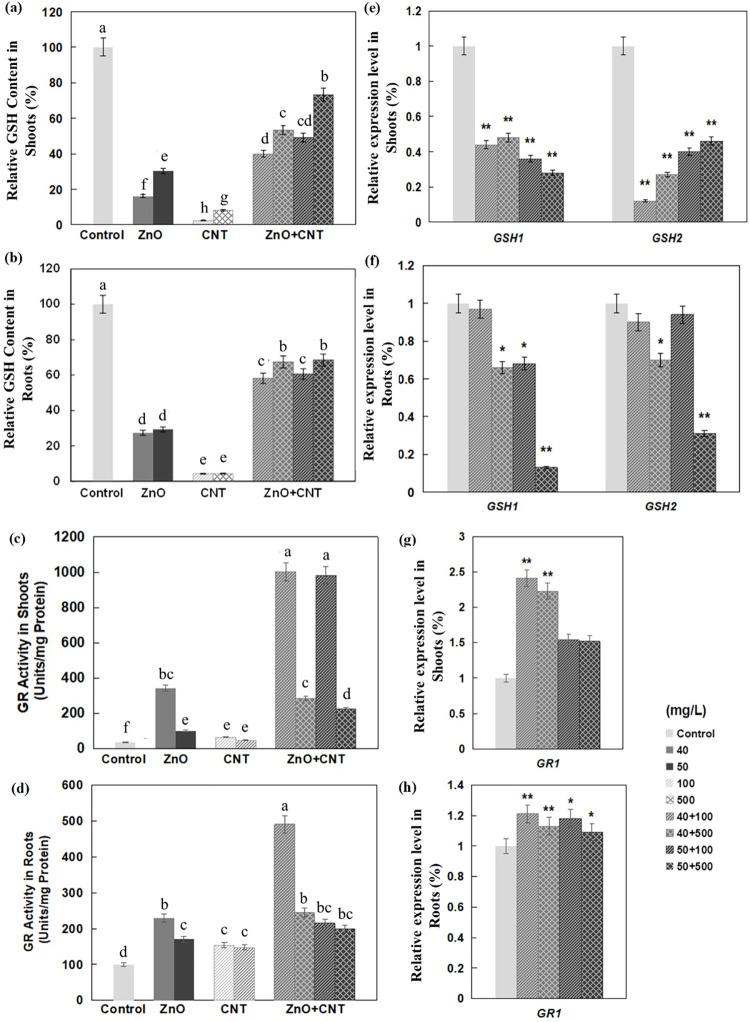
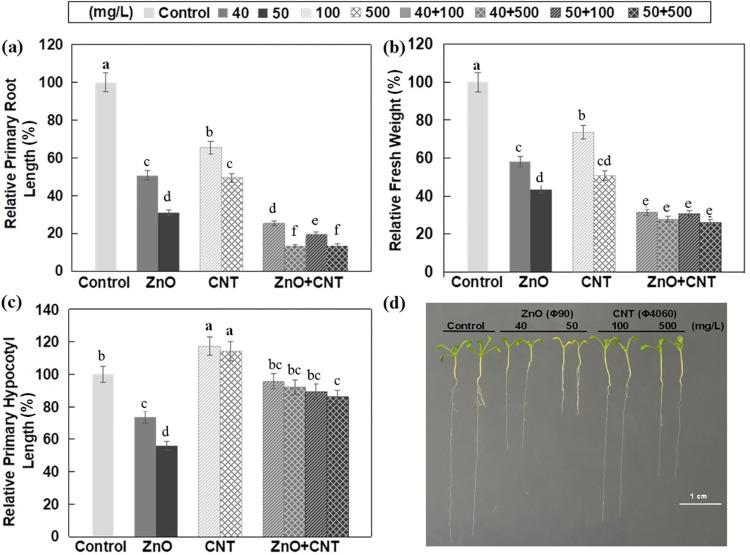
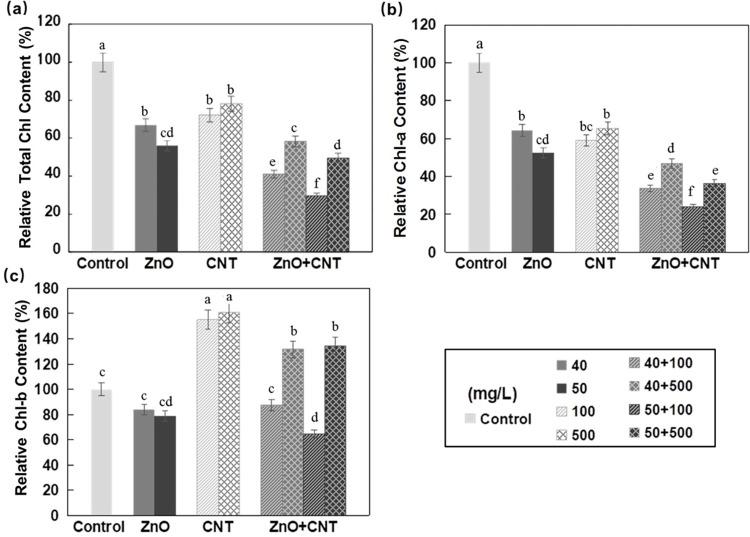
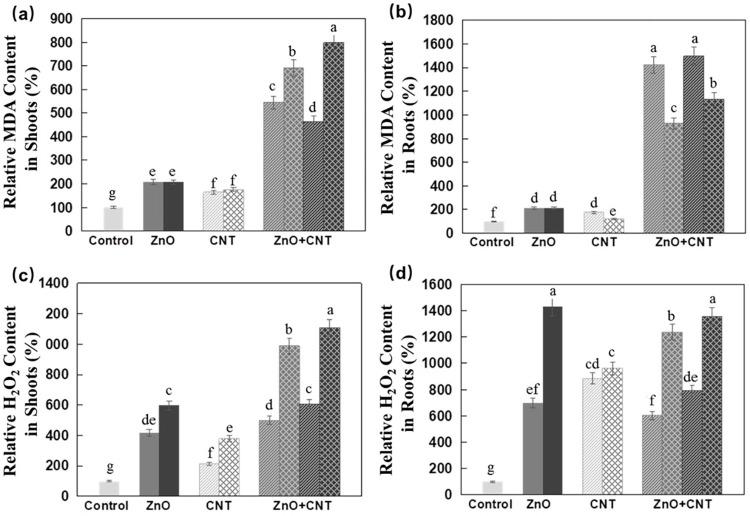
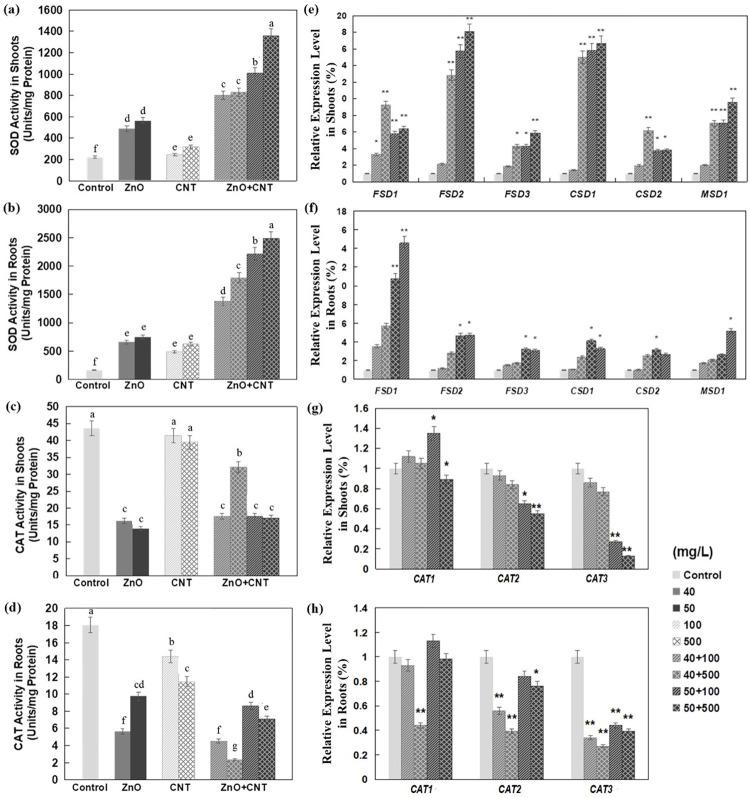
The extensive use of engineered nanoparticles (ENPs) has raised concerns about their potentially harmful effects on the ecosystem. Despite previous reports of a variety of individual ENPs, the mutual effects of ENPs when used in combination were not well understood. In this study, we first investigated the effects of different sizes and concentrations of ZnO nanoparticles (ZnO NPs) or multi-walled carbon nanotubes (MWCNTs) on the growth performance of Arabidopsis thaliana seedlings. Then, two concentrations of ZnO NP (40 and 50 mg/L) with a diameter of 90 nm and MWCNTs (100 and 500 mg/L) with an outer diameter of 40-60 nm were used to evaluate their respective or simultaneous phytotoxicity to Arabidopsis. The results showed that seedlings exposed to either ZnO NPs or MWCNTs exhibited significant phytotoxic symptoms. ZnO NPs caused stronger inhibitory effects than MWCNTs on several plant growth indices, including reduced root length, chlorophyll content, and increased ROS concentration. When applied together, the concurrent effects of ZnO NPs and MWCNTs on Arabidopsis seedlings appeared to be more negative, as evidenced not only by the further deterioration of several growth indices but also by their synergistic or additive regulation of the activities of several antioxidant enzymes such as superoxide dismutase (SOD), catalase (CAT) and glutathione reductase (GR). Moreover, qRT-PCR analysis revealed that in the presence of ZnO NPs and MWCNTs, the expression of genes important for maintaining cellular ROS homeostasis was differentially regulated in shoots and roots of Arabidopsis seedlings. Overall, our data may provide new insights into how plants respond to more than one type of nanomaterial and help us better understand the associated environmental risks.
工程纳米粒子(ENPs)的广泛应用引起了人们对其对生态系统潜在有害影响的关注。尽管之前有报道称各种单一的 ENPs,但对其组合使用时的相互影响还不太了解。在这项研究中,我们首先研究了不同大小和浓度的氧化锌纳米粒子(ZnO NPs)或多壁碳纳米管(MWCNTs)对拟南芥幼苗生长性能的影响。然后,我们使用两种浓度的 ZnO NP(40 和 50 mg/L)和直径为 90nm 的 MWCNTs(100 和 500 mg/L)来评估它们各自或同时对拟南芥的植物毒性。结果表明,暴露于 ZnO NPs 或 MWCNTs 的幼苗表现出明显的植物毒性症状。ZnO NPs 对几种植物生长指标的抑制作用强于 MWCNTs,包括根长、叶绿素含量降低和 ROS 浓度升高。当同时应用时,ZnO NPs 和 MWCNTs 对拟南芥幼苗的协同作用似乎更为负面,不仅表现在几个生长指标的进一步恶化,还表现在它们对几种抗氧化酶如超氧化物歧化酶(SOD)、过氧化氢酶(CAT)和谷胱甘肽还原酶(GR)的活性的协同或相加调节上。此外,qRT-PCR 分析表明,在 ZnO NPs 和 MWCNTs 的存在下,维持细胞 ROS 稳态的重要基因在拟南芥幼苗的地上部和根部的表达被不同地调节。总的来说,我们的数据可能为植物如何应对不止一种类型的纳米材料提供新的见解,并帮助我们更好地理解相关的环境风险。
 Zotero 插件