
海洋生物生活史中的遗留效应与适应性权衡:适应复杂性的代价
Carry-over effects and fitness trade-offs in marine life histories: The costs of complexity for adaptation.
作者信息
Marshall Dustin J, Connallon Tim
机构信息
School of Biological Sciences, and Centre for Geometric Biology Monash University Melbourne Victoria Australia.
出版信息
Evol Appl. 2022 Sep 20;16(2):474-485. doi: 10.1111/eva.13477. eCollection 2023 Feb.
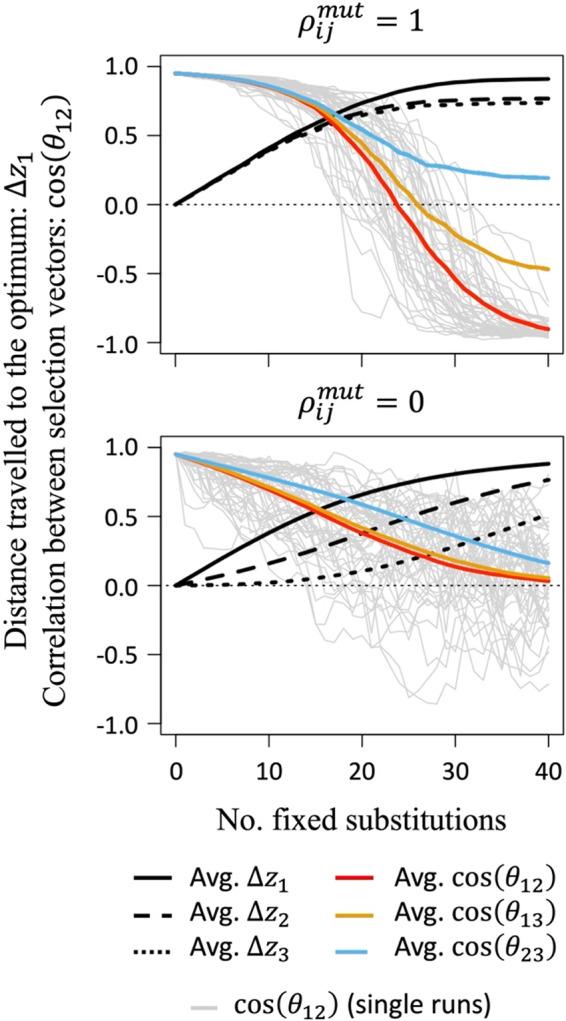
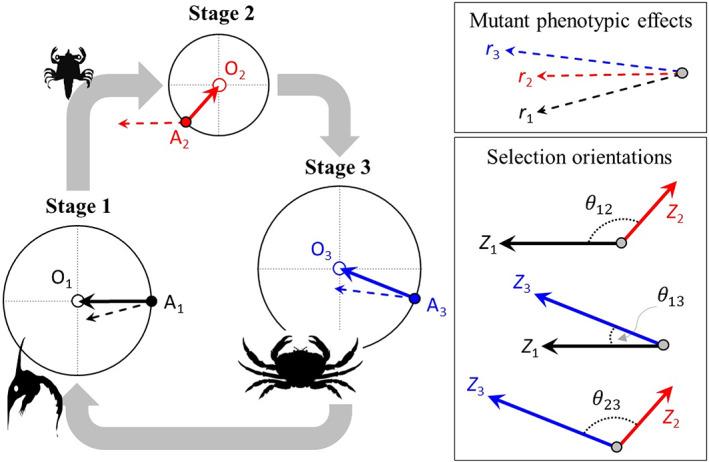
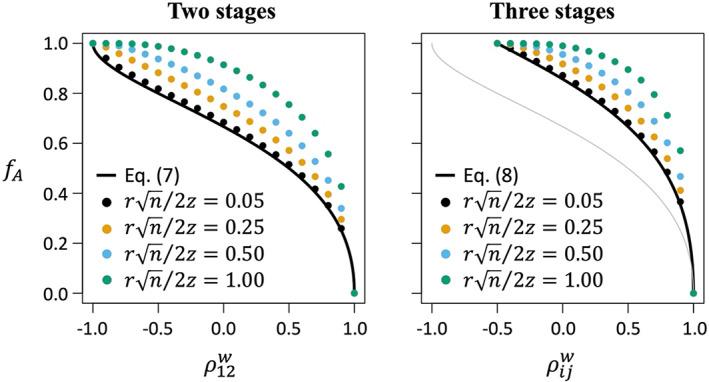
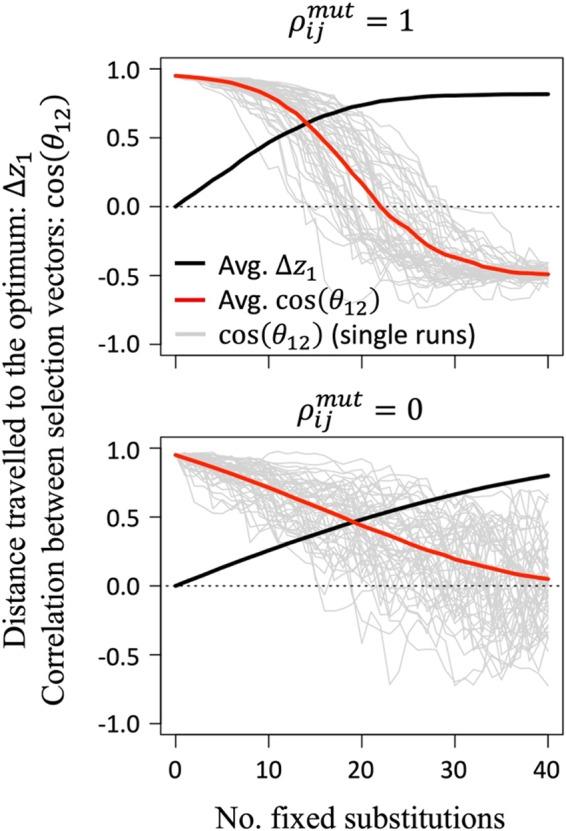
Most marine organisms have complex life histories, where the individual stages of a life cycle are often morphologically and ecologically distinct. Nevertheless, life-history stages share a single genome and are linked phenotypically (by "carry-over effects"). These commonalities across the life history couple the evolutionary dynamics of different stages and provide an arena for evolutionary constraints. The degree to which genetic and phenotypic links among stages hamper adaptation in any one stage remains unclear and yet adaptation is essential if marine organisms will adapt to future climates. Here, we use an extension of Fisher's geometric model to explore how both carry-over effects and genetic links among life-history stages affect the emergence of pleiotropic trade-offs between fitness components of different stages. We subsequently explore the evolutionary trajectories of adaptation of each stage to its optimum using a simple model of stage-specific viability selection with nonoverlapping generations. We show that fitness trade-offs between stages are likely to be common and that such trade-offs naturally emerge through either divergent selection or mutation. We also find that evolutionary conflicts among stages should escalate during adaptation, but carry-over effects can ameliorate this conflict. Carry-over effects also tip the evolutionary balance in favor of better survival in earlier life-history stages at the expense of poorer survival in later stages. This effect arises in our discrete-generation framework and is, therefore, unrelated to age-related declines in the efficacy of selection that arise in models with overlapping generations. Our results imply a vast scope for conflicting selection between life-history stages, with pervasive evolutionary constraints emerging from initially modest selection differences between stages. Organisms with complex life histories should also be more constrained in their capacity to adapt to global change than those with simple life histories.
大多数海洋生物具有复杂的生活史,其生命周期的各个阶段在形态和生态上往往截然不同。然而,生活史阶段共享一个单一的基因组,并在表型上相互关联(通过“遗留效应”)。生活史中的这些共性将不同阶段的进化动态联系在一起,并为进化限制提供了一个舞台。不同阶段之间的遗传和表型联系在多大程度上阻碍任何一个阶段的适应仍不清楚,但如果海洋生物要适应未来的气候,适应是必不可少的。在这里,我们使用费舍尔几何模型的扩展来探讨生活史阶段之间的遗留效应和遗传联系如何影响不同阶段适合度成分之间多效性权衡的出现。随后,我们使用一个具有不重叠世代的阶段特异性生存力选择的简单模型,探索每个阶段适应其最优状态的进化轨迹。我们表明,不同阶段之间的适合度权衡可能很常见,并且这种权衡通过分歧选择或突变自然出现。我们还发现,在适应过程中,不同阶段之间的进化冲突应该会加剧,但遗留效应可以缓解这种冲突。遗留效应还会使进化平衡倾向于早期生活史阶段更好的生存,而以后期较差的生存为代价。这种效应出现在我们的离散世代框架中,因此与具有重叠世代的模型中出现的与年龄相关的选择效率下降无关。我们的结果意味着生活史阶段之间存在冲突选择的广阔空间,从最初阶段之间适度的选择差异中出现普遍的进化限制。与具有简单生活史的生物相比,具有复杂生活史的生物在适应全球变化方面的能力也应该受到更多限制。
 Zotero 插件