
硫化改性纳米零价铁作为一种新型治疗药物用于脓毒症心肌损伤。
Sulfide-modified nanoscale zero-valent iron as a novel therapeutic remedy for septic myocardial injury.
机构信息
Deparment of Neurology, Xi'an No.3 Hospital, The Affiliated Hospital of Northwest University. Faculty of Life Sciences and Medicine, Northwest University, Xi'an, China; School of Chemistry, MOE Key Laboratory for Nonequilibrium Synthesis and Modulation of Condensed Matter, Xi'an Jiaotong University, 710049, Xi'an, China; Key Laboratory of Resource Biology and Biotechnology in Western China, Ministry of Education, Faculty of Life Sciences and Medicine, Northwest University, Xi'an, 710069, China.
Department of General Surgery, Tangdu Hospital, The Airforce Medical University, 1 Xinsi Road, Xi'an, 710038, China.
出版信息
J Adv Res. 2024 Jan;55:145-158. doi: 10.1016/j.jare.2023.02.008. Epub 2023 Feb 17.
INTRODUCTION
Myocardial injury is a serious complication in sepsis with high mortality. Zero-valent iron nanoparticles (nanoFe) displayed novel roles in cecal ligation and puncture (CLP)-induced septic mouse model. Nonetheless, its high reactivity makes it difficult for long-term storage.
OBJECTIVES
To overcome the obstacle and improve therapeutic efficiency, a surface passivation of nanoFe was designed using sodium sulfide.
METHODS
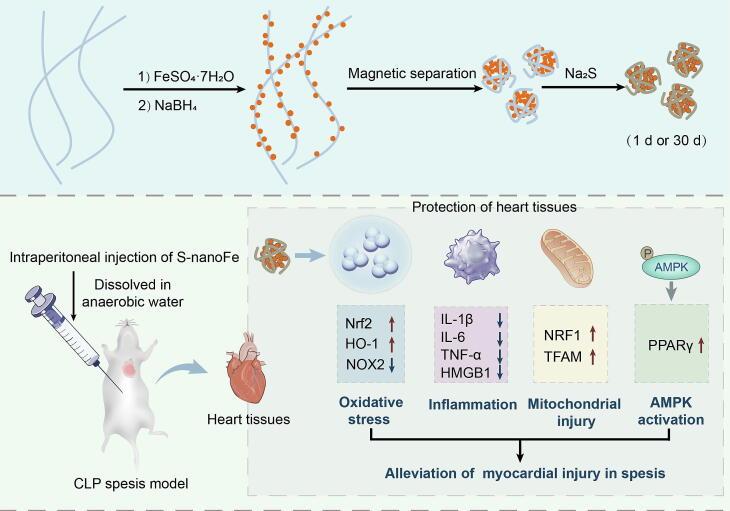
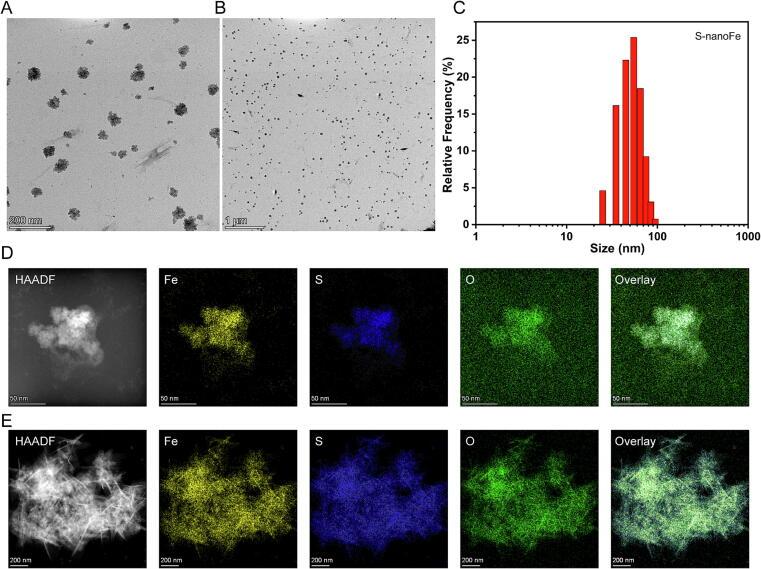
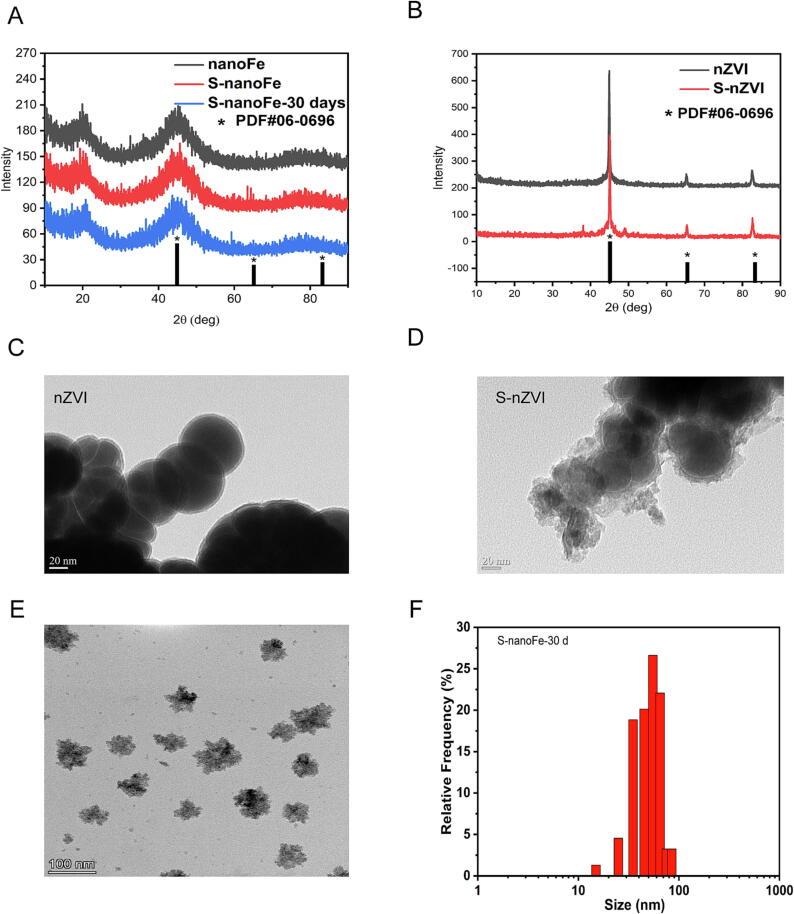
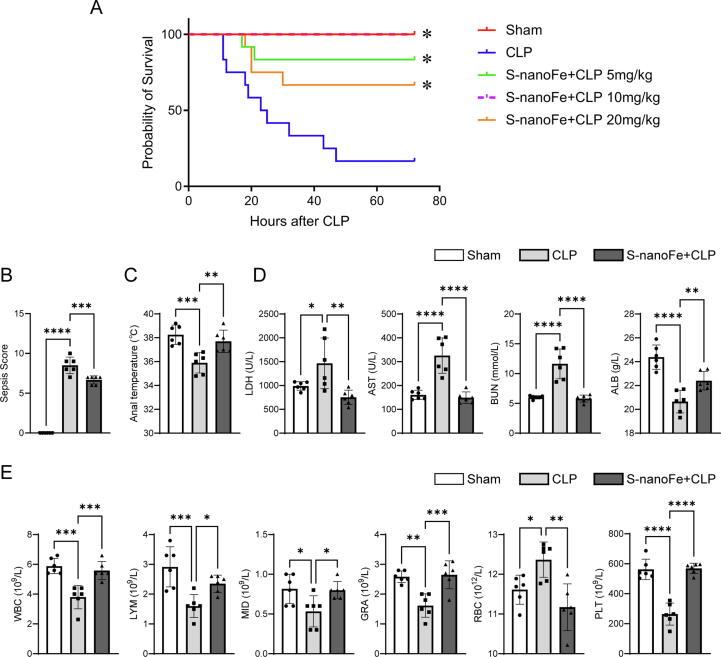
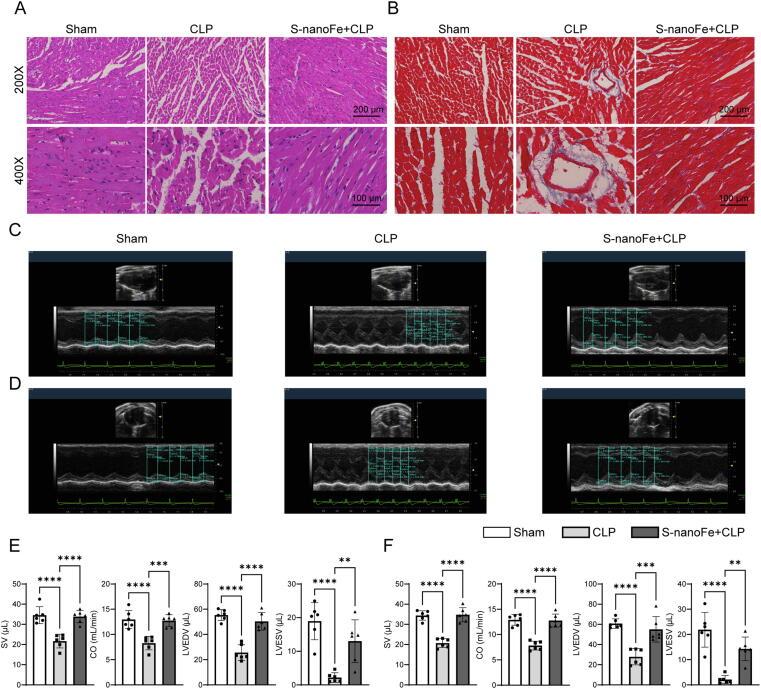
We prepared iron sulfide nanoclusters and constructed CLP mouse models. Then the effect of sulfide-modified nanoscale zero-valent iron (S-nanoFe) on the survival rate, blood routine parameters, blood biochemical parameters, cardiac function, and pathological indicators of myocardium was observed. RNA-seq was used to further explore the comprehensive protective mechanisms of S-nanoFe. Finally, the stability of S-nanoFe-1d and S-nanoFe-30 d, together with the therapeutic efficacy of sepsis between S-nanoFe and nanoFe was compared.
RESULTS
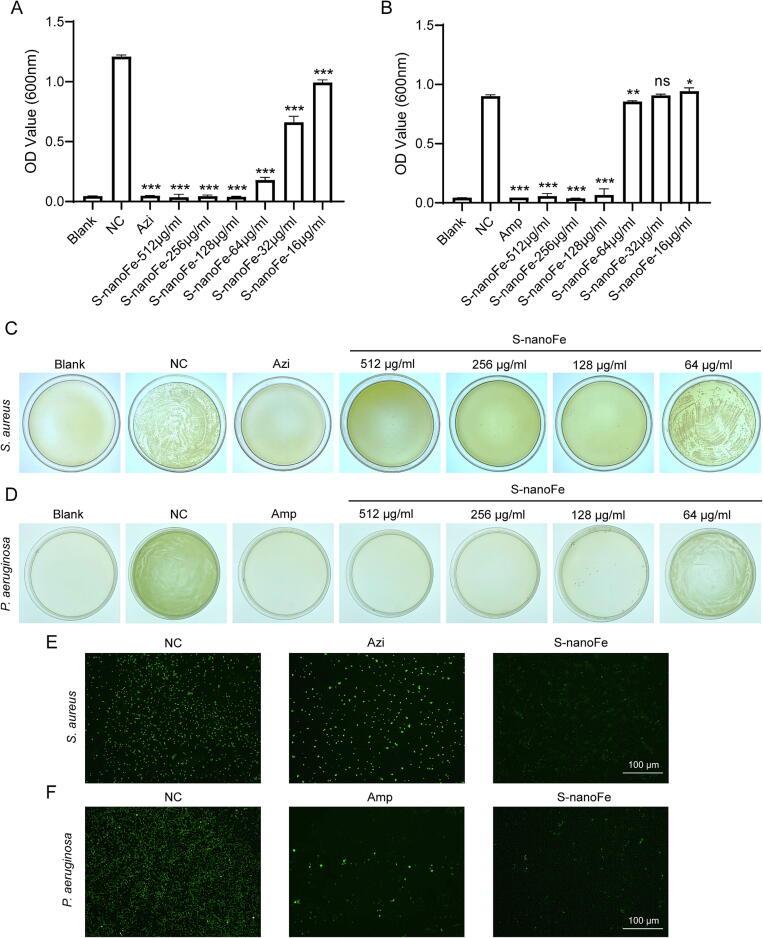
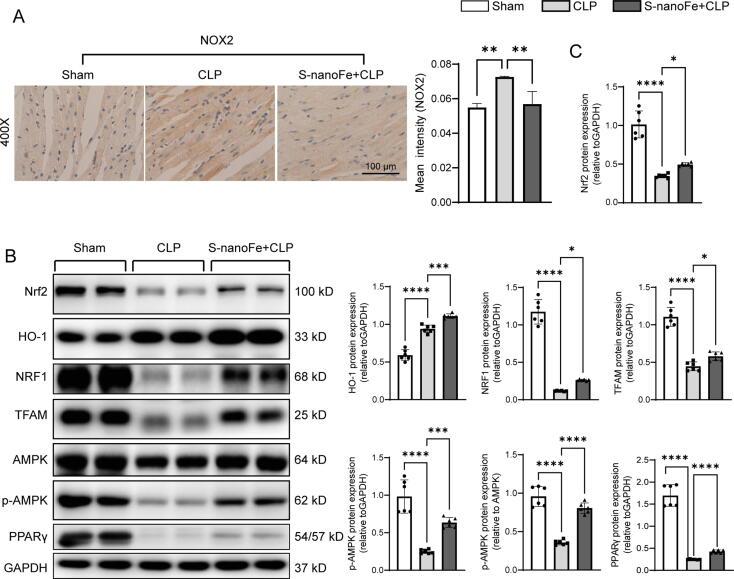
The results revealed that S-nanoFe significantly inhibited the growth of bacteria and exerted a protective role against septic myocardial injury. S-nanoFe treatment activated AMPK signaling and ameliorated several CLP-induced pathological processes including myocardial inflammation, oxidative stress, mitochondrial dysfunction. RNA-seq analysis further clarified the comprehensive myocardial protective mechanisms of S-nanoFe against septic injury. Importantly, S-nanoFe had a good stability and a comparable protective efficacy to nanoFe.
CONCLUSIONS
The surface vulcanization strategy for nanoFe has a significant protective role against sepsis and septic myocardial injury. This study provides an alternative strategy for overcoming sepsis and septic myocardial injury and opens up possibilities for the development of nanoparticle in infectious diseases.
简介
心肌损伤是脓毒症的严重并发症,死亡率很高。零价铁纳米粒子(nanoFe)在盲肠结扎穿刺(CLP)诱导的脓毒症小鼠模型中表现出新颖的作用。然而,其高反应性使其难以长期储存。
目的
克服这一障碍并提高治疗效率,我们设计了一种使用硫化钠对 nanoFe 进行表面钝化的方法。
方法
我们制备了硫化铁纳米团簇并构建了 CLP 小鼠模型。然后观察了硫化修饰的纳米零价铁(S-nanoFe)对存活率、血常规参数、血液生化参数、心功能和心肌病理指标的影响。RNA-seq 用于进一步探索 S-nanoFe 的综合保护机制。最后,比较了 S-nanoFe-1d 和 S-nanoFe-30d 的稳定性以及 S-nanoFe 和 nanoFe 之间的脓毒症治疗效果。
结果
结果表明,S-nanoFe 显著抑制了细菌的生长,并对脓毒症性心肌损伤发挥了保护作用。S-nanoFe 处理激活了 AMPK 信号通路,并改善了 CLP 诱导的几种病理过程,包括心肌炎症、氧化应激、线粒体功能障碍。RNA-seq 分析进一步阐明了 S-nanoFe 对脓毒症性损伤的全面心肌保护机制。重要的是,S-nanoFe 具有良好的稳定性,与 nanoFe 具有相当的保护效果。
结论
nanoFe 的表面硫化策略对脓毒症和脓毒症性心肌损伤具有显著的保护作用。本研究为克服脓毒症和脓毒症性心肌损伤提供了一种替代策略,并为纳米颗粒在感染性疾病中的开发开辟了可能性。




 Zotero 插件