
快速组合代谢网络重布线以增强谷氨酸棒杆菌中聚(3-羟基丁酸酯)的生产。
Rapid combinatorial rewiring of metabolic networks for enhanced poly(3-hydroxybutyrate) production in Corynebacterium glutamicum.
机构信息
Department of Biological Sciences, KAIST, Daejeon, Republic of Korea.
Institute for BioCentury, KAIST, Daejeon, Republic of Korea.
出版信息
Microb Cell Fact. 2023 Feb 17;22(1):29. doi: 10.1186/s12934-023-02037-x.
BACKGROUND
The disposal of plastic waste is a major environmental challenge. With recent advances in microbial genetic and metabolic engineering technologies, microbial polyhydroxyalkanoates (PHAs) are being used as next-generation biomaterials to replace petroleum-based synthetic plastics in a sustainable future. However, the relatively high production cost of bioprocesses hinders the production and application of microbial PHAs on an industrial scale.
RESULTS
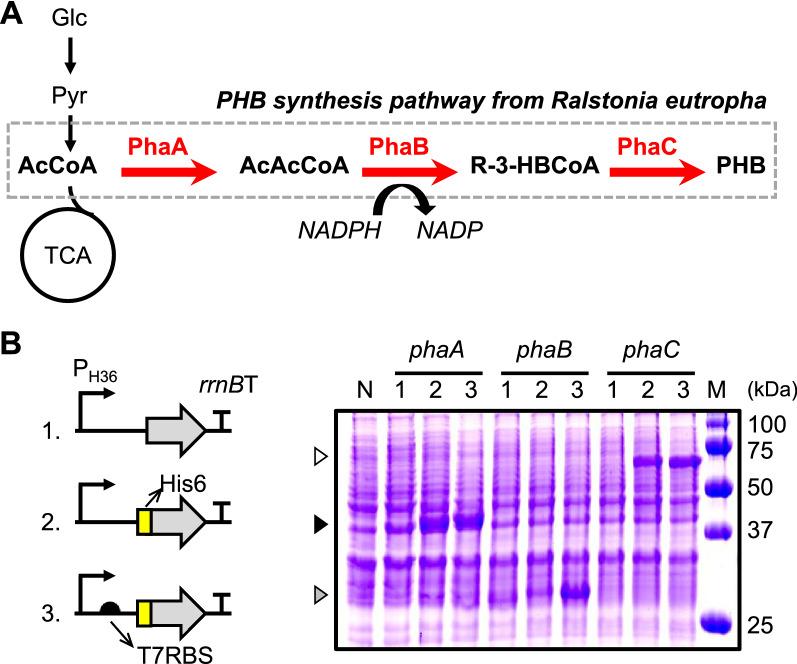
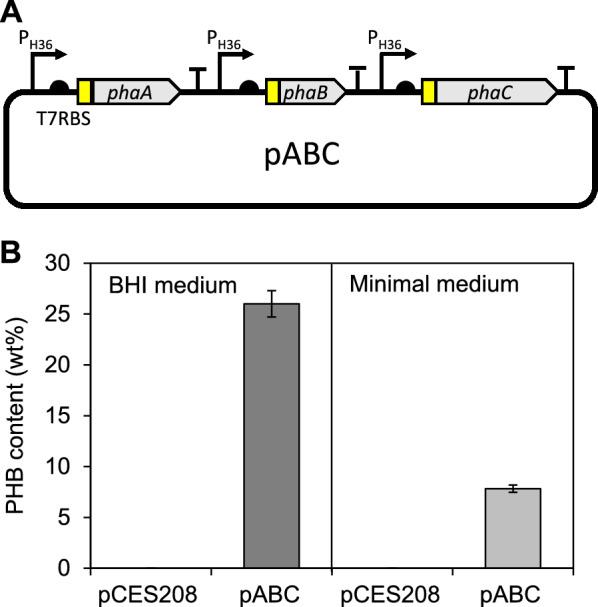
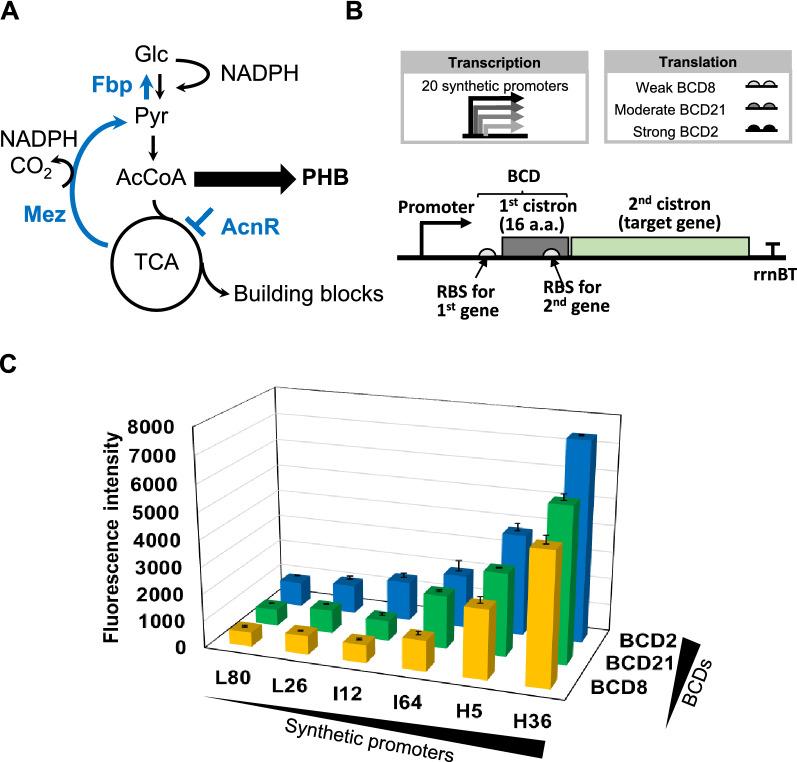
Here, we describe a rapid strategy to rewire metabolic networks in an industrial microorganism, Corynebacterium glutamicum, for the enhanced production of poly(3-hydroxybutyrate) (PHB). A three-gene PHB biosynthetic pathway in Rasltonia eutropha was refactored for high-level gene expression. A fluorescence-based quantification assay for cellular PHB content using BODIPY was devised for the rapid fluorescence-activated cell sorting (FACS)-based screening of a large combinatorial metabolic network library constructed in C. glutamicum. Rewiring metabolic networks across the central carbon metabolism enabled highly efficient production of PHB up to 29% of dry cell weight with the highest cellular PHB productivity ever reported in C. glutamicum using a sole carbon source.
CONCLUSIONS
We successfully constructed a heterologous PHB biosynthetic pathway and rapidly optimized metabolic networks across central metabolism in C. glutamicum for enhanced production of PHB using glucose or fructose as a sole carbon source in minimal media. We expect that this FACS-based metabolic rewiring framework will accelerate strain engineering processes for the production of diverse biochemicals and biopolymers.
背景
塑料废物的处理是一个主要的环境挑战。随着微生物遗传和代谢工程技术的最新进展,微生物聚羟基烷酸酯(PHA)正在被用作下一代生物材料,以在可持续的未来中替代石油基合成塑料。然而,生物工艺的相对较高的生产成本阻碍了微生物 PHA 在工业规模上的生产和应用。
结果
在这里,我们描述了一种在工业微生物谷氨酸棒杆菌中重新布线代谢网络的快速策略,以增强聚(3-羟基丁酸酯)(PHB)的生产。重构了根瘤农杆菌中的三基因 PHB 生物合成途径,以实现高水平的基因表达。设计了一种基于荧光的细胞 PHB 含量定量测定法,使用 BODIPY 进行快速荧光激活细胞分选(FACS)筛选在谷氨酸棒杆菌中构建的大型组合代谢网络文库。跨中央碳代谢重新布线代谢网络,使 PHB 的生产效率高达 29%干重,这是使用单一碳源在谷氨酸棒杆菌中报告的最高细胞 PHB 生产率。
结论
我们成功构建了异源 PHB 生物合成途径,并在最小培养基中使用葡萄糖或果糖作为唯一碳源,在谷氨酸棒杆菌中快速优化了跨中央代谢的代谢网络,以增强 PHB 的生产。我们期望这种基于 FACS 的代谢重布线框架将加速生产各种生物化学物质和生物聚合物的菌株工程过程。



 Zotero 插件