
高血压管理中的人工智能:你的秘密武器。
Artificial Intelligence in Hypertension Management: An Ace up Your Sleeve.
作者信息
Visco Valeria, Izzo Carmine, Mancusi Costantino, Rispoli Antonella, Tedeschi Michele, Virtuoso Nicola, Giano Angelo, Gioia Renato, Melfi Americo, Serio Bianca, Rusciano Maria Rosaria, Di Pietro Paola, Bramanti Alessia, Galasso Gennaro, D'Angelo Gianni, Carrizzo Albino, Vecchione Carmine, Ciccarelli Michele
机构信息
Department of Medicine, Surgery and Dentistry, University of Salerno, 84081 Baronissi, Italy.
Department of Advanced Biomedical Sciences, Federico II University of Naples, 80138 Naples, Italy.
出版信息
J Cardiovasc Dev Dis. 2023 Feb 9;10(2):74. doi: 10.3390/jcdd10020074.
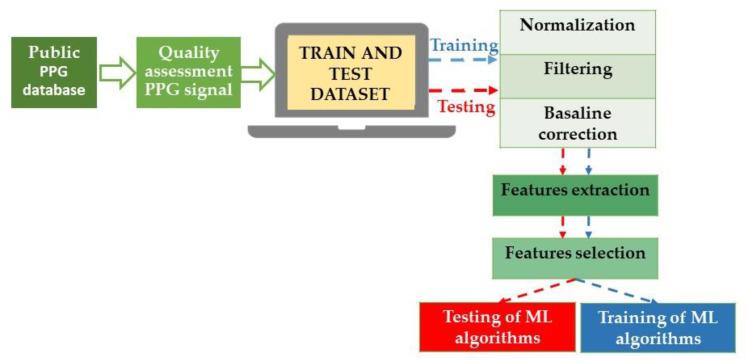
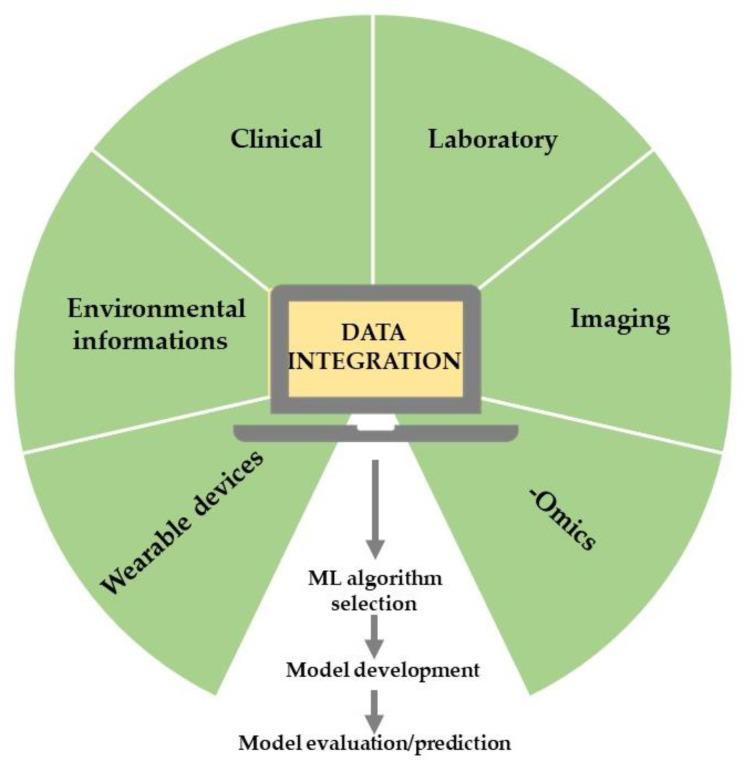
Arterial hypertension (AH) is a progressive issue that grows in importance with the increased average age of the world population. The potential role of artificial intelligence (AI) in its prevention and treatment is firmly recognized. Indeed, AI application allows personalized medicine and tailored treatment for each patient. Specifically, this article reviews the benefits of AI in AH management, pointing out diagnostic and therapeutic improvements without ignoring the limitations of this innovative scientific approach. Consequently, we conducted a detailed search on AI applications in AH: the articles (quantitative and qualitative) reviewed in this paper were obtained by searching journal databases such as PubMed and subject-specific professional websites, including Google Scholar. The search terms included artificial intelligence, artificial neural network, deep learning, machine learning, big data, arterial hypertension, blood pressure, blood pressure measurement, cardiovascular disease, and personalized medicine. Specifically, AI-based systems could help continuously monitor BP using wearable technologies; in particular, BP can be estimated from a photoplethysmograph (PPG) signal obtained from a smartphone or a smartwatch using DL. Furthermore, thanks to ML algorithms, it is possible to identify new hypertension genes for the early diagnosis of AH and the prevention of complications. Moreover, integrating AI with omics-based technologies will lead to the definition of the trajectory of the hypertensive patient and the use of the most appropriate drug. However, AI is not free from technical issues and biases, such as over/underfitting, the "black-box" nature of many ML algorithms, and patient data privacy. In conclusion, AI-based systems will change clinical practice for AH by identifying patient trajectories for new, personalized care plans and predicting patients' risks and necessary therapy adjustments due to changes in disease progression and/or therapy response.
动脉高血压(AH)是一个日益严重的问题,随着世界人口平均年龄的增加,其重要性也日益凸显。人工智能(AI)在其预防和治疗中的潜在作用已得到明确认可。事实上,AI的应用能够实现个性化医疗,为每位患者量身定制治疗方案。具体而言,本文回顾了AI在AH管理中的益处,指出其在诊断和治疗方面的改进,同时也不忽视这种创新科学方法的局限性。因此,我们对AI在AH中的应用进行了详细搜索:本文所综述的文章(定量和定性)是通过搜索诸如PubMed等期刊数据库以及特定主题的专业网站(包括谷歌学术)获得的。搜索词包括人工智能、人工神经网络、深度学习、机器学习、大数据、动脉高血压、血压、血压测量、心血管疾病和个性化医疗。具体来说,基于AI的系统可以借助可穿戴技术帮助持续监测血压;特别是,可以使用深度学习从智能手机或智能手表获取的光电容积脉搏波描记图(PPG)信号中估计血压。此外,借助机器学习算法,有可能识别出新的高血压基因,用于AH的早期诊断和并发症预防。而且,将AI与基于组学的技术相结合,将有助于确定高血压患者的病情发展轨迹并选择最合适的药物。然而,AI并非没有技术问题和偏差,如过拟合/欠拟合、许多机器学习算法的“黑箱”性质以及患者数据隐私问题。总之,基于AI的系统将通过识别新的个性化护理计划的患者轨迹,并预测由于疾病进展和/或治疗反应变化而导致的患者风险和必要的治疗调整,从而改变AH的临床实践。
 Zotero 插件