
基于无细胞和负载细胞微模块计算机辅助组装的仿生细胞外基质支架设计综述
Review on Bioinspired Design of ECM-Mimicking Scaffolds by Computer-Aided Assembly of Cell-Free and Cell Laden Micro-Modules.
作者信息
Salerno Aurelio, Netti Paolo Antonio
机构信息
Department of Chemical, Materials, and Industrial Production Engineering, University of Naples Federico II, P.le Tecchio 80, 80125 Naples, Italy.
Center for Advanced Biomaterials for Healthcare, Istituto Italiano di Tecnologia (IIT@CRIB), Largo Barsanti e Matteucci, 53, 80125 Naples, Italy.
出版信息
J Funct Biomater. 2023 Feb 13;14(2):101. doi: 10.3390/jfb14020101.
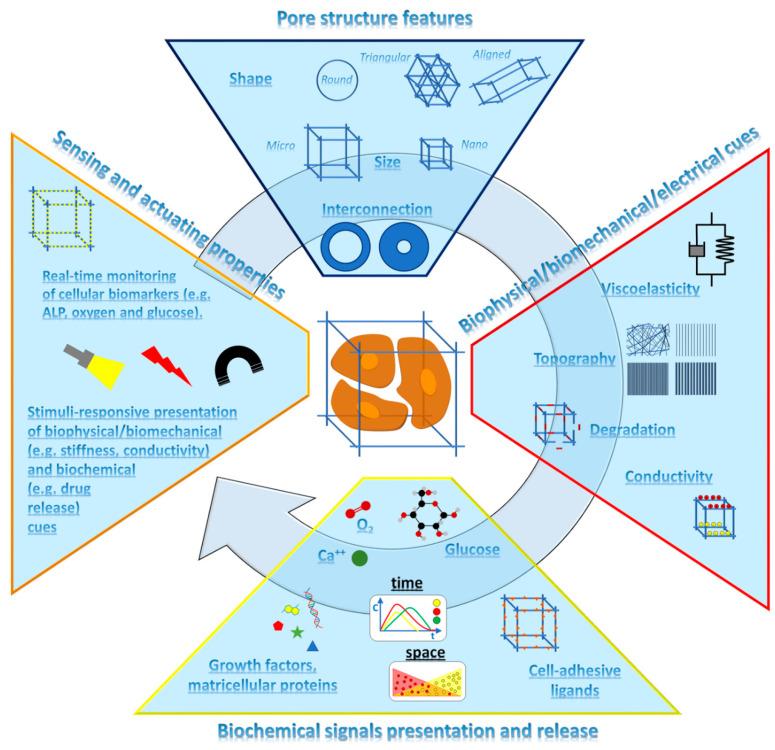
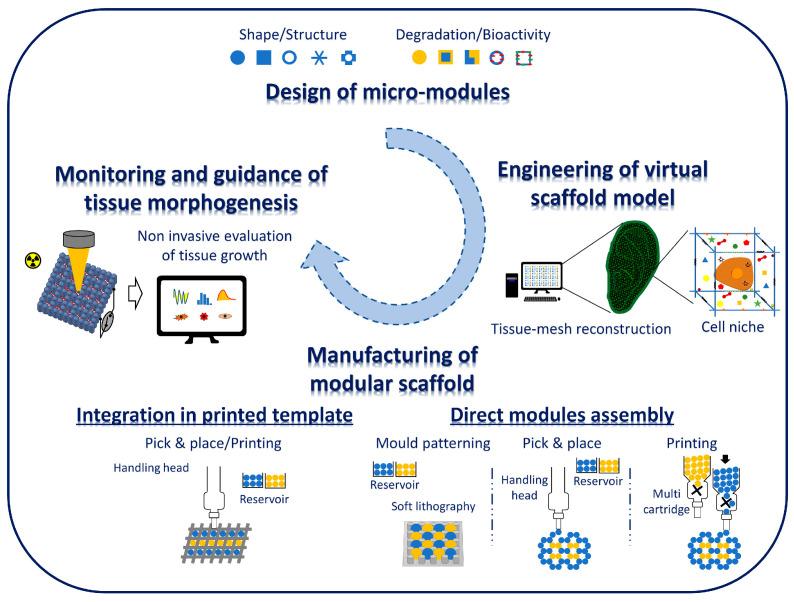
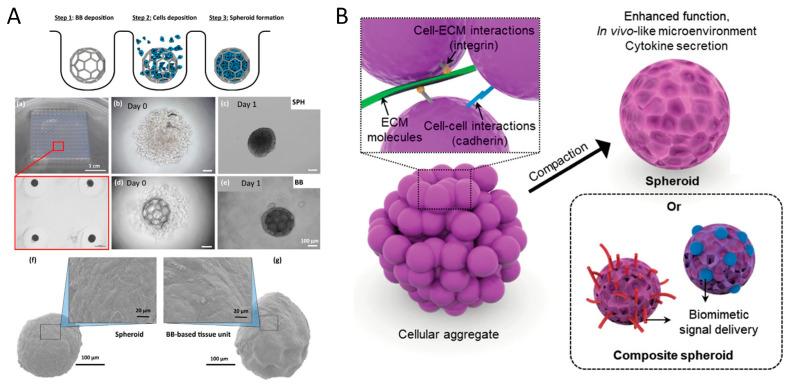
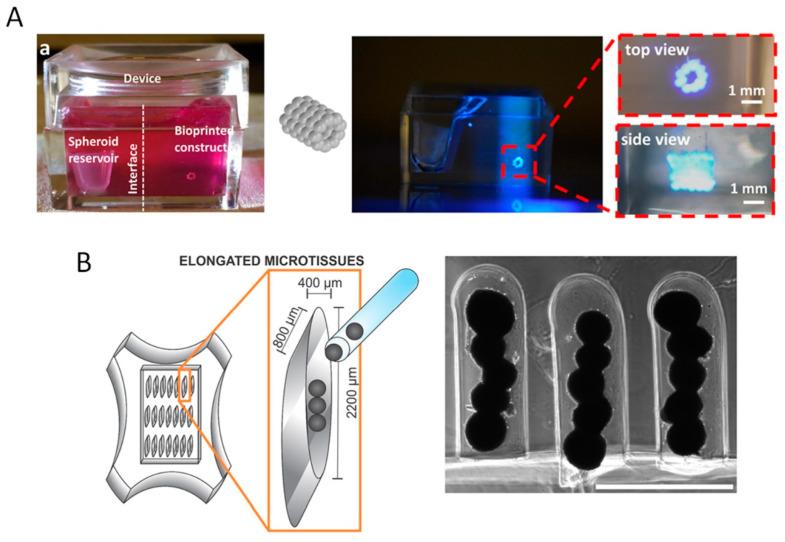
Tissue engineering needs bioactive drug delivery scaffolds capable of guiding cell biosynthesis and tissue morphogenesis in three dimensions. Several strategies have been developed to design and fabricate ECM-mimicking scaffolds suitable for directing in vitro cell/scaffold interaction, and controlling tissue morphogenesis in vivo. Among these strategies, emerging computer aided design and manufacturing processes, such as modular tissue unit patterning, promise to provide unprecedented control over the generation of biologically and biomechanically competent tissue analogues. This review discusses recent studies and highlights the role of scaffold microstructural properties and their drug release capability in cell fate control and tissue morphogenesis. Furthermore, the work highlights recent advances in the bottom-up fabrication of porous scaffolds and hybrid constructs through the computer-aided assembly of cell-free and/or cell-laden micro-modules. The advantages, current limitations, and future challenges of these strategies are described and discussed.
组织工程需要能够在三维空间中引导细胞生物合成和组织形态发生的生物活性药物递送支架。已经开发了几种策略来设计和制造模拟细胞外基质(ECM)的支架,这些支架适用于指导体外细胞/支架相互作用,并控制体内组织形态发生。在这些策略中,新兴的计算机辅助设计和制造工艺,如模块化组织单元图案化,有望为生物和生物力学功能良好的组织类似物的生成提供前所未有的控制。本文综述讨论了近期研究,并强调了支架微观结构特性及其药物释放能力在细胞命运控制和组织形态发生中的作用。此外,该工作突出了通过无细胞和/或载有细胞的微模块的计算机辅助组装在自下而上制造多孔支架和混合构建体方面的最新进展。描述并讨论了这些策略的优点、当前局限性和未来挑战。

 Zotero 插件