
连接蛋白在肿瘤微环境起始与维持中的多方面作用
The Multifaceted Role of Connexins in Tumor Microenvironment Initiation and Maintenance.
作者信息
Kutova Olga M, Pospelov Anton D, Balalaeva Irina V
机构信息
The Institute of Biology and Biomedicine, Lobachevsky State University of Nizhny Novgorod, 23 Gagarin Ave., Nizhny Novgorod 603950, Russia.
出版信息
Biology (Basel). 2023 Jan 28;12(2):204. doi: 10.3390/biology12020204.
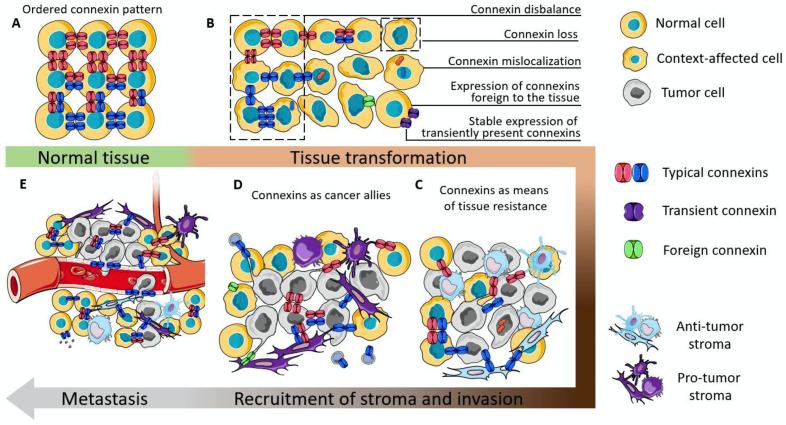
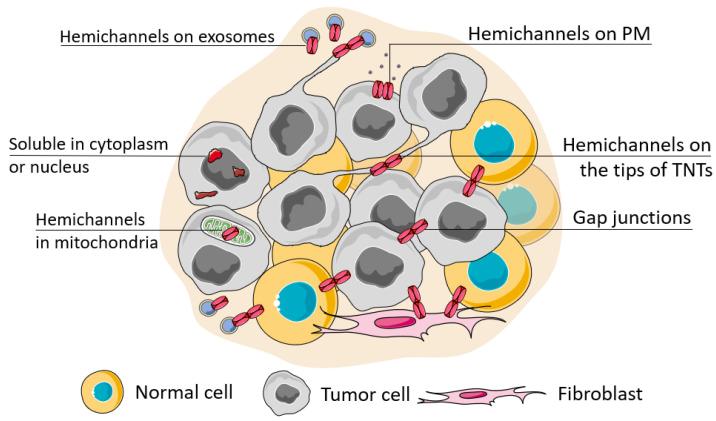
Today's research on the processes of carcinogenesis and the vital activity of tumor tissues implies more attention be paid to constituents of the tumor microenvironment and their interactions. These interactions between cells in the tumor microenvironment can be mediated via different types of protein junctions. Connexins are one of the major contributors to intercellular communication. They form the gap junctions responsible for the transfer of ions, metabolites, peptides, miRNA, etc., between neighboring tumor cells as well as between tumor and stromal cells. Connexin hemichannels mediate purinergic signaling and bidirectional molecular transport with the extracellular environment. Additionally, connexins have been reported to localize in tumor-derived exosomes and facilitate the release of their cargo. A large body of evidence implies that the role of connexins in cancer is multifaceted. The pro- or anti-tumorigenic properties of connexins are determined by their abundance, localization, and functionality as well as their channel assembly and non-channel functions. In this review, we have summarized the data on the contribution of connexins to the formation of the tumor microenvironment and to cancer initiation and progression.
如今,关于致癌过程和肿瘤组织生命活动的研究表明,需要更多地关注肿瘤微环境的组成成分及其相互作用。肿瘤微环境中细胞之间的这些相互作用可通过不同类型的蛋白质连接介导。连接蛋白是细胞间通讯的主要贡献者之一。它们形成间隙连接,负责在相邻肿瘤细胞之间以及肿瘤细胞与基质细胞之间传递离子、代谢物、肽、微小RNA等。连接蛋白半通道介导嘌呤能信号传导以及与细胞外环境的双向分子运输。此外,据报道连接蛋白定位于肿瘤来源的外泌体中,并促进其货物的释放。大量证据表明,连接蛋白在癌症中的作用是多方面的。连接蛋白的促肿瘤或抗肿瘤特性取决于它们的丰度、定位和功能,以及它们的通道组装和非通道功能。在这篇综述中,我们总结了关于连接蛋白对肿瘤微环境形成以及癌症发生和发展的贡献的数据。
 Zotero 插件