
姜黄素通过 EGFR 信号通路介导肝癌对仑伐替尼的耐药性。
Curcumin-Mediated Resistance to Lenvatinib via EGFR Signaling Pathway in Hepatocellular Carcinoma.
机构信息
Department of Molecular Diagnostics and Experimental Therapeutics, Beckman Research Institute of City of Hope Comprehensive Cancer Center, Duarte, CA 91010, USA.
Department of Surgery, Tokushima University, Tokushima 779-1510, Japan.
出版信息
Cells. 2023 Feb 14;12(4):612. doi: 10.3390/cells12040612.
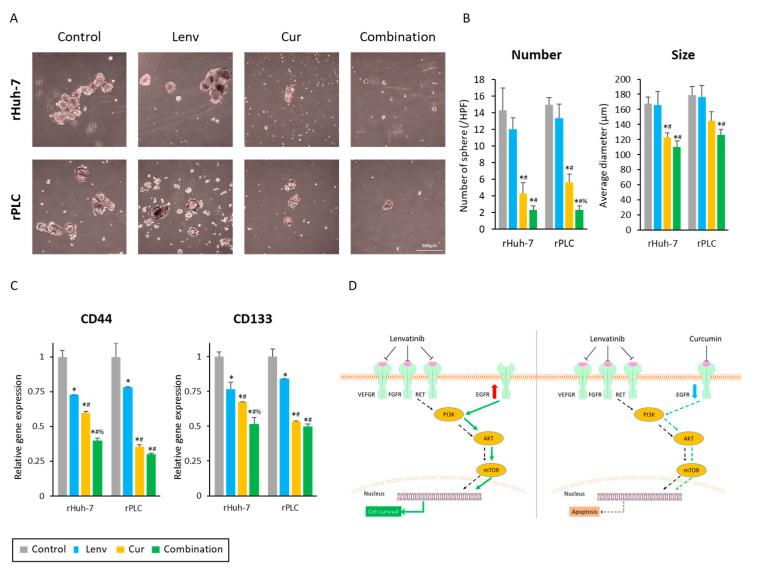
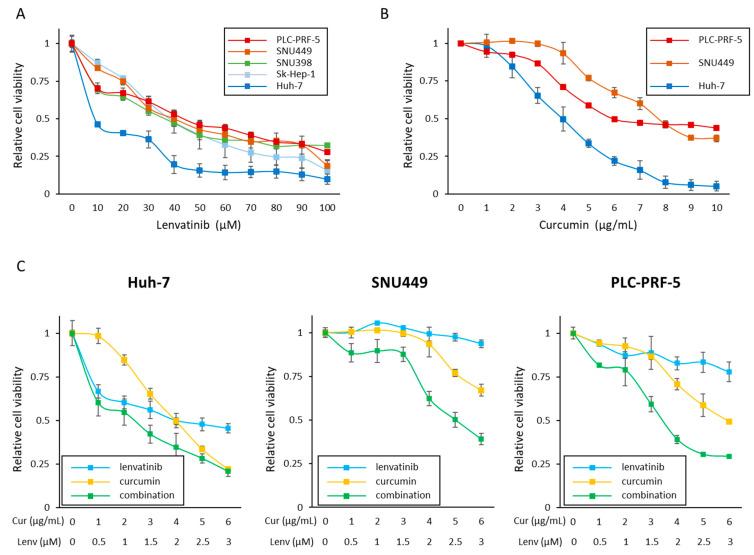
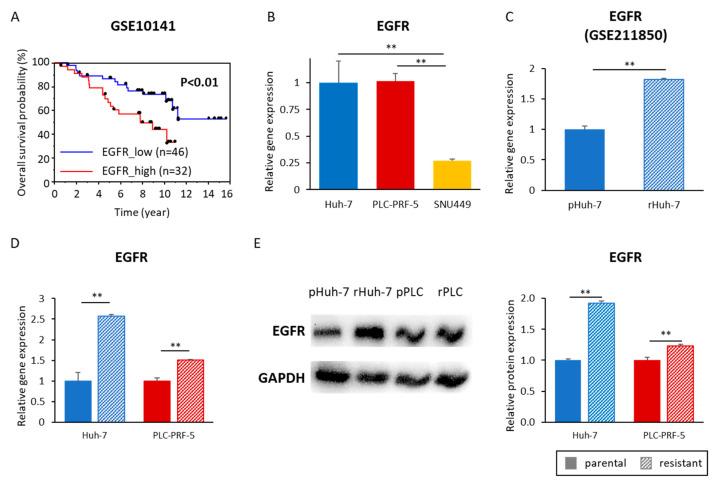
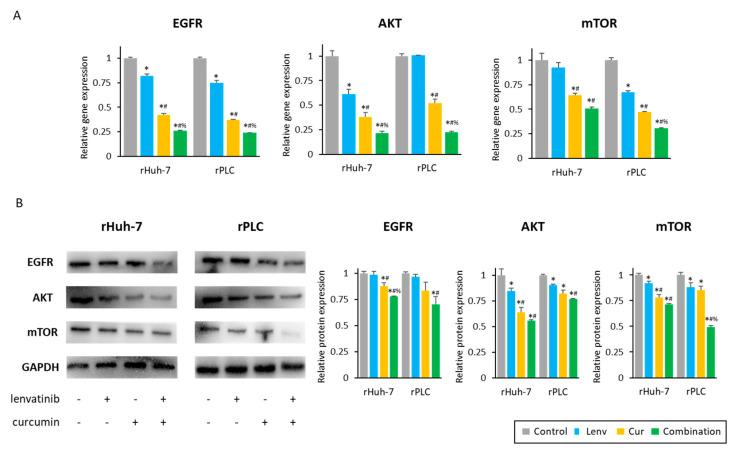
Lenvatinib is a multi-kinase inhibitor approved as a first-line treatment for patients with unresectable advanced hepatocellular carcinoma (HCC). However, its response rate is unsatisfactory, primarily due to the acquisition of resistance, which limits its clinical significance for treating patients with HCC. Recent evidence suggests that epidermal growth factor receptor (EGFR) activation can trigger Lenvatinib-resistance; and is considered an important therapeutic target in HCC. Curcumin, one of the most studied naturally occurring botanicals with robust anti-cancer activity, is also reported to be a potent tyrosine kinase inhibitor. In this study, we hypothesized that the anti-EGFR potential of Curcumin might help overcome Lenvatinib resistance in HCC. We established two Lenvatinib-resistant cells and discovered that a combination of Curcumin and Lenvatinib exhibited a synergistic anti-tumor efficacy in the resistant HCC cell lines. In line with previous reports, Lenvatinib-resistant cell lines revealed significant activation of the EGFR, and genomewide transcriptomic profiling analysis identified that the PI3K-AKT pathway was associated with Lenvatinib resistance. The combination treatment with Curcumin and Lenvatinib dramatically suppressed gene and protein expression of the EGFR-PI3K-AKT pathway, suggesting Curcumin overcomes Lenvatinib resistance via inhibition of EGFR. We further validated these findings in tumor spheroids derived from resistant cell lines. In conclusion, we, for the first time, report that Curcumin reverses Lenvatinib resistance in HCC, and that their combination has clinical application potential for adjunctive treatment in HCC.
仑伐替尼是一种多激酶抑制剂,已被批准用于治疗不可切除的晚期肝细胞癌(HCC)患者的一线治疗药物。然而,其反应率并不令人满意,主要是由于耐药性的获得,这限制了其在治疗 HCC 患者中的临床意义。最近的证据表明,表皮生长因子受体(EGFR)的激活可以触发仑伐替尼耐药;并且被认为是 HCC 的重要治疗靶点。姜黄素是研究最多的具有强大抗癌活性的天然植物之一,也被报道为一种有效的酪氨酸激酶抑制剂。在这项研究中,我们假设姜黄素的抗 EGFR 潜力可能有助于克服 HCC 中的仑伐替尼耐药。我们建立了两种仑伐替尼耐药细胞系,并发现姜黄素和仑伐替尼联合使用在耐药 HCC 细胞系中表现出协同的抗肿瘤疗效。与之前的报道一致,仑伐替尼耐药细胞系显示出 EGFR 的显著激活,并且全基因组转录组分析鉴定出 PI3K-AKT 通路与仑伐替尼耐药相关。姜黄素和仑伐替尼联合治疗可显著抑制 EGFR-PI3K-AKT 通路的基因和蛋白表达,表明姜黄素通过抑制 EGFR 克服仑伐替尼耐药。我们进一步在耐药细胞系衍生的肿瘤球体中验证了这些发现。总之,我们首次报道姜黄素逆转了 HCC 中的仑伐替尼耐药,并且它们的联合应用具有辅助治疗 HCC 的临床应用潜力。


 Zotero 插件