
自噬在帕金森病中的致病作用及治疗途径
Pathogenic Aspects and Therapeutic Avenues of Autophagy in Parkinson's Disease.
机构信息
Univ. de Bordeaux, CNRS, IMN, UMR 5293, F-33000 Bordeaux, France.
出版信息
Cells. 2023 Feb 15;12(4):621. doi: 10.3390/cells12040621.
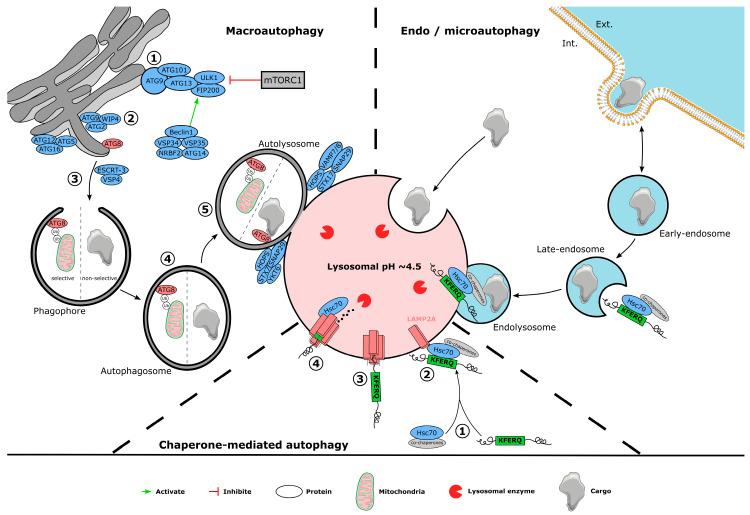
The progressive aging of the population and the fact that Parkinson's disease currently does not have any curative treatment turn out to be essential issues in the following years, where research has to play a critical role in developing therapy. Understanding this neurodegenerative disorder keeps advancing, proving the discovery of new pathogenesis-related genes through genome-wide association analysis. Furthermore, the understanding of its close link with the disruption of autophagy mechanisms in the last few years permits the elaboration of new animal models mimicking, through multiple pathways, different aspects of autophagic dysregulation, with the presence of pathological hallmarks, in brain regions affected by Parkinson's disease. The synergic advances in these fields permit the elaboration of multiple therapeutic strategies for restoring autophagy activity. This review discusses the features of Parkinson's disease, the autophagy mechanisms and their involvement in pathogenesis, and the current methods to correct this cellular pathway, from the development of animal models to the potentially curative treatments in the preclinical and clinical phase studies, which are the hope for patients who do not currently have any curative treatment.
人口的老龄化和目前没有任何治愈帕金森病的方法这两个事实在未来几年将成为重要问题,在这些年中,研究必须在开发疗法方面发挥关键作用。对这种神经退行性疾病的理解不断深入,通过全基因组关联分析证明了新的发病机制相关基因的发现。此外,近年来人们发现帕金森病与自噬机制的破坏密切相关,这使得人们能够通过多种途径来模拟自噬失调的不同方面,在受帕金森病影响的大脑区域中出现病理性特征,从而建立新的动物模型。这些领域的协同进展使得恢复自噬活性的多种治疗策略的制定成为可能。这篇综述讨论了帕金森病的特征、自噬机制及其在发病机制中的作用,以及目前纠正这种细胞途径的方法,从动物模型的开发到临床前和临床阶段研究中潜在的治愈性治疗,这为目前尚无治愈方法的患者带来了希望。

 Zotero 插件