
基于碳纳米管的生物传感器,使用融合技术与生物和化学物质,用于食品评估。
Carbon Nanotube-Based Biosensors Using Fusion Technologies with Biologicals & Chemicals for Food Assessment.
机构信息
Department of Green Chemical Engineering, Sangmyung University, Cheonan 31066, Republic of Korea.
出版信息
Biosensors (Basel). 2023 Jan 24;13(2):183. doi: 10.3390/bios13020183.
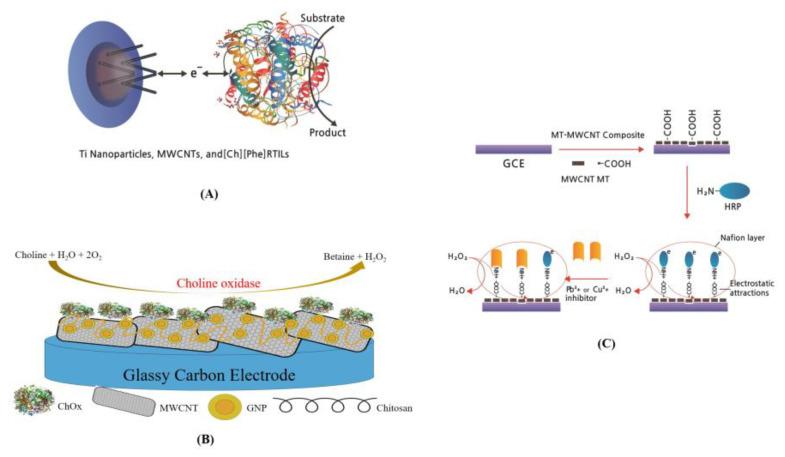
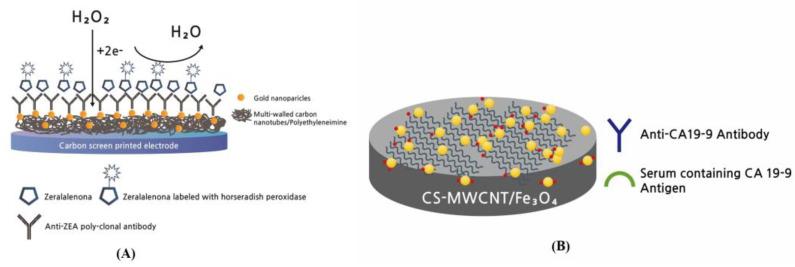
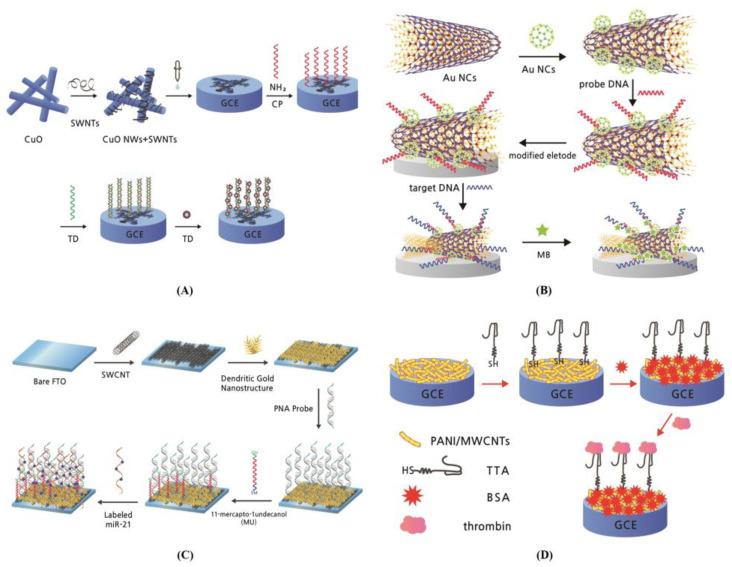
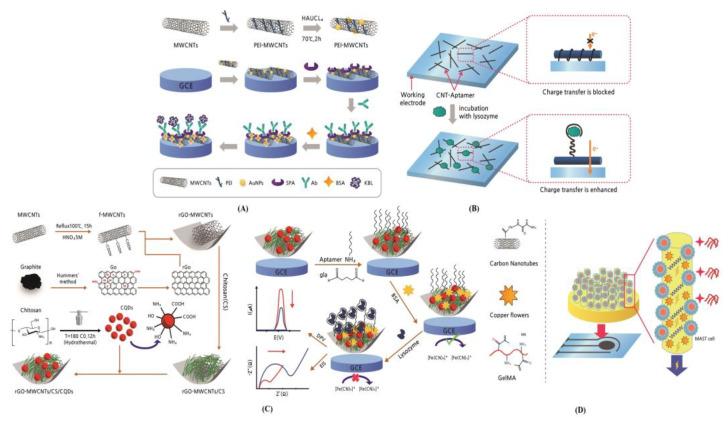
High-sensitivity sensors applied in various diagnostic systems are considered to be a promising technology in the era of the fourth industrial revolution. Biosensors that can quickly detect the presence and concentration of specific biomaterials are receiving research attention owing to the breakthroughs in detection technology. In particular, the latest technologies involving the miniaturization of biosensors using nanomaterials, such as nanowires, carbon nanotubes, and nanometals, have been widely studied. Nano-sized biosensors applied in food assessment and in in vivo measurements have the advantages of rapid diagnosis, high sensitivity and selectivity. Nanomaterial-based biosensors are inexpensive and can be applied to various fields. In the present society, where people are paying attention to health and wellness, high-technology food assessment is becoming essential as the consumer demand for healthy food increases. Thus, biosensor technology is required in the food and medical fields. Carbon nanotubes (CNTs) are widely studied for use in electrochemical biosensors. The sensitive electrical characteristics of CNTs allow them to act as electron transfer mediators in electrochemical biosensors. CNT-based biosensors require novel technologies for immobilizing CNTs on electrodes, such as silicon wafers, to use as biosensor templates. CNT-based electrochemical biosensors that serve as field-effect transistors (FET) increase sensitivity. In this review, we critically discuss the recent advances in CNT-based electrochemical biosensors applied with various receptors (antibodies, DNA fragments, and other nanomaterials) for food evaluation, including pathogens, food allergens, and other food-based substances.
应用于各种诊断系统的高灵敏度传感器被认为是第四次工业革命时代的一项有前途的技术。由于检测技术的突破,能够快速检测特定生物材料存在和浓度的生物传感器受到了研究关注。特别是,使用纳米材料(如纳米线、碳纳米管和纳米金属)将生物传感器小型化的最新技术得到了广泛研究。应用于食品评估和体内测量的纳米级生物传感器具有快速诊断、高灵敏度和选择性的优点。基于纳米材料的生物传感器价格低廉,可应用于各个领域。在当今社会,人们关注健康和保健,随着对健康食品需求的增加,高科技食品评估变得必不可少。因此,生物传感器技术在食品和医疗领域都有需求。
碳纳米管(CNT)因其在电化学生物传感器中的敏感电特性而被广泛研究。碳纳米管作为电子转移介质在电化学生物传感器中发挥作用。基于 CNT 的生物传感器需要将 CNT 固定在电极(如硅片)上的新技术,以用作生物传感器模板。基于 CNT 的电化学生物传感器作为场效应晶体管(FET)可提高灵敏度。在这篇综述中,我们批判性地讨论了最近在基于 CNT 的电化学生物传感器方面的进展,这些传感器应用了各种受体(抗体、DNA 片段和其他纳米材料)用于食品评估,包括病原体、食物过敏原和其他基于食品的物质。


 Zotero 插件