
基于代谢组学的降脂治疗研究:机遇与挑战。
Pharmacometabolomics for the Study of Lipid-Lowering Therapies: Opportunities and Challenges.
机构信息
Monzino Cardiologic Center, IRCCS, 20138 Milan, Italy.
Division of Pharmacy, IEO European Institute of Oncology IRCCS, 20141 Milan, Italy.
出版信息
Int J Mol Sci. 2023 Feb 7;24(4):3291. doi: 10.3390/ijms24043291.
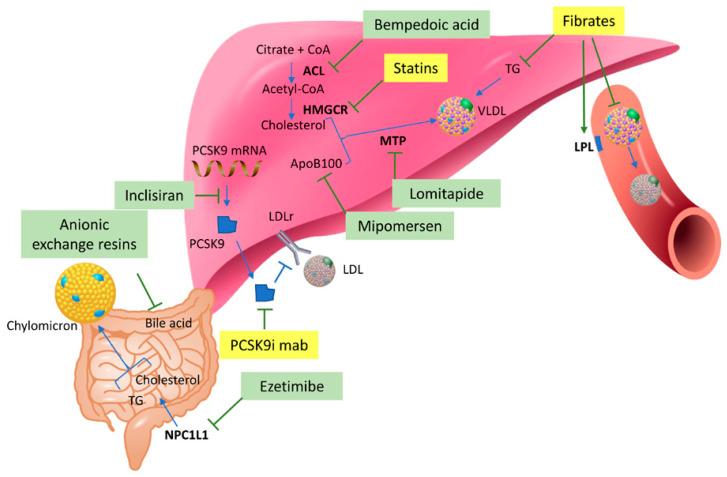
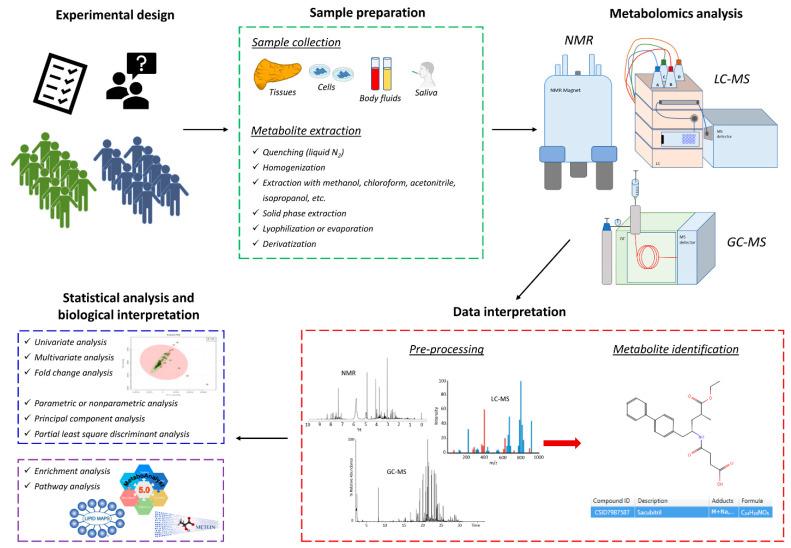
Lipid-lowering therapies are widely used to prevent the development of atherosclerotic cardiovascular disease (ASCVD) and related mortality worldwide. "Omics" technologies have been successfully applied in recent decades to investigate the mechanisms of action of these drugs, their pleiotropic effects, and their side effects, aiming to identify novel targets for future personalized medicine with an improvement of the efficacy and safety associated with the treatment. Pharmacometabolomics is a branch of metabolomics that is focused on the study of drug effects on metabolic pathways that are implicated in the variation of response to the treatment considering also the influences from a specific disease, environment, and concomitant pharmacological therapies. In this review, we summarized the most significant metabolomic studies on the effects of lipid-lowering therapies, including the most commonly used statins and fibrates to novel drugs or nutraceutical approaches. The integration of pharmacometabolomics data with the information obtained from the other "omics" approaches could help in the comprehension of the biological mechanisms underlying the use of lipid-lowering drugs in view of defining a precision medicine to improve the efficacy and reduce the side effects associated with the treatment.
降脂治疗被广泛用于预防世界各地动脉粥样硬化性心血管疾病(ASCVD)及其相关死亡率的发生。“组学”技术在最近几十年中被成功应用于研究这些药物的作用机制、其多效性效应及其副作用,旨在确定新的靶点,以实现未来的个性化药物治疗,提高与治疗相关的疗效和安全性。临床代谢组学是代谢组学的一个分支,主要关注药物对代谢途径的影响,这些代谢途径与治疗反应的变化有关,同时还考虑到特定疾病、环境和伴随的药物治疗的影响。在这篇综述中,我们总结了降脂治疗影响的最显著的代谢组学研究,包括最常用的他汀类药物和贝特类药物,以及新型药物或营养药物方法。将临床代谢组学数据与从其他“组学”方法获得的信息整合,可以帮助我们理解降脂药物使用的生物学机制,从而确定精准医学方法来提高疗效,降低与治疗相关的副作用。
 Zotero 插件