
全基因组鉴定ERF转录因子家族用于结构分析、表达模式及对干旱胁迫的响应研究(.中未明确植物名称,此处翻译不完整)
Genome-Wide Identification of the ERF Transcription Factor Family for Structure Analysis, Expression Pattern, and Response to Drought Stress in .
作者信息
Zeng Dong, Dai Li-Juan, Li Xiang, Li Wei, Qu Guan-Zheng, Li Shuang
机构信息
State Key Laboratory of Tree Genetics and Breeding, Northeast Forestry University, Harbin 150040, China.
School of Agriculture, Ningxia University, Yinchuan 750021, China.
出版信息
Int J Mol Sci. 2023 Feb 12;24(4):3697. doi: 10.3390/ijms24043697.
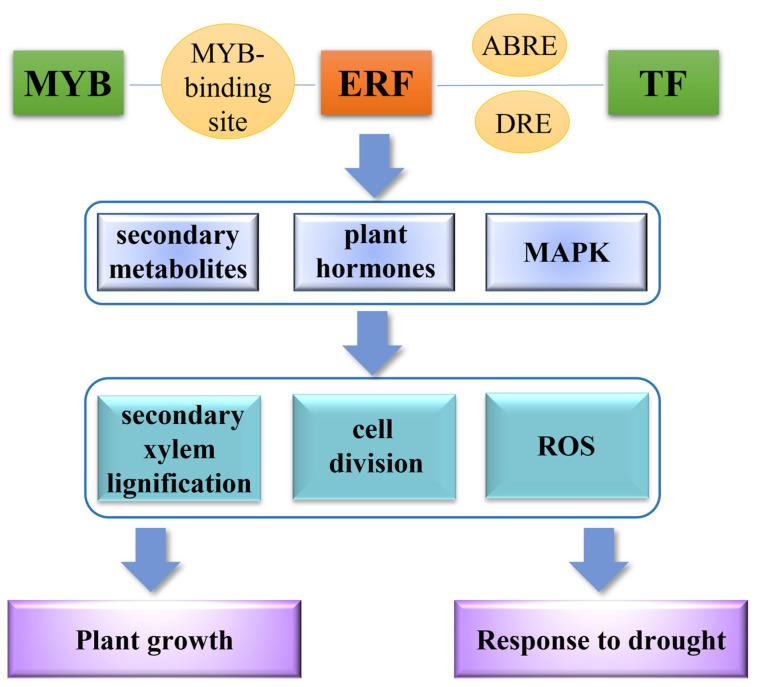
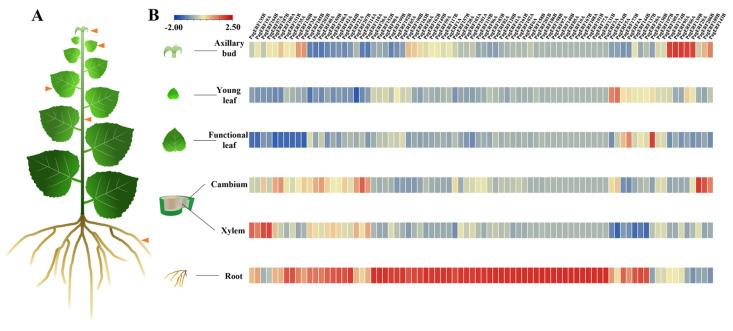
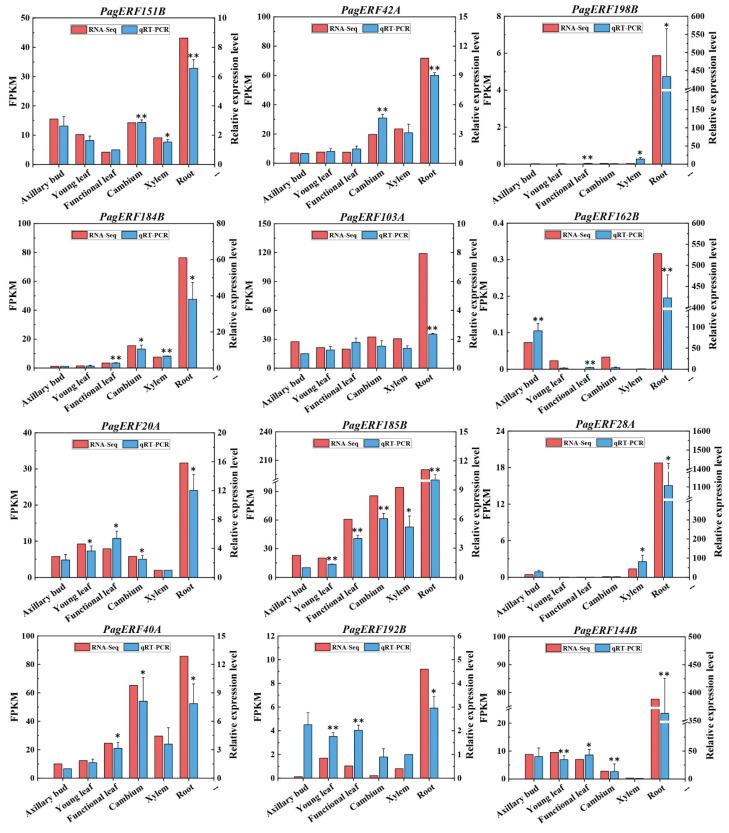
The Ethylene Responsive Factor (ERF) transcription factor family is important for regulating plant growth and stress responses. Although the expression patterns of ERF family members have been reported in many plant species, their role in , an important model plant for forest research, remains unclear. In this study, we identified 209 PagERF transcription factors by analyzing the genome. We analyzed their amino acid sequences, molecular weight, theoretical pI (Isoelectric point), instability index, aliphatic index, grand average of hydropathicity, and subcellular localization. Most PagERFs were predicted to localize in the nucleus, with only a few PagERFs localized in the cytoplasm and nucleus. Phylogenetic analysis divided the PagERF proteins into ten groups, Class I to X, with those belonging to the same group containing similar motifs. Cis-acting elements associated with plant hormones, abiotic stress responses, and MYB binding sites were analyzed in the promoters of genes. We used transcriptome data to analyze the expression patterns of genes in different tissues of , including axillary buds, young leaves, functional leaves, cambium, xylem, and roots, and the results indicated that genes are expressed in all tissues of , especially in roots. Quantitative verification results were consistent with transcriptome data. When seedlings were treated with 6% polyethylene glycol 6000 (PEG6000), the results of RT-qRCR showed that nine genes responded to drought stress in various tissues. This study provides a new perspective on the roles of PagERF family members in regulating plant growth and development, and responses to stress in . Our study provides a theoretical basis for ERF family research in the future.
乙烯响应因子(ERF)转录因子家族对于调控植物生长和胁迫反应至关重要。尽管在许多植物物种中都报道了ERF家族成员的表达模式,但它们在杨树(森林研究的重要模式植物)中的作用仍不清楚。在本研究中,我们通过分析杨树基因组鉴定出209个PagERF转录因子。我们分析了它们的氨基酸序列、分子量、理论等电点、不稳定指数、脂肪族指数、亲水性总平均值以及亚细胞定位。大多数PagERFs被预测定位于细胞核,只有少数PagERFs定位于细胞质和细胞核。系统发育分析将PagERF蛋白分为十组,即I类至X类,同一组中的蛋白含有相似的基序。在PagERF基因的启动子中分析了与植物激素、非生物胁迫反应和MYB结合位点相关的顺式作用元件。我们利用转录组数据分析了PagERF基因在杨树不同组织(包括腋芽、幼叶、功能叶、形成层、木质部和根)中的表达模式,结果表明PagERF基因在杨树的所有组织中均有表达,尤其是在根中。定量验证结果与转录组数据一致。当用6%聚乙二醇6000(PEG6000)处理杨树幼苗时,RT-qRCR结果表明九个PagERF基因在不同组织中对干旱胁迫有响应。本研究为PagERF家族成员在调控杨树生长发育和胁迫反应中的作用提供了新的视角。我们的研究为未来ERF家族的研究提供了理论基础。



 Zotero 插件