
黏膜感染中固有淋巴细胞的可塑性
Innate Lymphoid Cell Plasticity in Mucosal Infections.
作者信息
Korchagina Anna A, Koroleva Ekaterina, Tumanov Alexei V
机构信息
Department of Microbiology, Immunology and Molecular Genetics, University of Texas Health Science Center at San Antonio, 7703 Floyd Curl Dr., San Antonio, TX 78229, USA.
出版信息
Microorganisms. 2023 Feb 12;11(2):461. doi: 10.3390/microorganisms11020461.
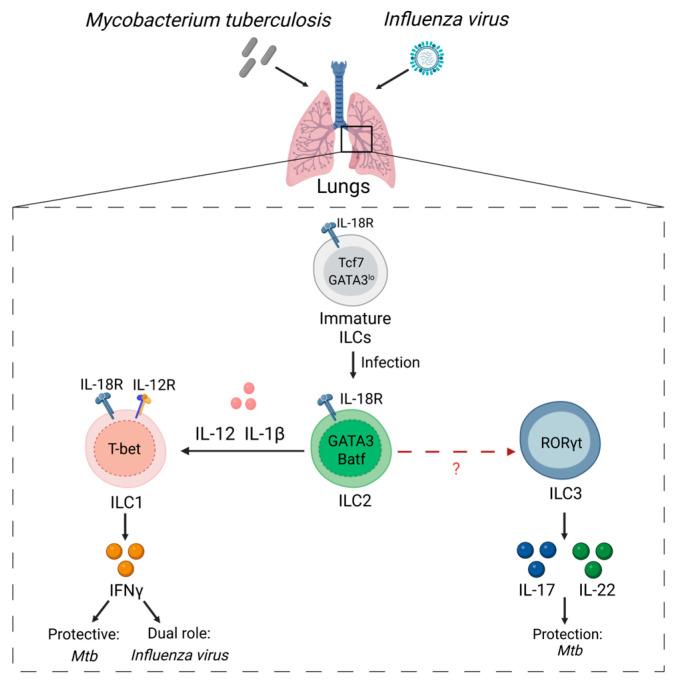
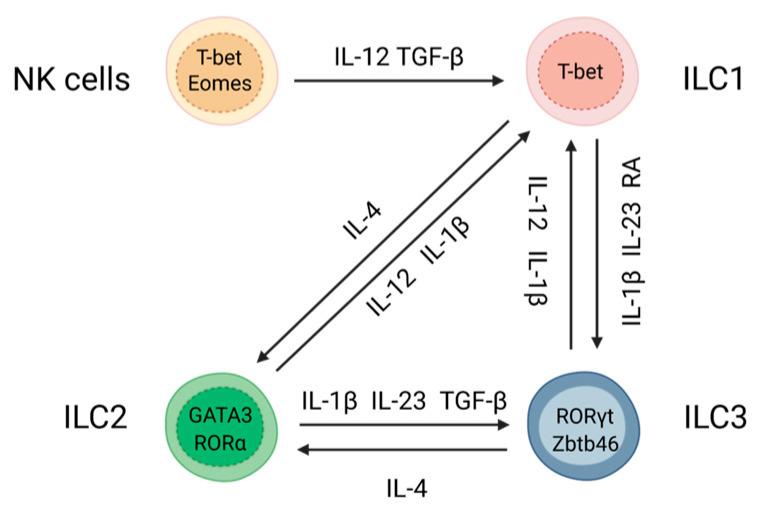
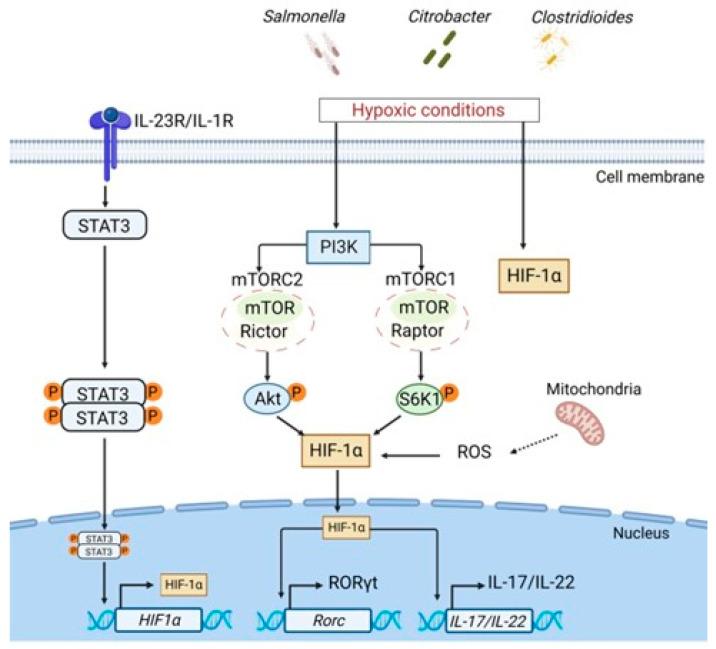
Mucosal tissue homeostasis is a dynamic process that involves multiple mechanisms including regulation of innate lymphoid cells (ILCs). ILCs are mostly tissue-resident cells which are critical for tissue homeostasis and immune response against pathogens. ILCs can sense environmental changes and rapidly respond by producing effector cytokines to limit pathogen spread and initiate tissue recovery. However, dysregulation of ILCs can also lead to immunopathology. Accumulating evidence suggests that ILCs are dynamic population that can change their phenotype and functions under rapidly changing tissue microenvironment. However, the significance of ILC plasticity in response to pathogens remains poorly understood. Therefore, in this review, we discuss recent advances in understanding the mechanisms regulating ILC plasticity in response to intestinal, respiratory and genital tract pathogens. Key transcription factors and lineage-guiding cytokines regulate this plasticity. Additionally, we discuss the emerging data on the role of tissue microenvironment, gut microbiota, and hypoxia in ILC plasticity in response to mucosal pathogens. The identification of new pathways and molecular mechanisms that control functions and plasticity of ILCs could uncover more specific and effective therapeutic targets for infectious and autoimmune diseases where ILCs become dysregulated.
黏膜组织稳态是一个动态过程,涉及多种机制,包括对固有淋巴细胞(ILCs)的调节。ILCs大多是组织驻留细胞,对组织稳态和针对病原体的免疫反应至关重要。ILCs能够感知环境变化,并通过产生效应细胞因子迅速做出反应,以限制病原体传播并启动组织修复。然而,ILCs的失调也会导致免疫病理。越来越多的证据表明,ILCs是一个动态群体,在快速变化的组织微环境中可改变其表型和功能。然而,ILCs可塑性在应对病原体方面的重要性仍知之甚少。因此,在本综述中,我们讨论了在理解调节ILCs对肠道、呼吸道和生殖道病原体反应的可塑性机制方面的最新进展。关键转录因子和谱系导向细胞因子调节这种可塑性。此外,我们还讨论了关于组织微环境、肠道微生物群和缺氧在ILCs对黏膜病原体反应的可塑性中的作用的新数据。确定控制ILCs功能和可塑性的新途径和分子机制,可能会为ILCs失调的感染性和自身免疫性疾病发现更具特异性和有效性的治疗靶点。


 Zotero 插件