
2019年冠状病毒病大流行对头颈癌确诊患者癌症分期的影响。
The Effects of the COVID-19 Pandemic on Cancer Staging in Patients Diagnosed With Head and Neck Cancer.
作者信息
Mack Delanie P, Spencer Horace, Wang Kaidi, Lewis Gary D
机构信息
Medicine: Radiation Oncology, University of Arkansas for Medical Sciences, Little Rock, USA.
Biostatistics, University of Arkansas for Medical Sciences, Little Rock, USA.
出版信息
Cureus. 2023 Jan 25;15(1):e34190. doi: 10.7759/cureus.34190. eCollection 2023 Jan.
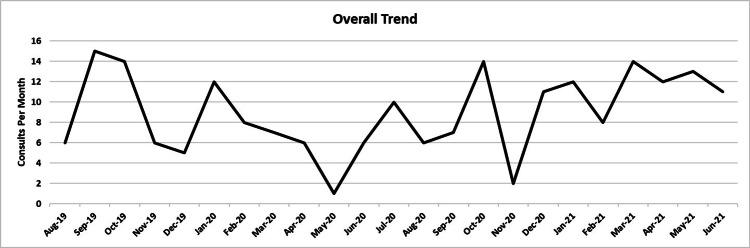
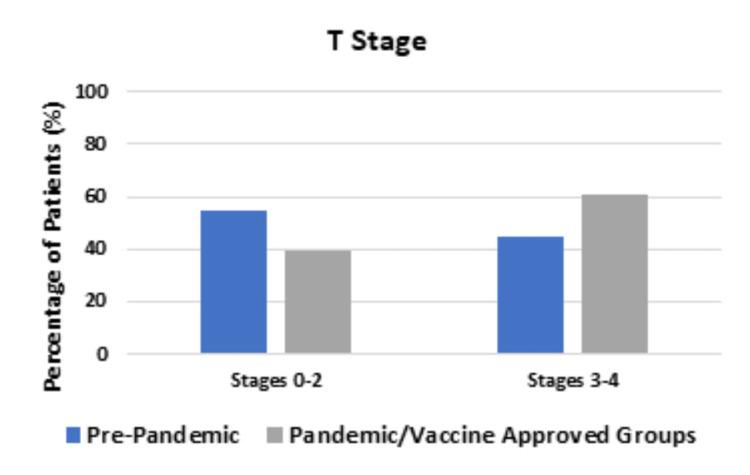
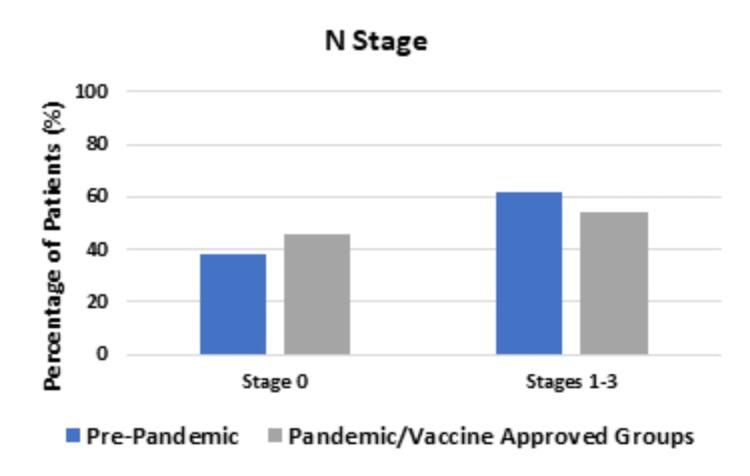
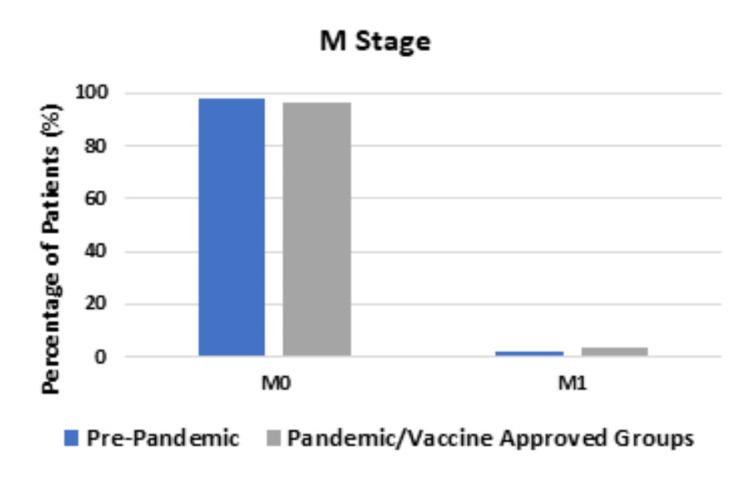
Purpose The healthcare system across the world was forced to implement new policies, guidelines, and procedures due to the coronavirus disease 2019 (COVID-19) pandemic, which led many patients to make an impossible choice about their health. For various reasons, many patients chose to remain at home and delay any interaction at medical facilities to protect themselves or others from the virus. Patients managing chronic diseases faced unprecedented challenges during this period, and the long-term effects on these patient populations remain unclear. Oncology patients, specifically those diagnosed with head and neck cancers, require prompt diagnosis and initiation of treatment for better outcomes. While the overall impact of how the pandemic has affected oncology patients is unknown, this retrospective study examined how the staging of head and neck tumors at our institution has been impacted since the beginning of the pandemic. Methods Available patient data (from August 1, 2019, through June 28, 2021) were collected from medical records and compared to determine statistical significance. Patients were categorized into a Pre-pandemic group, Pandemic group, and Vaccine-approved group, and patient and treatment characteristics were analyzed to look for patterns. The pre-pandemic period was defined as the period from August 1, 2019, to March 16, 2020, the pandemic period was defined as the period from March 17, 2020, to December 31, 2020, and the vaccine-approved period was defined as the period from January 1, 2021, to June 28, 2021. Results Fisher's exact tests were used to compare tumor, node, metastasis (TNM) staging distributions between the three groups. In the Pre-pandemic group, out of 67 patients, 33 patients (55.0%) were diagnosed with a T stage of 0-2 and 27 patients (45.0%) were diagnosed with a T stage of 3-4. In the Pandemic and Vaccine-approved groups, out of 139 patients, 50 patients (39.1%) were diagnosed with a T stage of 0-2 and 78 patients (60.9%) were diagnosed with a T stage of 3-4; these differences were statistically significant (P-value = 0.0426). The Pre-pandemic group had 25 patients (41.7%) diagnosed with a group stage of 0-2 and 35 patients (58.3%) diagnosed with a group stage of 3-4. The Pandemic and Vaccine-approved groups had 36 patients (28.1%) diagnosed with a group stage of 0-2 and 92 patients (71.9%) diagnosed with a group stage of 3-4; these results trended to statistically significant (P-value = 0.0688). Conclusions Our findings suggest that there have been a higher number of patients with head and neck cancer diagnosed with a T stage of 3 or 4 since the start of the COVID-19 pandemic. The effects of the COVID-19 pandemic are ongoing and will need further evaluation to determine the overall effects on oncology patients. Increased morbidity and mortality rates may be a potential result in the years to come.
目的 由于2019年冠状病毒病(COVID-19)大流行,全球医疗保健系统被迫实施新的政策、指南和程序,这使得许多患者在自身健康问题上做出了艰难抉择。出于各种原因,许多患者选择居家,推迟与医疗机构的任何接触,以保护自己或他人免受病毒感染。在此期间,慢性病患者面临着前所未有的挑战,而这些患者群体所受的长期影响仍不明朗。肿瘤患者,尤其是那些被诊断为头颈癌的患者,需要及时诊断并开始治疗以获得更好的治疗效果。虽然大流行对肿瘤患者的总体影响尚不清楚,但这项回顾性研究调查了自疫情开始以来我院头颈肿瘤的分期情况。
方法 收集了现有患者数据(从2019年8月1日至2021年6月28日),并从病历中提取数据进行比较,以确定统计学意义。患者被分为疫情前组、疫情组和疫苗获批组,并分析患者及治疗特征以寻找规律。疫情前期定义为2019年8月1日至2020年3月16日,疫情期定义为2020年3月17日至2020年12月31日,疫苗获批期定义为2021年1月1日至2021年6月28日。
结果 采用Fisher精确检验比较三组之间的肿瘤、淋巴结、转移(TNM)分期分布情况。在疫情前组的67例患者中,33例(55.0%)被诊断为T分期0-2期,27例(45.0%)被诊断为T分期3-4期。在疫情组和疫苗获批组的139例患者中,50例(39.1%)被诊断为T分期0-2期,78例(60.9%)被诊断为T分期3-4期;这些差异具有统计学意义(P值 = 0.0426)。疫情前组有25例(41.7%)被诊断为组分期0-2期,35例(58.3%)被诊断为组分期3-4期。疫情组和疫苗获批组有36例(28.1%)被诊断为组分期0-2期,92例(71.9%)被诊断为组分期3-4期;这些结果有统计学意义的趋势(P值 = 0.0688)。
结论 我们的研究结果表明,自COVID-19大流行开始以来,被诊断为T分期3或4期的头颈癌患者数量有所增加。COVID-19大流行的影响仍在持续,需要进一步评估以确定对肿瘤患者的总体影响。未来几年可能会出现发病率和死亡率上升的潜在结果。

 Zotero 插件