
一种微生理皮肤-肝脏-甲状腺芯片3模型的开发及其在消费者相关条件下评估局部应用化妆品成分对甲状腺激素影响的应用。
Development of a microphysiological skin-liver-thyroid Chip3 model and its application to evaluate the effects on thyroid hormones of topically applied cosmetic ingredients under consumer-relevant conditions.
作者信息
Tao Thi-Phuong, Maschmeyer Ilka, LeCluyse Edward L, Rogers Eda, Brandmair Katrin, Gerlach Silke, Przibilla Julia, Kern Fredy, Genies Camille, Jacques Carine, Najjar Abdulkarim, Schepky Andreas, Marx Uwe, Kühnl Jochen, Hewitt Nicola J
机构信息
TissUse GmbH, Berlin, Germany.
LifeNet Health, Durham, NC, United States.
出版信息
Front Pharmacol. 2023 Feb 8;14:1076254. doi: 10.3389/fphar.2023.1076254. eCollection 2023.
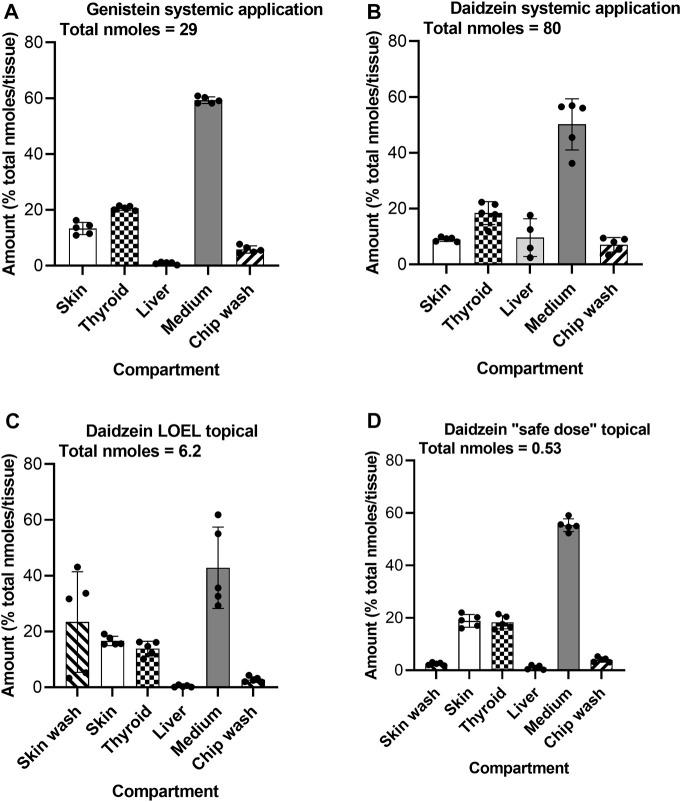
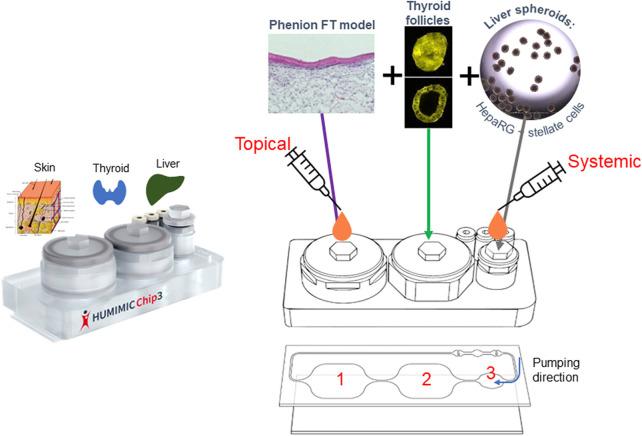
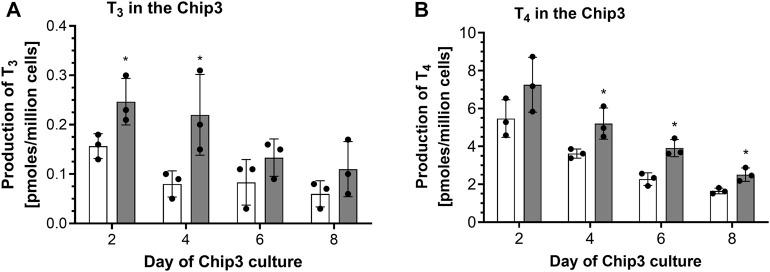
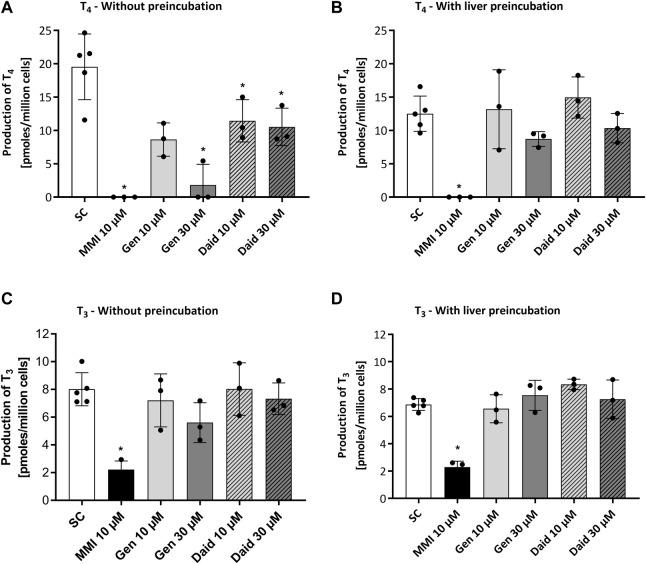
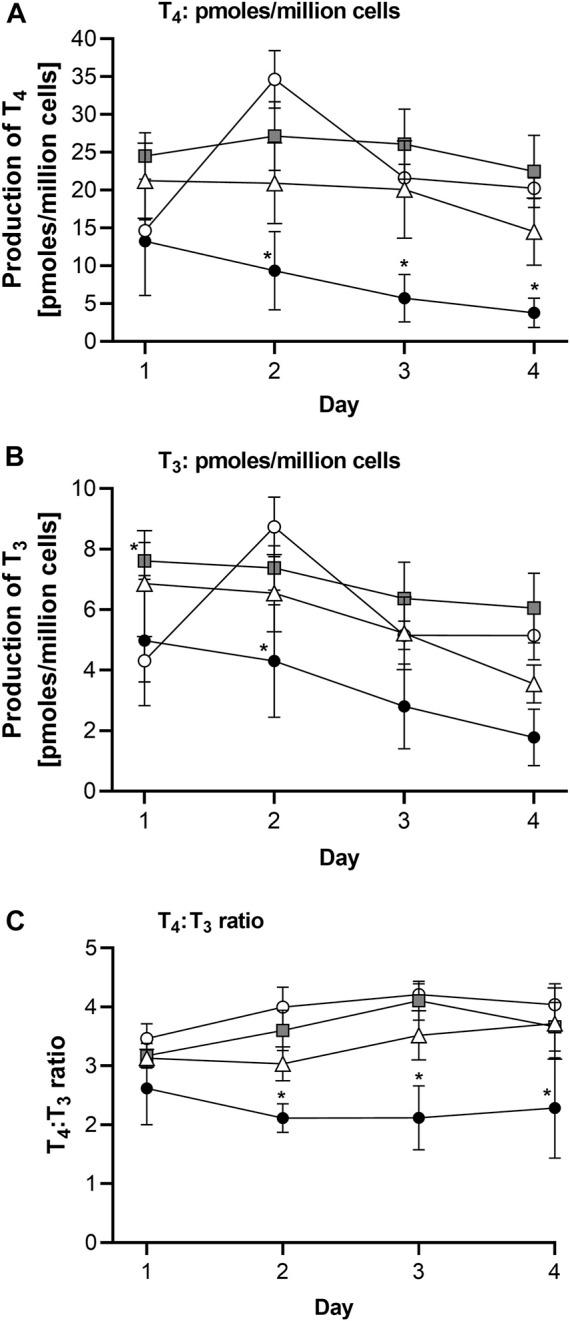
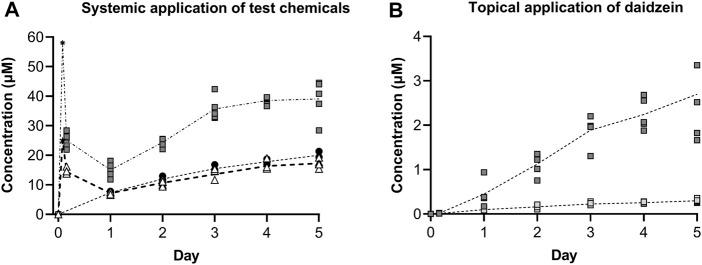
All cosmetic ingredients registered in Europe must be evaluated for their safety using non-animal methods. Microphysiological systems (MPS) offer a more complex higher tier model to evaluate chemicals. Having established a skin and liver HUMIMIC Chip2 model demonstrating how dosing scenarios impact the kinetics of chemicals, we investigated whether thyroid follicles could be incorporated to evaluate the potential of topically applied chemicals to cause endocrine disruption. This combination of models in the HUMIMIC Chip3 is new; therefore, we describe here how it was optimized using two chemicals known to inhibit thyroid production, daidzein and genistein. The MPS was comprised of Phenion Full Thickness skin, liver spheroids and thyroid follicles co-cultured in the TissUse HUMIMIC Chip3. Endocrine disruption effects were determined according to changes in thyroid hormones, thyroxine (T) and 3,3',5-triiodothyronine (T). A main part of the Chip3 model optimization was the replacement of freshly isolated thyroid follicles with thyrocyte-derived follicles. These were used in static incubations to demonstrate the inhibition of T and T production by genistein and daidzein over 4 days. Daidzein exhibited a lower inhibitory activity than genistein and both inhibitory activities were decreased after a 24 h preincubation with liver spheroids, indicating metabolism was detoxification pathways. The skin-liver-thyroid Chip3 model was used to determine a consumer-relevant exposure to daidzein present in a body lotion based on thyroid effects. A "safe dose" of 0.235 μg/cm i.e., 0.047% applied in 0.5 mg/cm of body lotion was the highest concentration of daidzein which does not result in changes in T and T levels. This concentration correlated well with the value considered safe by regulators. In conclusion, the Chip3 model enabled the incorporation of the relevant exposure route (dermal), metabolism in the skin and liver, and the bioactivity endpoint (assessment of hormonal balance i.e., thyroid effects) into a single model. These conditions are closer to those than 2D cell/tissue assays lacking metabolic function. Importantly, it also allowed the assessment of repeated doses of chemical and a direct comparison of systemic and tissue concentrations with toxicodynamic effects over time, which is more realistic and relevant for safety assessment.
在欧洲注册的所有化妆品成分都必须使用非动物方法对其安全性进行评估。微生理系统(MPS)提供了一个更复杂的高级模型来评估化学物质。在建立了皮肤和肝脏HUMIMIC Chip2模型以展示给药方案如何影响化学物质的动力学之后,我们研究了是否可以纳入甲状腺滤泡来评估局部应用化学物质导致内分泌干扰的可能性。HUMIMIC Chip3中这种模型组合是全新的;因此,我们在此描述如何使用两种已知可抑制甲状腺生成的化学物质大豆苷元和染料木黄酮对其进行优化。MPS由在TissUse HUMIMIC Chip3中共培养的Phenion全层皮肤、肝脏球体和甲状腺滤泡组成。根据甲状腺激素、甲状腺素(T)和3,3',5-三碘甲状腺原氨酸(T)的变化来确定内分泌干扰效应。Chip3模型优化的一个主要部分是用甲状腺细胞衍生的滤泡替代新鲜分离的甲状腺滤泡。这些滤泡用于静态培养,以证明染料木黄酮和大豆苷元在4天内对T和T生成的抑制作用。大豆苷元的抑制活性低于染料木黄酮,并且在与肝脏球体预孵育24小时后,两种抑制活性均降低,表明代谢是解毒途径。皮肤-肝脏-甲状腺Chip3模型用于根据甲状腺效应确定身体乳液中与消费者相关的大豆苷元暴露量。“安全剂量”为0.235μg/cm,即在0.5mg/cm的身体乳液中施加0.047%,这是大豆苷元的最高浓度,不会导致T和T水平的变化。该浓度与监管机构认为安全的值相关性良好。总之,Chip3模型能够将相关暴露途径(皮肤)、皮肤和肝脏中的代谢以及生物活性终点(激素平衡评估即甲状腺效应)纳入单一模型。这些条件比缺乏代谢功能的二维细胞/组织检测更接近实际情况。重要的是,它还允许评估化学物质的重复剂量,并直接比较全身和组织浓度与随时间的毒效学效应,这对于安全评估更现实且相关。



 Zotero 插件