
胃饥饿素受体激动剂MK0677和过夜禁食不能挽救129S1/SvImJ小鼠中缺失的恐惧消退。
Ghrelin receptor agonist MK0677 and overnight fasting do not rescue deficient fear extinction in 129S1/SvImJ mice.
作者信息
Fritz Eva Maria, Pierre Anouk, De Bundel Dimitri, Singewald Nicolas
机构信息
Department of Pharmacology and Toxicology, Institute of Pharmacy and CMBI, University of Innsbruck, Innsbruck, Austria.
Department of Pharmaceutical Sciences, Research Group Experimental Pharmacology, Center for Neurosciences (C4N), Vrije Universiteit Brussel, Brussels, Belgium.
出版信息
Front Psychiatry. 2023 Feb 9;14:1094948. doi: 10.3389/fpsyt.2023.1094948. eCollection 2023.
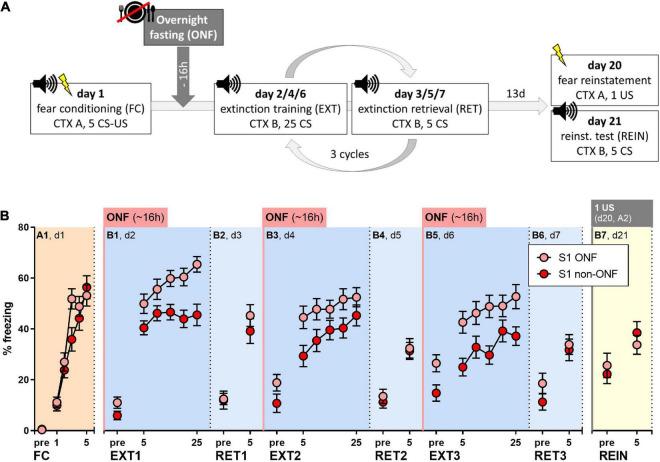
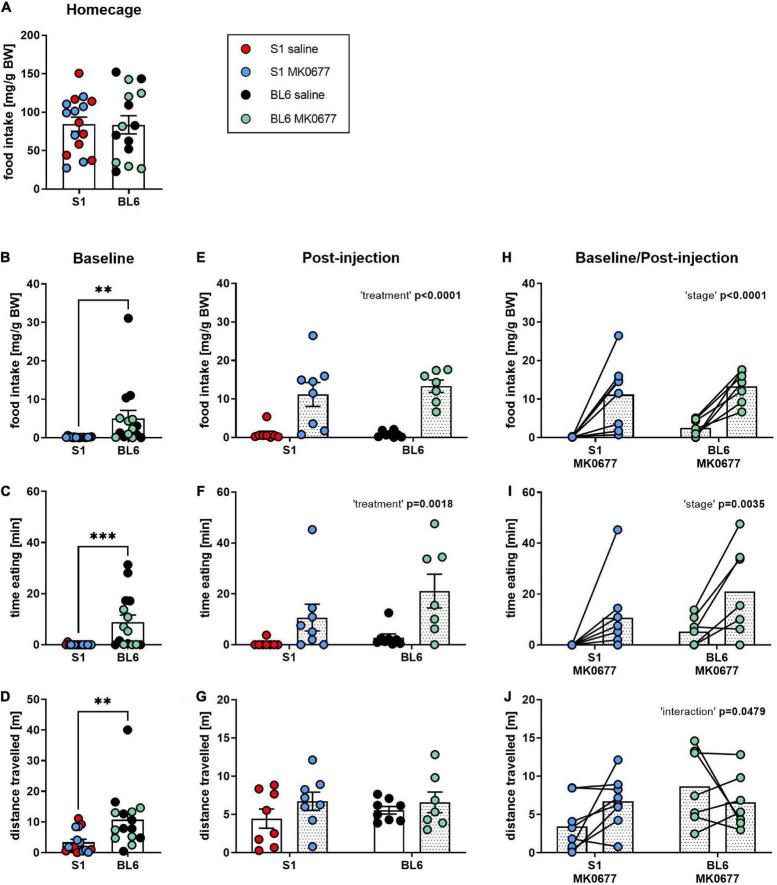
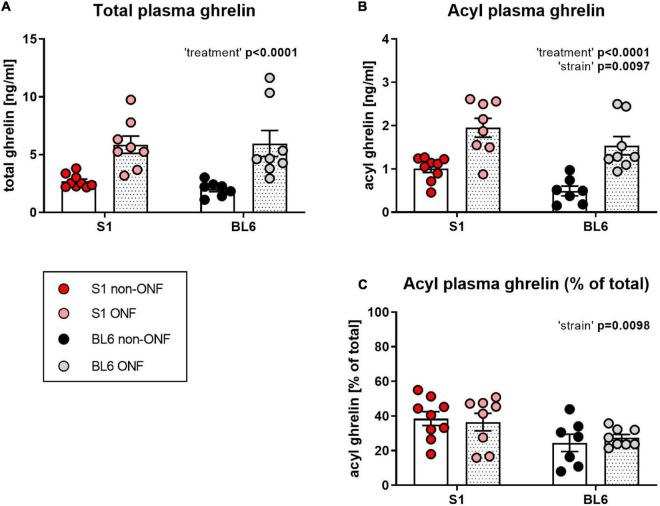
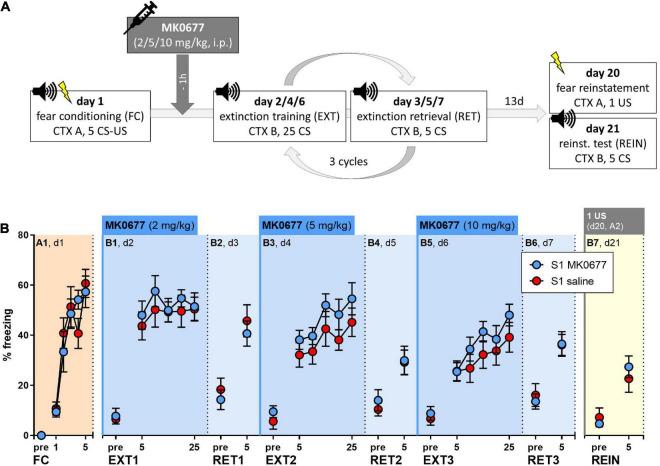
The hunger hormone ghrelin has been implicated in the modulation of anxiety- and fear-related behaviors in rodents and humans, while its dysregulation may be associated with psychiatric illness. Along these lines, the ghrelin system has been suggested as a potential target to facilitate fear extinction, which is the main mechanism underlying cognitive behavioral therapy. So far, this hypothesis has not been tested in individuals that have difficulties to extinguish fear. Thus, we investigated pharmacological (ghrelin receptor agonist MK0677) and non-pharmacological (overnight fasting) strategies to target the ghrelin system in the 129S1/SvImJ (S1) mouse strain, which models the endophenotype of impaired fear extinction that has been associated with treatment resistance in anxiety and PTSD patients. MK0677 induced food intake and overnight fasting increased plasma ghrelin levels in S1 mice, suggesting that the ghrelin system is responsive in the S1 strain. However, neither systemic administration of MK0677 nor overnight fasting had an effect on fear extinction in S1 mice. Similarly, our groups previously reported that both interventions did not attenuate fear in extinction-competent C57BL/6J mice. In summary, our findings are in contrast to several studies reporting beneficial effects of GHSR agonism and overnight fasting on fear- and anxiety-related behaviors in rodents. Rather, our data agree with accumulating evidence of divergent behavioral effects of ghrelin system activation and underscore the hypothesis that potential benefits of targeting the ghrelin system in fear extinction may be dependent on factors (e.g., previous stress exposure) that are not yet fully understood.
饥饿激素胃饥饿素已被证明与调节啮齿动物和人类的焦虑及恐惧相关行为有关,而其失调可能与精神疾病相关。据此,胃饥饿素系统被认为是促进恐惧消退的潜在靶点,恐惧消退是认知行为疗法的主要机制。到目前为止,这一假设尚未在难以消退恐惧的个体中得到验证。因此,我们研究了针对129S1/SvImJ(S1)小鼠品系胃饥饿素系统的药理学(胃饥饿素受体激动剂MK0677)和非药理学(过夜禁食)策略,该品系模拟了与焦虑症和创伤后应激障碍(PTSD)患者治疗抵抗相关的恐惧消退受损的内表型。MK0677诱导S1小鼠进食,过夜禁食可提高S1小鼠的血浆胃饥饿素水平,表明S1品系中的胃饥饿素系统有反应。然而,全身给予MK0677和过夜禁食均对S1小鼠的恐惧消退没有影响。同样,我们的团队之前报道,这两种干预措施对恐惧消退能力正常的C57BL/6J小鼠的恐惧也没有减轻作用。总之,我们的研究结果与几项报道生长激素促分泌素受体(GHSR)激动剂和过夜禁食对啮齿动物恐惧和焦虑相关行为有有益影响的研究相反。相反,我们的数据与越来越多关于胃饥饿素系统激活产生不同行为效应的证据一致,并强调了这样一种假设,即针对胃饥饿素系统促进恐惧消退的潜在益处可能取决于尚未完全了解的因素(例如,先前的应激暴露)。
 Zotero 插件