
巴基斯坦白沙瓦地区奶牛场耐多药肺炎克雷伯菌的储库及其荚膜耐药基因。
Multidrug resistant Klebsiella Pneumoniae reservoir and their capsular resistance genes in cow farms of district Peshawar, Pakistan.
机构信息
Department of Microbiology, Abdul Wali Khan University Mardan, Mardan, Pakistan.
Centre of Biotechnology and Microbiology, University of Peshawar, Peshawar, Pakistan.
出版信息
PLoS One. 2023 Feb 27;18(2):e0282245. doi: 10.1371/journal.pone.0282245. eCollection 2023.
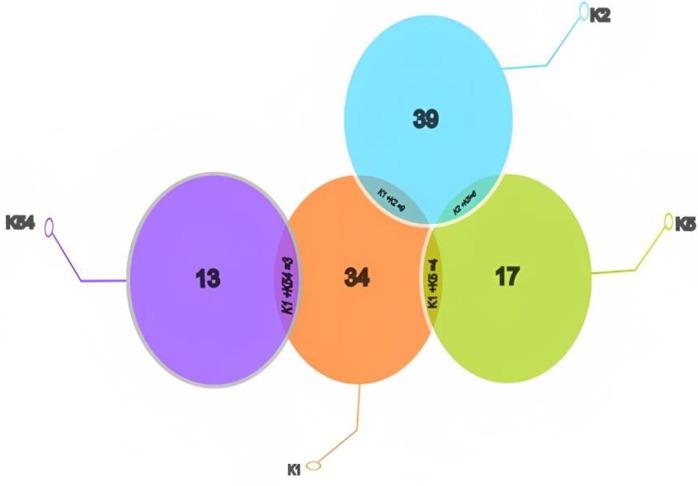
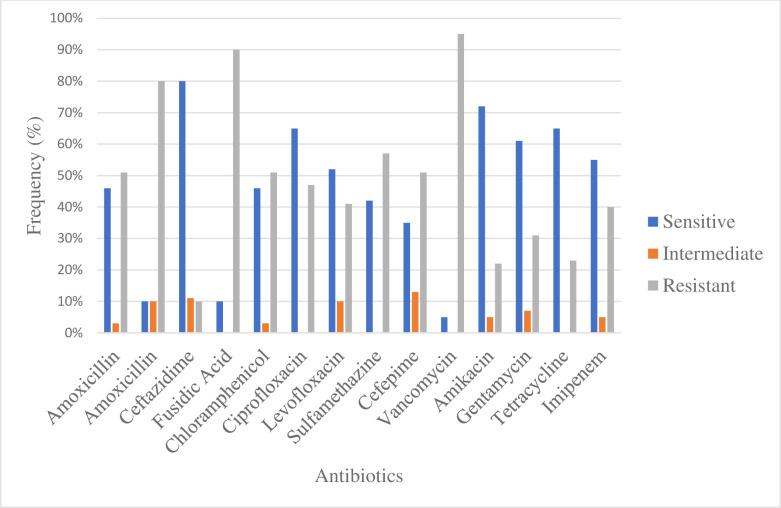
Klebsiella pneumoniae is a major zoonotic pathogen that causes a variety of severe illnesses as well as mastitis. The distribution of mastitis-causing K. Pneumoniae and its virulence factors vary by country and geographical location. The present study aimed to find out the occurrence of Multidrug-resistant (MDR) K. Pneumoniae and their capsular resistance genes which were undocumented previously in cow farms of district Peshawar, Pakistan. A total of 700 milk samples from symptomatic mastitic cows were screened for MDR K. Pneumoniae. Furthermore, the characterization of capsular resistance genes was done by molecular techniques. Among these samples, K. pneumoniae was found 180/700 (25.7%), while MDR K. pneumoniae was found 80/180 (44.4%). The antibiogram analysis revealed high resistance to Vancomycin (95%) while highly sensitive to Ceftazidime (80%). The distribution of capsular genes shows the most common serotype K2 gene 39/80 (48.7%), followed by serotype K1 gene 34/80 (42.5%), serotype K5 17/80 (21.2%), and serotype K54 13/80 (16.2), respectively. Moreover, the co-occurrence of serotypes K1+K2 was found at 11.25%, KI+K5 was 05%, K1+K54 was 3.75%, and K2+K5 was 7.5%, respectively. A statistically significant association (p ≤ 0.05) was found between predicted and discovered K. pneumoniae values. In conclusion, the presence of MDR K. pneumoniae in combination with capsular genes may be a possible threat to dairy farm animals and humans in Peshawar, Pakistan. It may give us special attention to follow up on hygienic practices in livestock management.
肺炎克雷伯菌是一种主要的人畜共患病病原体,可导致多种严重疾病和乳腺炎。引起乳腺炎的肺炎克雷伯菌及其毒力因子的分布因国家和地理位置而异。本研究旨在了解巴基斯坦白沙瓦地区奶牛场以前未记录过的多药耐药(MDR)肺炎克雷伯菌及其荚膜耐药基因的发生情况。对 700 份有症状乳腺炎奶牛的牛奶样本进行 MDR 肺炎克雷伯菌筛查。此外,还通过分子技术对荚膜耐药基因进行了特征分析。在这些样本中,发现肺炎克雷伯菌 180/700(25.7%),而 MDR 肺炎克雷伯菌 80/180(44.4%)。药敏分析显示对万古霉素高度耐药(95%),而对头孢他啶高度敏感(80%)。荚膜基因的分布显示最常见的血清型 K2 基因 39/80(48.7%),其次是血清型 K1 基因 34/80(42.5%)、血清型 K5 基因 17/80(21.2%)和血清型 K54 基因 13/80(16.2%)。此外,还发现血清型 K1+K2 共存率为 11.25%,KI+K5 为 0.5%,K1+K54 为 3.75%,K2+K5 为 7.5%。预测值和发现值之间存在统计学显著关联(p≤0.05)。综上所述,MDR 肺炎克雷伯菌与荚膜基因的存在可能对巴基斯坦白沙瓦地区的奶牛场动物和人类构成威胁。这可能会引起我们对牲畜管理中卫生实践的特别关注。
 Zotero 插件