
西罗莫司在特发性肺纤维化的随机对照交叉试验中抑制循环成纤维细胞。
Sirolimus suppresses circulating fibrocytes in idiopathic pulmonary fibrosis in a randomized controlled crossover trial.
机构信息
Division of Pulmonary, Critical Care, and Sleep Medicine, University of Florida, Gainesville, Florida, USA.
Department of Medicine, University of Virginia School of Medicine, Charlottesville, Virginia, USA.
出版信息
JCI Insight. 2023 Apr 24;8(8):e166901. doi: 10.1172/jci.insight.166901.
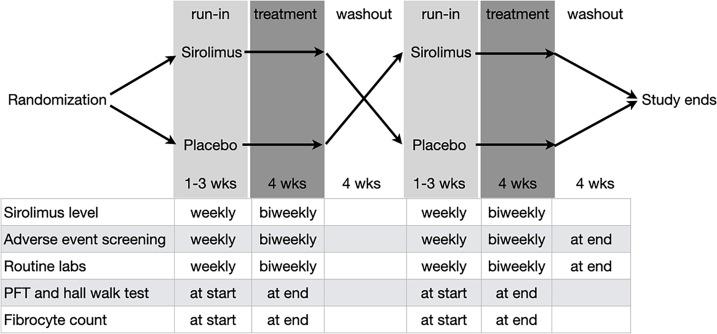
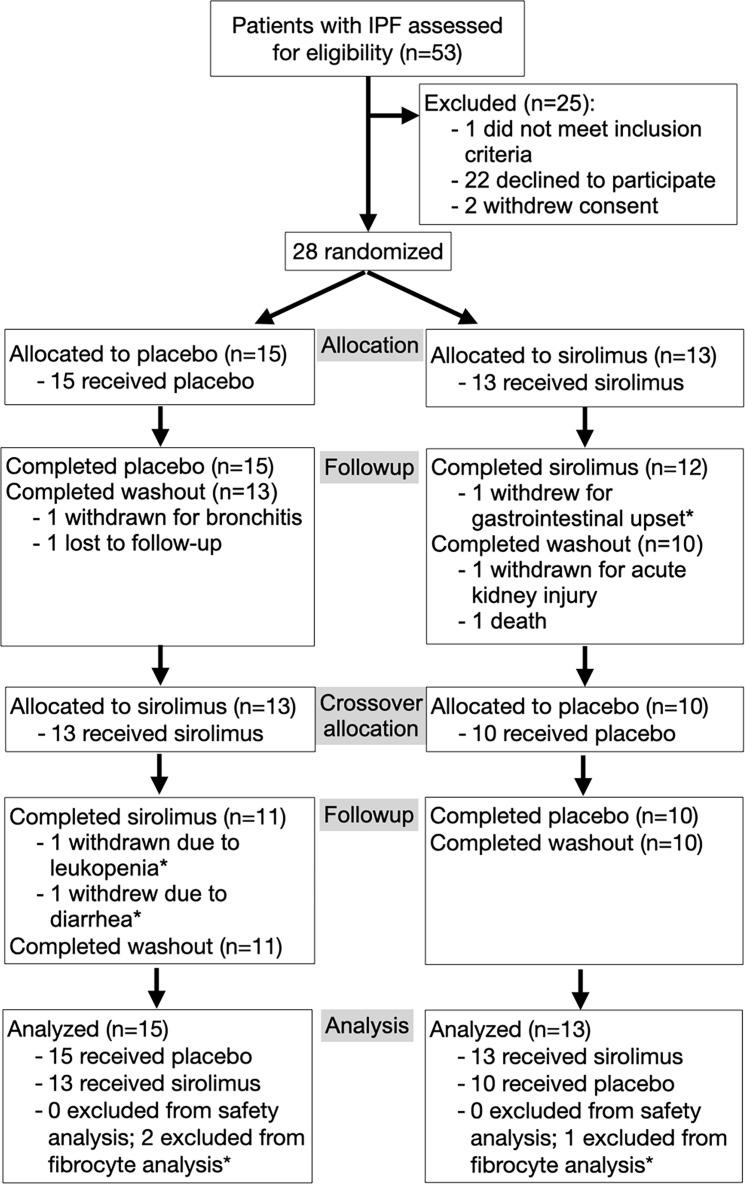
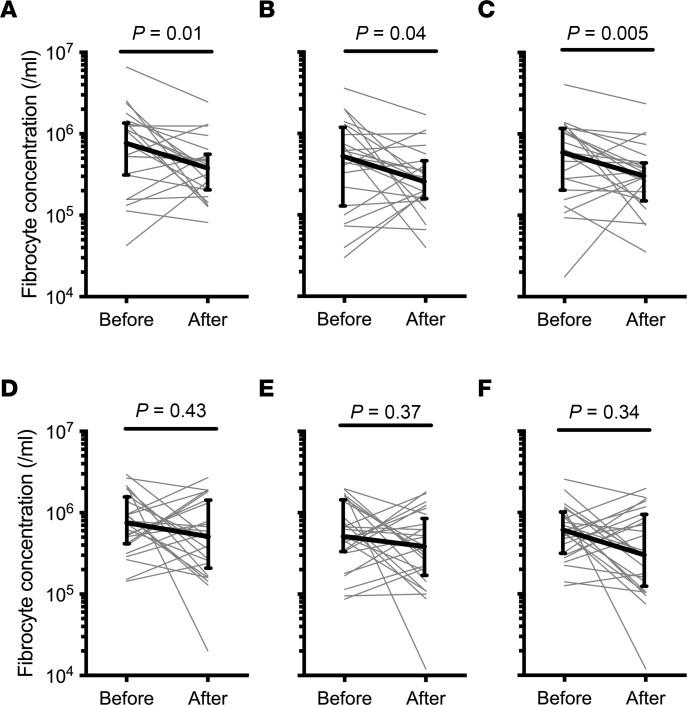
BACKGROUNDFibrocytes are BM-derived circulating cells that traffic to the injured lungs and contribute to fibrogenesis. The mTOR inhibitor, sirolimus, inhibits fibrocyte CXCR4 expression, reducing fibrocyte traffic and attenuating lung fibrosis in animal models. We sought to test the hypothesis that short-term treatment with sirolimus reduces the concentration of CXCR4+ circulating fibrocytes in patients with idiopathic pulmonary fibrosis (IPF).METHODSWe conducted a short-term randomized double-blind placebo-controlled crossover pilot trial to assess the safety and tolerability of sirolimus in IPF. Participants were randomly assigned to sirolimus or placebo for approximately 6 weeks, and after a 4-week washout, they were assigned to the alternate treatment. Toxicity, lung function, and the concentration of circulating fibrocytes were measured before and after each treatment.RESULTSIn the 28 study participants, sirolimus resulted in a statistically significant 35% decline in the concentration of total fibrocytes, 34% decline in CXCR4+ fibrocytes, and 42% decline in fibrocytes expressing α-smooth muscle actin, but no significant change in these populations occurred on placebo. Respiratory adverse events occurred more frequently during treatment with placebo than sirolimus; the incidence of adverse events and drug tolerability did not otherwise differ during therapy with drug and placebo. Lung function was unaffected by either treatment, with the exception of a small decline in gas transfer during treatment with placebo.CONCLUSIONAs compared with placebo, short-term treatment with sirolimus resulted in reduction of circulating fibrocyte concentrations in participants with IPF, with an acceptable safety profile.TRIAL REGISTRATIONClinicalTrials.gov, accession no. NCT01462006.FUNDINGNIH R01HL098329 and American Heart Association 18TPA34170486.
背景
纤维细胞是骨髓来源的循环细胞,它们迁移到受损的肺部并促进纤维化形成。雷帕霉素是一种 mTOR 抑制剂,可抑制纤维细胞的 CXCR4 表达,减少纤维细胞的迁移,并在动物模型中减轻肺纤维化。我们试图验证这样一个假设,即短期使用雷帕霉素可降低特发性肺纤维化(IPF)患者循环纤维细胞中 CXCR4+的浓度。
方法
我们进行了一项短期、随机、双盲、安慰剂对照的交叉试验,以评估雷帕霉素在 IPF 中的安全性和耐受性。参与者被随机分配接受雷帕霉素或安慰剂治疗约 6 周,然后在 4 周洗脱期后,他们被分配接受交替治疗。在每次治疗前后测量毒性、肺功能和循环纤维细胞的浓度。
结果
在 28 名研究参与者中,雷帕霉素可使总纤维细胞浓度显著下降 35%,CXCR4+纤维细胞下降 34%,α-平滑肌肌动蛋白表达的纤维细胞下降 42%,而安慰剂组则没有显著变化。与雷帕霉素相比,安慰剂治疗期间更频繁地出现呼吸不良事件;在药物和安慰剂治疗期间,不良事件的发生率和药物耐受性没有其他差异。除了在安慰剂治疗期间气体转移略有下降外,两种治疗方法均未影响肺功能。
结论
与安慰剂相比,短期使用雷帕霉素可降低 IPF 患者循环纤维细胞的浓度,且安全性良好。
试验注册
ClinicalTrials.gov,注册号 NCT01462006。
资金来源
美国国立卫生研究院 R01HL098329 和美国心脏协会 18TPA34170486。

 Zotero 插件