
绿色食品供应链管理作为缓解食品供应链管理风险以提高环境健康水平的一种解决方案。
Green food supply chain management as a solution for the mitigation of food supply chain management risk for improving the environmental health level.
作者信息
El Ayoubi Mohamad Saad, Radmehr Mehrshad
机构信息
Cyprus International University (CIU)/Institute of Graduate Studies and Research, Faculty of Economics and Administrative Science, Cyprus International University, Nicosia, North Cyprus, via Mersin 10, Turkey.
Cyprus International University, Faculty of Economics and Administrative Science, Nicosia, North Cyprus, via Mersin 10, Turkey.
出版信息
Heliyon. 2023 Feb 14;9(2):e13264. doi: 10.1016/j.heliyon.2023.e13264. eCollection 2023 Feb.
PURPOSE
In the context of the food industry, this research investigates the impact of green supply chain management (GSCM) on environmental health. This helps the practitioners and policy makers in mitigation of the supply chain (SC) risks and enhance the environmental health level.
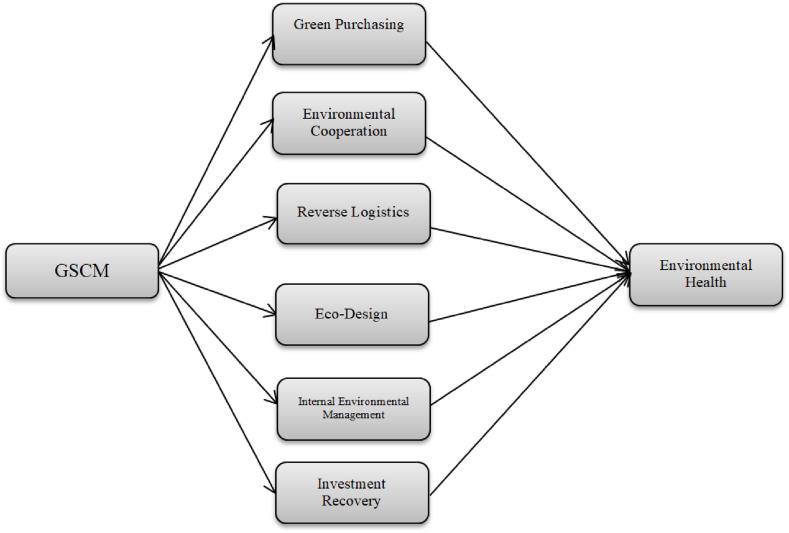
DESIGN/METHODOLOGY/APPROACH: The study's model was structured using GSC risk factors of green purchasing, environmental cooperation, reverse logistics, eco design, internal environmental management, and investment recovery. A questionnaire-based survey was used to examine the proposed model; 102 data from the senior managers of food firms in Lebanon were collected. Using SPSS and AMOS statistical software, an exploratory factor analysis (EFA), a confirmatory factor analysis (CFA), and multiple regressions have been applied.
FINDINGS
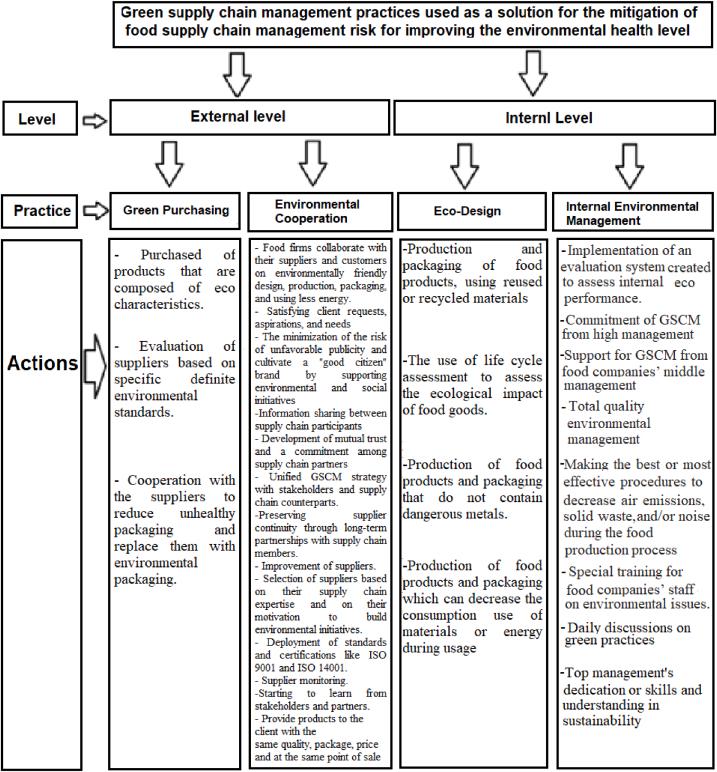
The outcome of structural equation modeling (SEM) revealed that four of six GSC risk factors were significantly related to environmental health. The study findings can be applied to the external level through many green practices in cooperation with suppliers and customers like the collaboration with them on environmentally friendly design, purchasing, production, packaging and using less energy. This can increase the level of environmental health by decreasing the impact of SCM risks. Regarding the internal level, many procedures and decisions may lead to an environmentally friendly ambience in the firms like the commitment of GSCM practices from the management and the implementation of internal eco-performance evaluation system. This may enhance the environmental health provisions by setting up an action plan to mitigate the GSC risk and address the sustainable health objectives.
ORIGINALITY
The paper's distinctiveness comes from the fact that it fills a gap in the literature regarding the few numbers of studies that treat the green supply chain management GSCM as mitigation solution for the risks of SCM. In addition, there were no studies explain the relationship between GSCM and environmental health; this will be the first time the assess the impacts of GSCM practices on environmental health in the food industry.
目的
在食品行业背景下,本研究调查绿色供应链管理(GSCM)对环境健康的影响。这有助于从业者和政策制定者减轻供应链(SC)风险并提高环境健康水平。
设计/方法/途径:该研究模型基于绿色采购、环境合作、逆向物流、生态设计、内部环境管理和投资回收等绿色供应链风险因素构建。采用问卷调查来检验所提出的模型;收集了来自黎巴嫩食品公司高级管理人员的102份数据。使用SPSS和AMOS统计软件进行了探索性因素分析(EFA)、验证性因素分析(CFA)和多元回归分析。
研究结果
结构方程模型(SEM)的结果表明,六个绿色供应链风险因素中的四个与环境健康显著相关。研究结果可通过与供应商和客户合作开展的许多绿色实践应用于外部层面,如在环保设计、采购、生产、包装和减少能源使用方面与他们合作。这可以通过降低供应链管理风险的影响来提高环境健康水平。在内部层面,许多程序和决策可能会在企业中营造出环保氛围,比如管理层对绿色供应链管理实践的承诺以及内部生态绩效评估系统的实施。这可以通过制定减轻绿色供应链风险和实现可持续健康目标的行动计划来加强环境健康保障。
创新性
本文的独特之处在于,它填补了文献中关于将绿色供应链管理(GSCM)作为供应链管理风险缓解解决方案的研究数量较少的空白。此外,此前没有研究解释绿色供应链管理与环境健康之间的关系;这将是首次评估绿色供应链管理实践对食品行业环境健康的影响。

 Zotero 插件