
大麻二酚可改善氟哌啶醇诱导的斑马鱼运动功能障碍:与多巴胺激活药物的比较研究。
Cannabidiol improves haloperidol-induced motor dysfunction in zebrafish: a comparative study with a dopamine activating drug.
作者信息
Hasumi Akihiro, Maeda Hideyuki
机构信息
Department of Forensic Medicine, Tokyo Medical University, 6-1-1 Shinjuku Shinjuku-ku, Tokyo, 160-8402, Japan.
出版信息
J Cannabis Res. 2023 Mar 4;5(1):6. doi: 10.1186/s42238-023-00177-w.
BACKGROUND
Cannabidiol (CBD) extracted from the cannabis plant is believed to have a medicinal value due to its neuroprotective effect via anti-inflammatory and antioxidant action. Recent behavioral studies in rats have reported that CBD mediates serotonin (5-HT1A) receptor action to improve motor dysfunction induced by dopamine (D2) receptor blockade. In particular, its effect on D2 receptor blockade in the striatum is an important function associated with neurological disorders resulting from various extrapyramidal motor dysfunctions. Dopaminergic neurodegeneration associated with this site is known for inducing Parkinson's disease (PD), which often affects the elderly. It is also known to cause drug-induced Parkinsonism. This study examines the ameliorating effect of CBD, which does not act directly on D2 receptors, against drug-induced motor dysfunction induced by the antipsychotic drug (haloperidol).
METHODS
We created a drug-induced Parkinsonism model in zebrafish larvae using an antipsychotic drug (haloperidol). We evaluated the distance traveled and repetitive light-stimulation response. Furthermore, we examined whether administration of several concentrations of CBD ameliorates symptoms of the Parkinsonism model and compared its effects with those of antiparkinsonian drug ropinirole.
RESULTS
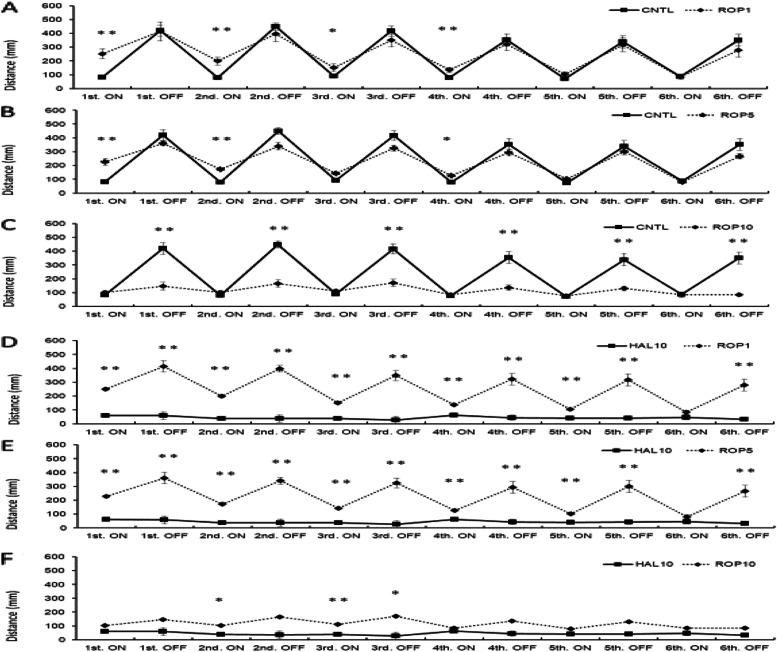
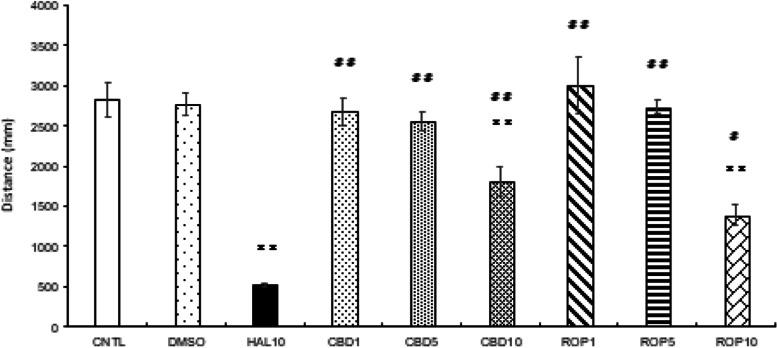
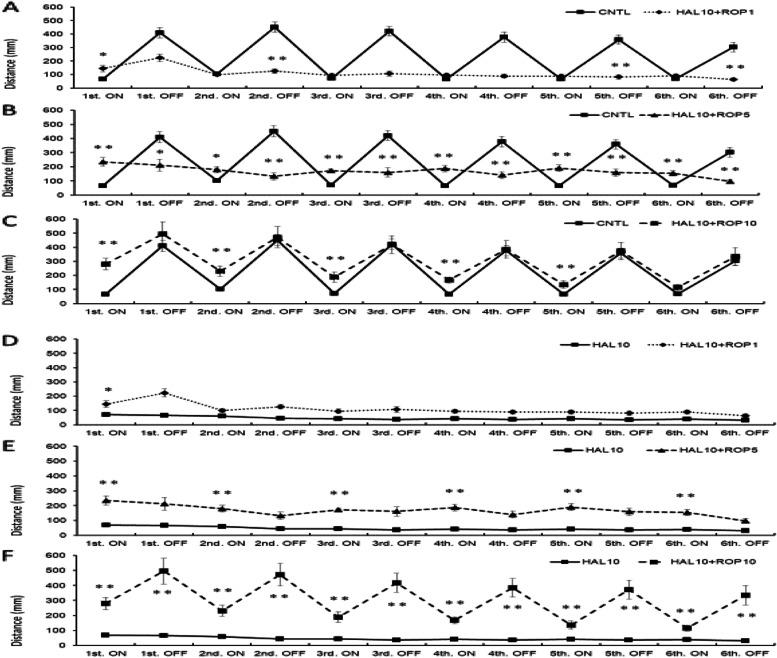
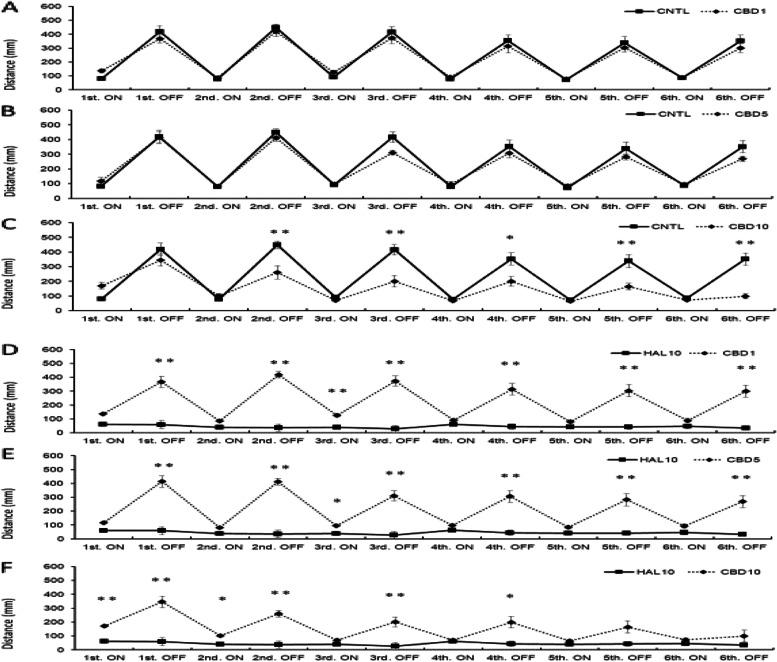
CBD concentrations equal to half of haloperidol's resulted in an almost complete reversal of haloperidol-induced motor dysfunction, as measured by the distance traveled by the zebrafish and their response to light-stimulus. While ropinirole also significantly reversed haloperidol's effects at the same concentration as CBD, CBD was more effective than ropinirole.
CONCLUSIONS
CBD-induced motor dysfunction improvement via D2 receptor blockade is a potential novel mechanism for the treatment of haloperidol-induced motor dysfunction.
背景
从大麻植物中提取的大麻二酚(CBD)因其通过抗炎和抗氧化作用产生的神经保护作用而被认为具有药用价值。最近对大鼠的行为研究报告称,CBD介导5-羟色胺(5-HT1A)受体作用,以改善多巴胺(D2)受体阻断诱导的运动功能障碍。特别是,其对纹状体中D2受体阻断的作用是与各种锥体外系运动功能障碍导致的神经疾病相关的一项重要功能。已知与该部位相关的多巴胺能神经变性会诱发帕金森病(PD),该病常影响老年人。还已知其会导致药物性帕金森综合征。本研究考察了不直接作用于D2受体的CBD对抗精神病药物(氟哌啶醇)诱导的药物性运动功能障碍的改善作用。
方法
我们使用抗精神病药物(氟哌啶醇)在斑马鱼幼虫中建立了药物性帕金森综合征模型。我们评估了游动距离和重复性光刺激反应。此外,我们考察了给予几种浓度的CBD是否能改善帕金森综合征模型的症状,并将其效果与抗帕金森病药物罗匹尼罗的效果进行比较。
结果
与氟哌啶醇浓度一半相当的CBD浓度,导致氟哌啶醇诱导的运动功能障碍几乎完全逆转,这通过斑马鱼的游动距离及其对光刺激的反应来衡量。虽然罗匹尼罗在与CBD相同的浓度下也显著逆转了氟哌啶醇的作用,但CBD比罗匹尼罗更有效。
结论
CBD通过阻断D2受体改善运动功能障碍是治疗氟哌啶醇诱导的运动功能障碍的一种潜在新机制。



 Zotero 插件