
解析关键生理生化特性和分子网络在黄瓜耐热胁迫中的作用。
Elucidating the role of key physio-biochemical traits and molecular network conferring heat stress tolerance in cucumber.
作者信息
Hongal Dhananjay A, Raju Dhandapani, Kumar Sudhir, Talukdar Akshay, Das Anjan, Kumari Khushboo, Dash Prasanta K, Chinnusamy Viswanathan, Munshi Anilabha Das, Behera Tusar Kanti, Dey Shyam Sundar
机构信息
Division of Vegetable Science, ICAR-Indian Agricultural Research Institute, New Delhi, India.
Division of Plant Physiology, ICAR-Indian Agricultural Research Institute, New Delhi, India.
出版信息
Front Plant Sci. 2023 Feb 20;14:1128928. doi: 10.3389/fpls.2023.1128928. eCollection 2023.
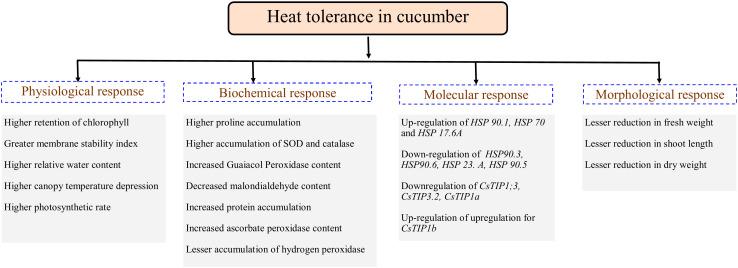
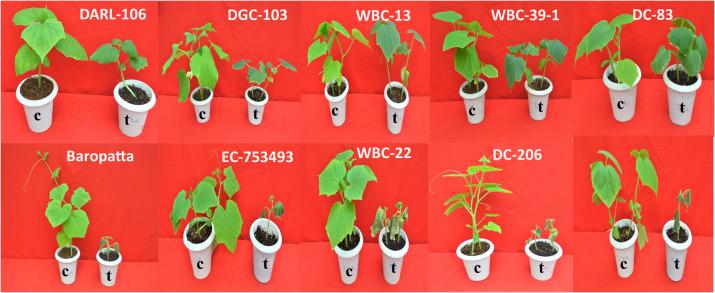
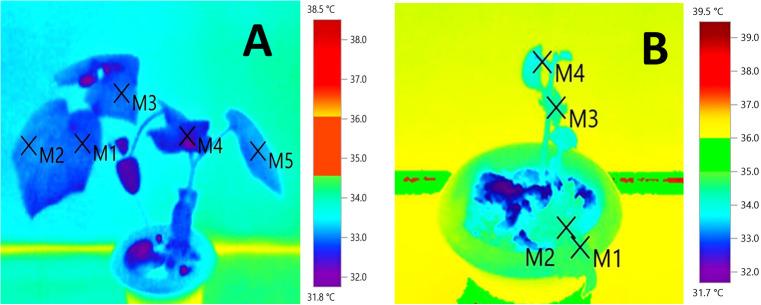
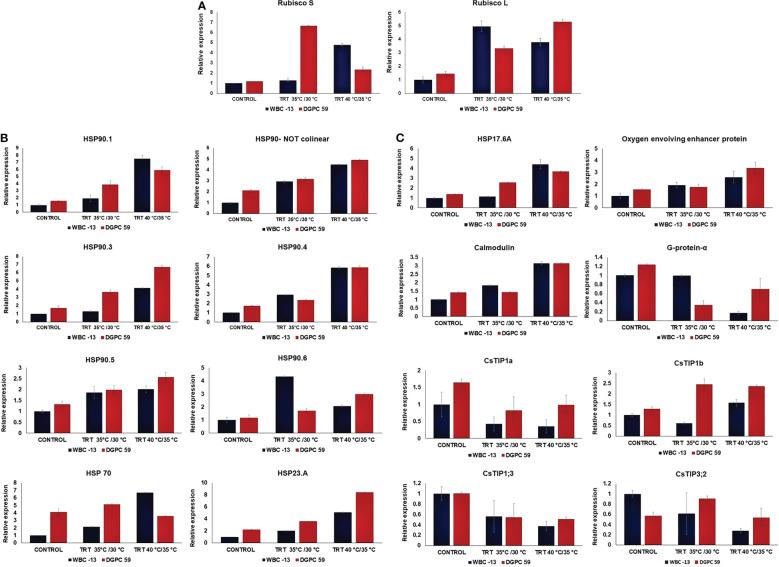
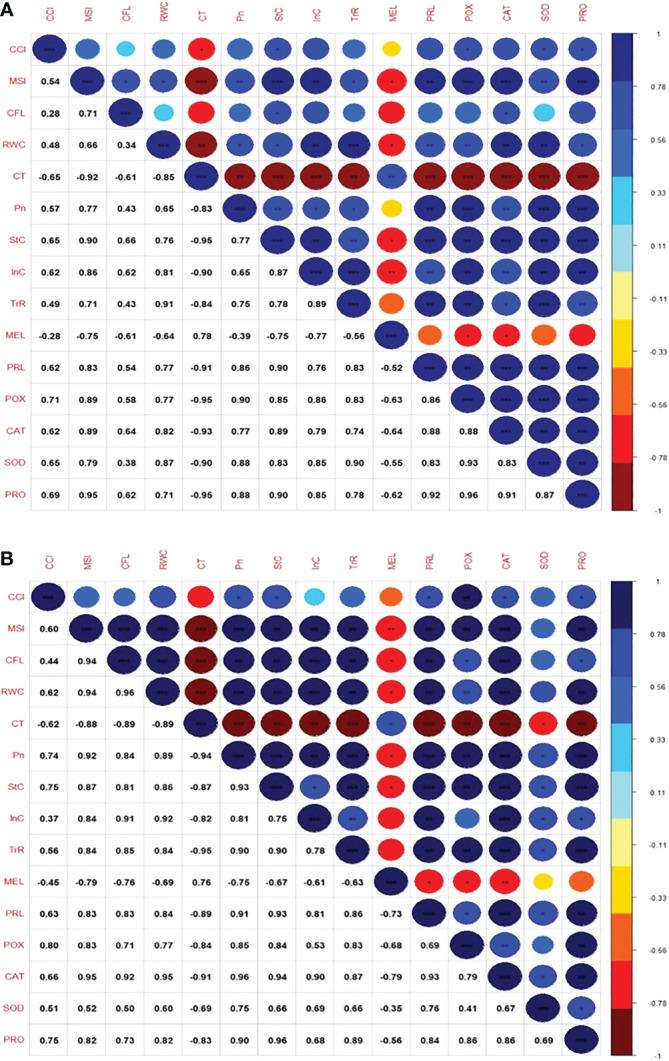
Cucumber is an important vegetable crop grown worldwide and highly sensitive to prevailing temperature condition. The physiological, biochemical and molecular basis of high temperature stress tolerance is poorly understood in this model vegetable crop. In the present study, a set of genotypes with contrasting response under two different temperature stress (35/30°C and 40/35°C) were evaluated for important physiological and biochemical traits. Besides, expression of the important heat shock proteins (HSPs), aquaporins (AQPs), photosynthesis related genes was conducted in two selected contrasting genotypes at different stress conditions. It was established that tolerant genotypes were able to maintain high chlorophyll retention, stable membrane stability index, higher retention of water content, stability in net photosynthesis, high stomatal conductance and transpiration in combination with less canopy temperatures under high temperature stress conditions compared to susceptible genotypes and were considered as the key physiological traits associated with heat tolerance in cucumber. Accumulation of biochemicals like proline, protein and antioxidants like SOD, catalase and peroxidase was the underlying biochemical mechanisms for high temperature tolerance. Upregulation of photosynthesis related genes, signal transduction genes and heat responsive genes (HSPs) in tolerant genotypes indicate the molecular network associated with heat tolerance in cucumber. Among the HSPs, higher accumulation of HSP70 and HSP90 were recorded in the tolerant genotype, WBC-13 under heat stress condition indicating their critical role. Besides, and were upregulated in the tolerant genotypes under heat stress condition. Therefore, the HSPs in combination with photosynthetic and aquaporin genes were the underlying important molecular network associated with heat stress tolerance in cucumber. The findings of the present study also indicated negative feedback of and oxygen evolving complex in relation to heat stress tolerance in cucumber. These results indicate that the thermotolerant cucumber genotypes enhanced physio-biochemical and molecular adaptation under high-temperature stress condition. This study provides foundation to design climate smart genotypes in cucumber through integration of favorable physio-biochemical traits and understanding the detailed molecular network associated with heat stress tolerance in cucumber.
黄瓜是一种在全球广泛种植的重要蔬菜作物,对当前的温度条件高度敏感。在这种模式蔬菜作物中,对高温胁迫耐受性的生理、生化和分子基础了解甚少。在本研究中,评估了一组在两种不同温度胁迫(35/30°C和40/35°C)下具有不同反应的基因型的重要生理和生化性状。此外,在两个选定的对比基因型中,于不同胁迫条件下对重要的热休克蛋白(HSPs)、水通道蛋白(AQPs)、光合作用相关基因的表达进行了研究。结果表明,与敏感基因型相比,耐受基因型在高温胁迫条件下能够保持较高的叶绿素保留率、稳定的膜稳定性指数、较高的水分含量保留率、净光合作用稳定性、高气孔导度和蒸腾作用,同时冠层温度较低,这些被认为是黄瓜耐热性相关的关键生理性状。脯氨酸、蛋白质等生化物质以及超氧化物歧化酶、过氧化氢酶和过氧化物酶等抗氧化剂的积累是高温耐受性的潜在生化机制。耐受基因型中光合作用相关基因、信号转导基因和热响应基因(HSPs)的上调表明了黄瓜耐热性相关的分子网络。在热休克蛋白中,在热胁迫条件下,耐受基因型WBC - 13中HSP70和HSP90的积累较高,表明它们的关键作用。此外,热胁迫条件下, 和 在耐受基因型中上调。因此,热休克蛋白与光合和水通道蛋白基因相结合是黄瓜热胁迫耐受性相关的重要潜在分子网络。本研究的结果还表明了 和放氧复合体与黄瓜热胁迫耐受性的负反馈关系。这些结果表明,耐热黄瓜基因型在高温胁迫条件下增强了生理生化和分子适应性。本研究为通过整合有利的生理生化性状和了解黄瓜热胁迫耐受性相关的详细分子网络来设计适应气候的黄瓜基因型提供了基础。
 Zotero 插件