
内分泌干扰化学物质对胎盘发育的影响。
The effect of endocrine-disrupting chemicals on placental development.
机构信息
Department of Endocrinology, The Second Hospital of Jilin University, Changchun, China.
Department of Obstetrics and Gynecology, The Second Hospital of Jilin University, Changchun, China.
出版信息
Front Endocrinol (Lausanne). 2023 Feb 21;14:1059854. doi: 10.3389/fendo.2023.1059854. eCollection 2023.
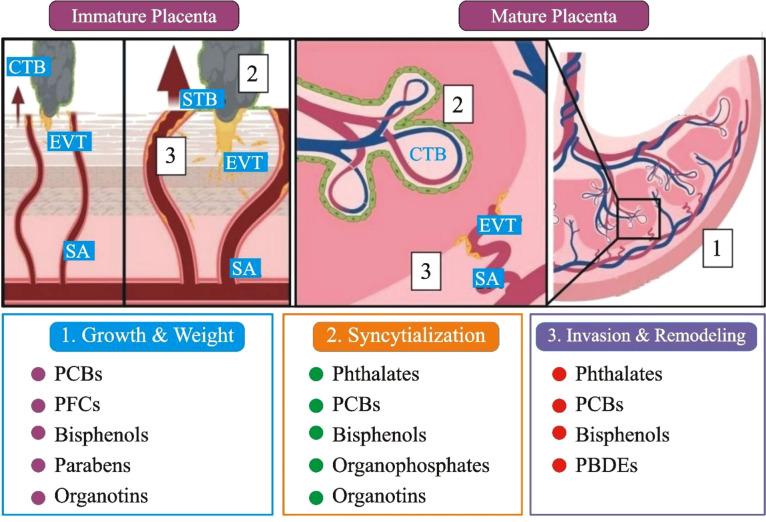
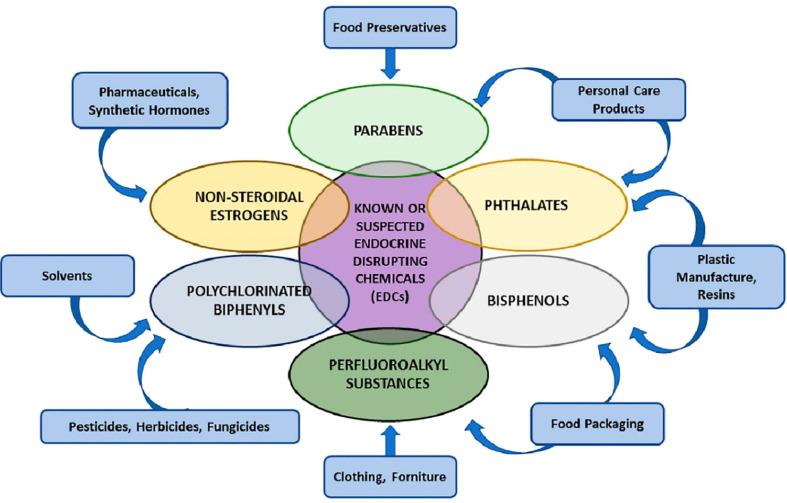
Endocrine-disrupting chemicals (EDCs) or endocrine disruptors are substances that are either naturally occurring or artificial and are released into the natural environment. Humans are exposed to EDCs through ingestion, inhalation, and skin contact. Many everyday household items, such as plastic bottles and containers, the liners of metal food cans, detergents, flame retardants, food, gadgets, cosmetics, and pesticides, contain endocrine disruptors. Each hormone has a unique chemical makeup and structural attributes. The way that endocrine hormones connect to receptors is described as a "lock and key" mechanism, with each hormone serving as the key (lock). This mechanism is enabled by the complementary shape of receptors to their hormone, which allows the hormone to activate the receptors. EDCs are described as exogenous chemicals or compounds that have a negative impact on organisms' health by interacting with the functioning of the endocrine system. EDCs are associated with cancer, cardiovascular risk, behavioural disorders, autoimmune abnormalities, and reproductive disorders. EDCs exposure in humans is highly harmful during critical life stages. Nonetheless, the effect of EDCs on the placenta is often underestimated. The placenta is especially sensitive to EDCs due to its abundance of hormone receptors. In this review, we evaluated the most recent data on the effects of EDCs on placental development and function, including heavy metals, plasticizers, pesticides, flame retardants, UV filters and preservatives. The EDCs under evaluation have evidence from human biomonitoring and are found in nature. Additionally, this study indicates important knowledge gaps that will direct future research on the topic.
内分泌干扰物(EDCs)或内分泌干扰物是指天然存在或人工合成的物质,并释放到自然环境中。人类通过摄入、吸入和皮肤接触暴露于 EDC 中。许多日常家居用品,如塑料瓶和容器、金属食品罐的衬里、清洁剂、阻燃剂、食品、小工具、化妆品和杀虫剂,都含有内分泌干扰物。每种激素都具有独特的化学成分和结构属性。内分泌激素与受体结合的方式被描述为“锁和钥匙”机制,每种激素都充当钥匙(锁)。这种机制是通过受体与其激素的互补形状来实现的,允许激素激活受体。EDCs 被描述为具有负面影响的外源性化学物质或化合物通过与内分泌系统的功能相互作用,对生物体的健康产生影响。EDCs 与癌症、心血管风险、行为障碍、自身免疫异常和生殖障碍有关。人类在关键生命阶段接触 EDC 是非常有害的。尽管如此,EDCs 对胎盘的影响往往被低估了。由于胎盘含有丰富的激素受体,因此胎盘对 EDC 特别敏感。在这篇综述中,我们评估了 EDCs 对胎盘发育和功能的最新影响数据,包括重金属、增塑剂、农药、阻燃剂、紫外线过滤器和防腐剂。评估的 EDCs 具有人体生物监测的证据,并存在于自然界中。此外,本研究指出了重要的知识空白,将指导该主题的未来研究。
 Zotero 插件