
利用近红外高光谱成像技术快速检测船舶采集的海洋微塑料聚合物类型。
Rapid shipboard measurement of net-collected marine microplastic polymer types using near-infrared hyperspectral imaging.
机构信息
GEOMAR Helmholtz Centre for Ocean Research Kiel, Wischhofstr. 1-3, 24148, Kiel, Germany.
Institute for Marine and Atmospheric Research Utrecht, Department of Physics, Utrecht University, Utrecht, The Netherlands.
出版信息
Anal Bioanal Chem. 2023 Jun;415(15):2989-2998. doi: 10.1007/s00216-023-04634-6. Epub 2023 Mar 16.
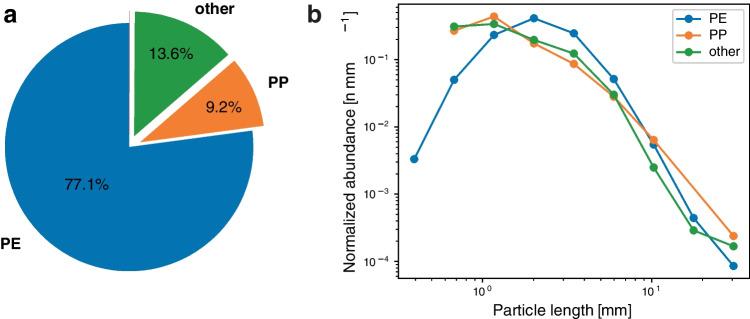
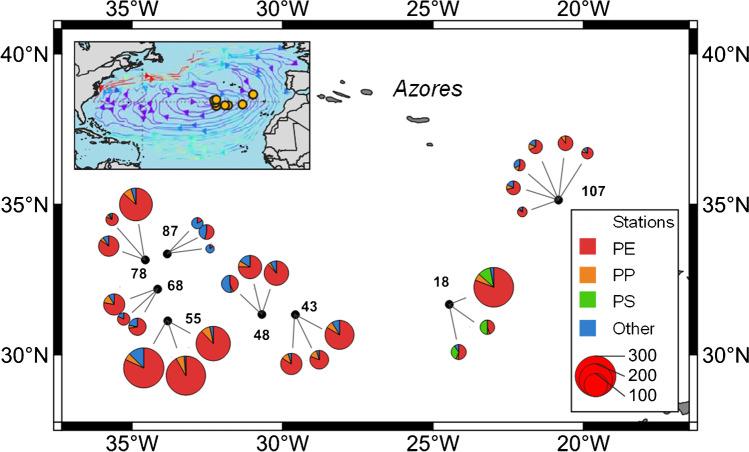
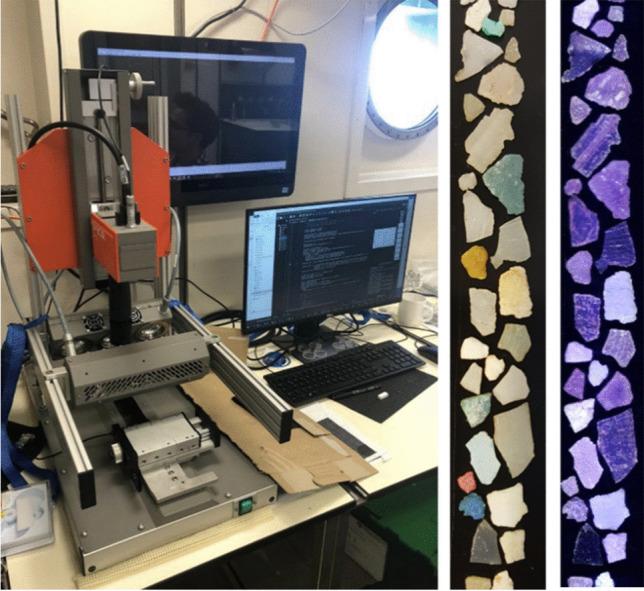
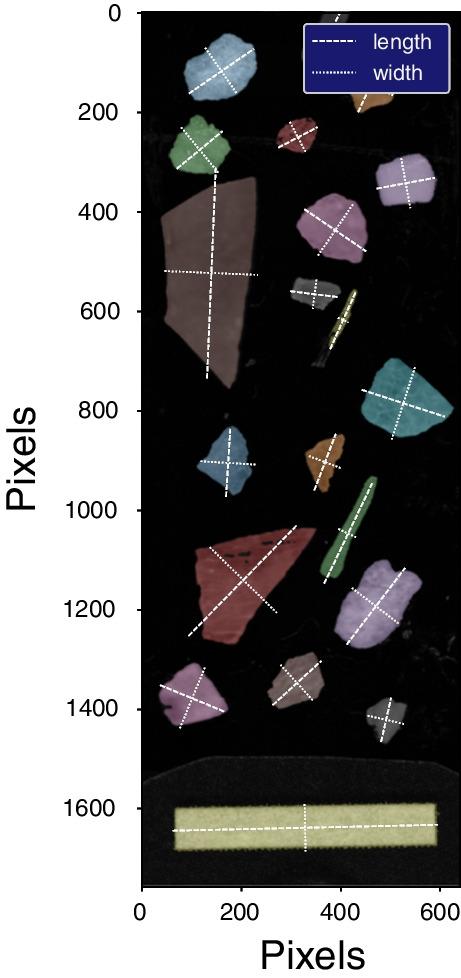
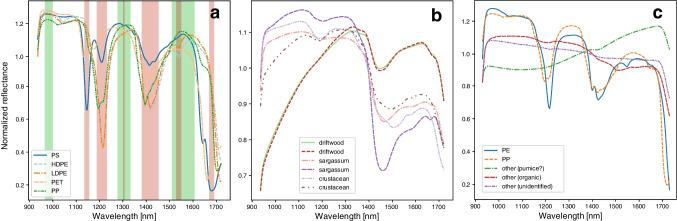
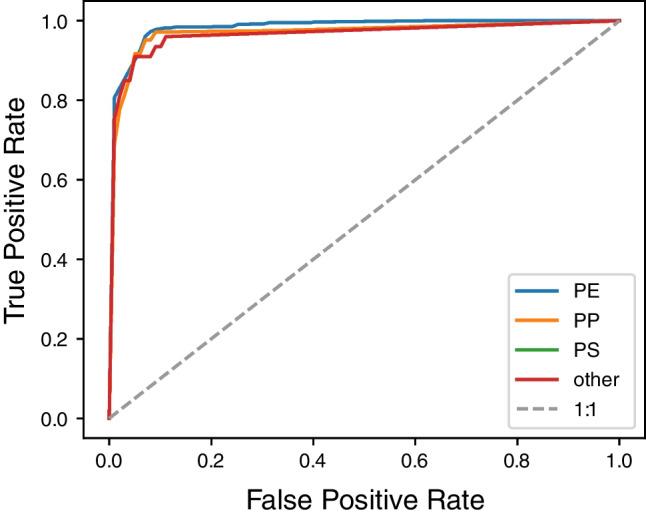
Isolation and detection of microplastics (MP) in marine samples is extremely cost- and labor-intensive, limiting the speed and amount of data that can be collected. In the current work, we describe rapid measurement of net-collected MPs (net mesh size 300 µm) using a benchtop near-infrared hyperspectral imaging system during a research expedition to the subtropical North Atlantic gyre. Suspected plastic particles were identified microscopically and mounted on a black adhesive background. Particles were imaged with a Specim FX17 near-infrared linescan camera and a motorized stage. A particle mapping procedure was built on existing edge-finding algorithms and a polymer identification method developed using spectra from virgin polymer reference materials. This preliminary work focused on polyethylene, polypropylene, and polystyrene as they are less dense than seawater and therefore likely to be found floating in the open ocean. A total of 27 net tows sampled 2534 suspected MP particles that were imaged and analyzed at sea. Approximately 77.1% of particles were identified as polyethylene, followed by polypropylene (9.2%). A small fraction of polystyrene was detected only at one station. Approximately 13.6% of particles were either other plastic polymers or were natural materials visually misidentified as plastics. Particle size distributions for PE and PP particles with a length greater than 1 mm followed an approximate power law relationship with abundance. This method allowed at-sea, near real-time identification of MP polymer types and particle dimensions, and shows great promise for rapid field measurements of microplastics in net-collected samples.
在海洋样本中分离和检测微塑料(MP)极其耗费成本和劳动力,限制了可以收集的数据的速度和数量。在目前的工作中,我们描述了在亚热带北大西洋环流研究考察中使用台式近红外高光谱成像系统对网采 MP(网目尺寸 300 µm)进行快速测量的方法。通过显微镜识别疑似塑料颗粒,并将其安装在黑色粘性背景上。使用 Specim FX17 近红外线扫描相机和电动载物台对颗粒进行成像。建立了一个基于现有边缘检测算法和使用原始聚合物参考材料光谱开发的聚合物识别方法的颗粒测绘程序。这项初步工作集中在聚乙烯、聚丙烯和聚苯乙烯上,因为它们的密度小于海水,因此很可能漂浮在开阔的海洋中。总共进行了 27 次拖网采样,对 2534 个疑似 MP 颗粒进行了成像和海上分析。约 77.1%的颗粒被鉴定为聚乙烯,其次是聚丙烯(9.2%)。仅在一个站位检测到一小部分聚苯乙烯。约 13.6%的颗粒要么是其他塑料聚合物,要么是被视觉误识别为塑料的天然材料。大于 1mm 的 PE 和 PP 颗粒的粒径分布遵循丰度的近似幂律关系。该方法允许在海上实时识别 MP 聚合物类型和颗粒尺寸,并为快速测量网采样本中的微塑料提供了很大的前景。
 Zotero 插件