
二茂铁锚定方法对基于SBA-15的催化剂在环丙沙星光芬顿降解过程中的反应活性和稳定性的影响。
The influence of ferrocene anchoring method on the reactivity and stability of SBA-15-based catalysts in the degradation of ciprofloxacin photo-Fenton process.
作者信息
Walkowiak Adrian, Wolski Lukasz, Ziolek Maria
机构信息
Adam Mickiewicz University, Poznań, Faculty of Chemistry Uniwersytetu Poznańskiego 8 61-614 Poznań Poland
出版信息
RSC Adv. 2023 Mar 14;13(12):8360-8373. doi: 10.1039/d3ra00188a. eCollection 2023 Mar 8.
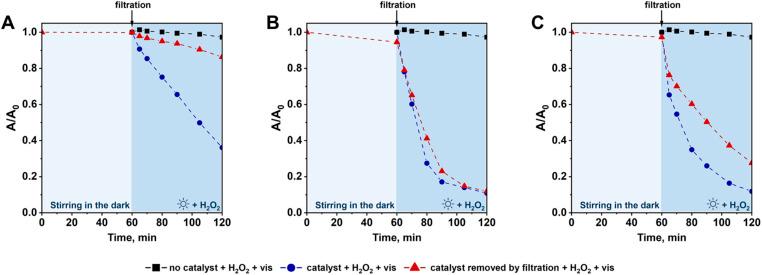
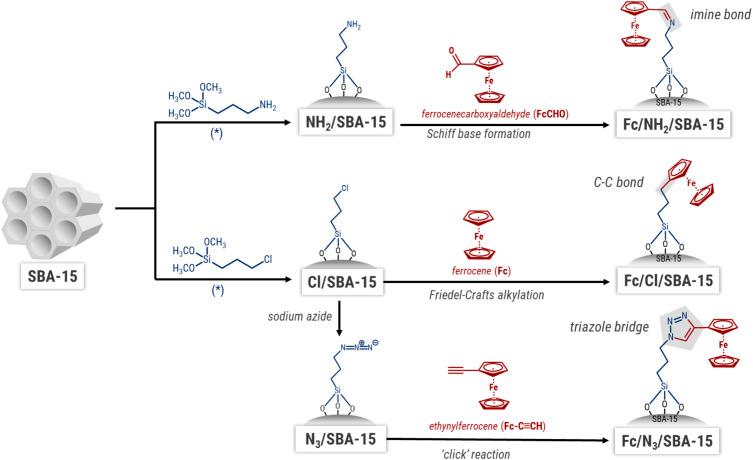
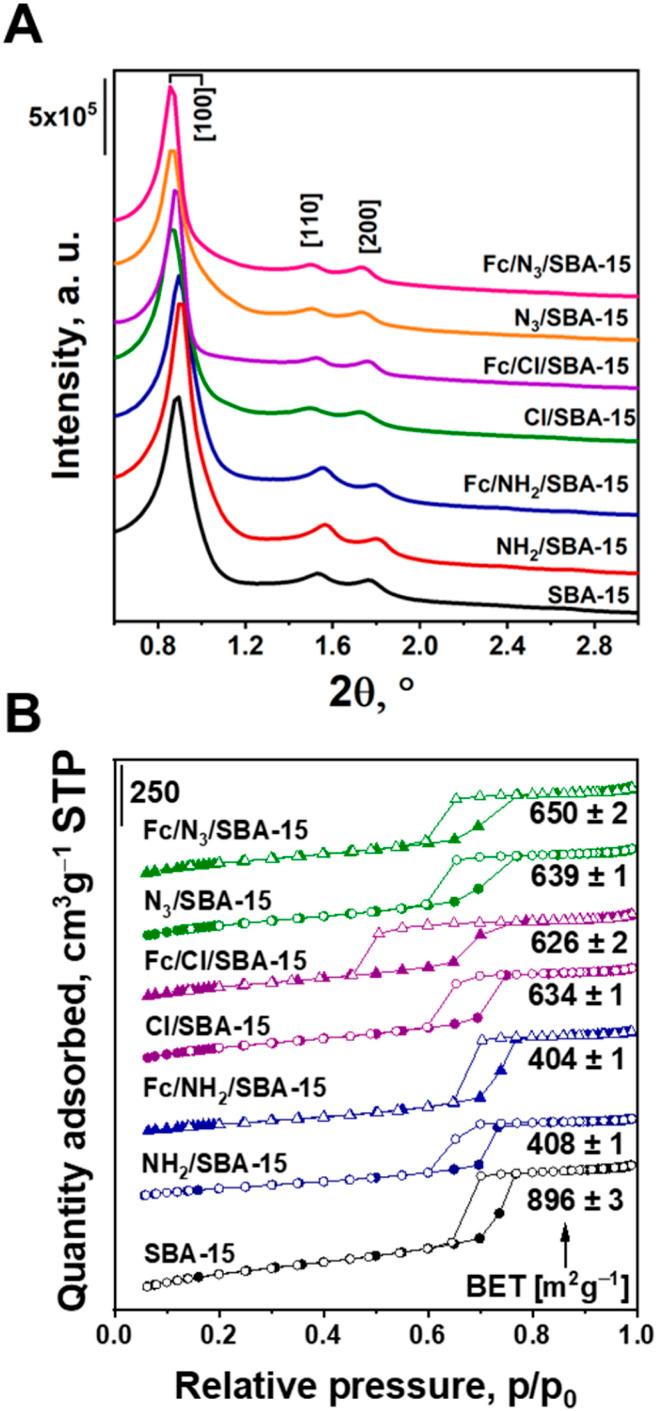
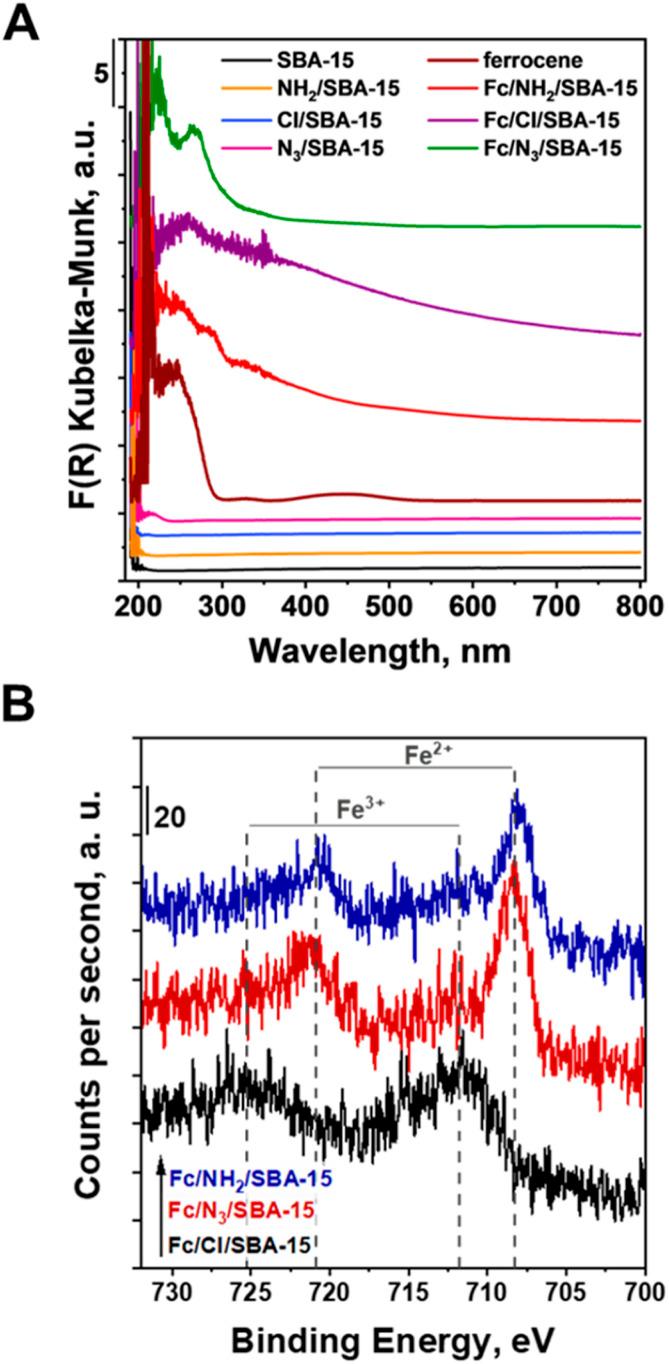
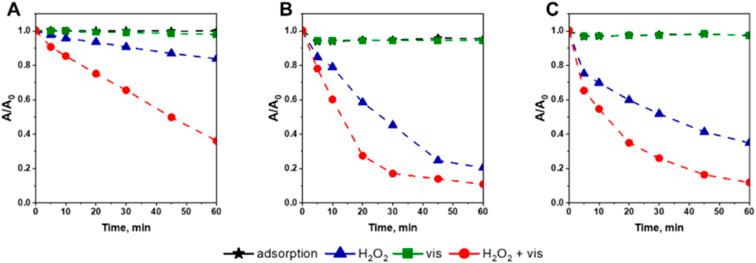
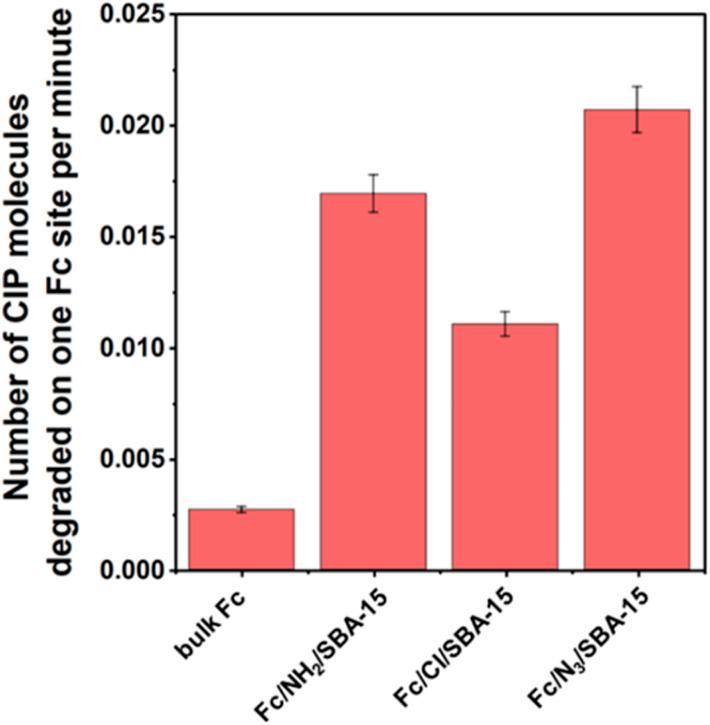
The study is aimed at evaluation of the impact of ferrocene (Fc) anchoring method on the efficiency of its incorporation on the surface of mesoporous silica SBA-15, as well as the reactivity and stability of these hybrid organic-inorganic materials in degradation of ciprofloxacin (CIP) photocatalytic, Fenton and photo-Fenton processes. For this purpose, Fc was anchored on SBA-15 supports three different methods: (i) Schiff base formation, (ii) Friedel-Crafts alkylation, and (iii) click reaction (azide-alkyne cycloaddition). The as-prepared materials were characterized by powder X-ray diffraction, nitrogen physisorption, infrared spectroscopy and inductively coupled plasma optical emission spectrometry, as well as UV-visible and X-ray photoelectron spectroscopies. The highest efficiency of Fc anchoring was obtained when applying the Friedel-Crafts alkylation, while the least effective was the Schiff base formation. As concerns the catalysts activity, all materials exhibited negligible reactivity in the photocatalytic process, but were capable of degrading CIP in the presence of HO (Fenton process). For all materials, the highest efficiency of CIP removal was observed for the photo-Fenton reaction. When expressed as the activity of a single Fc site, the most reactive were Fc species from the catalyst prepared by the click reaction. All materials, irrespectively of the ferrocene anchoring method, were deactivating over the reaction time because of Fc leaching. The highest stability in three subsequent reaction cycles was observed for the catalyst prepared by the azide-alkyne cycloaddition. Thus, the click reaction was found to be the best method for the preparation of Fc-containing catalysts for CIP degradation.
该研究旨在评估二茂铁(Fc)锚定方法对其负载于介孔二氧化硅SBA-15表面效率的影响,以及这些有机-无机杂化材料在光催化、芬顿和光芬顿过程中降解环丙沙星(CIP)的反应活性和稳定性。为此,采用三种不同方法将Fc锚定在SBA-15载体上:(i)席夫碱形成法,(ii)傅克烷基化法,以及(iii)点击反应(叠氮-炔环加成反应)。通过粉末X射线衍射、氮物理吸附、红外光谱、电感耦合等离子体发射光谱以及紫外可见光谱和X射线光电子能谱对所制备的材料进行了表征。采用傅克烷基化法时,Fc的锚定效率最高,而席夫碱形成法的效果最差。关于催化剂活性,所有材料在光催化过程中的反应活性可忽略不计,但在HO存在下(芬顿过程)能够降解CIP。对于所有材料,光芬顿反应中CIP的去除效率最高。以单个Fc位点的活性表示时,通过点击反应制备的催化剂中的Fc物种反应活性最高。由于Fc浸出,所有材料无论采用何种二茂铁锚定方法,在反应过程中都会失活。通过叠氮-炔环加成反应制备的催化剂在三个连续反应循环中表现出最高的稳定性。因此,发现点击反应是制备用于CIP降解的含Fc催化剂的最佳方法。




 Zotero 插件