
干细胞疗法联合生长因子控释用于治疗括约肌功能障碍。
Stem cell therapy combined with controlled release of growth factors for the treatment of sphincter dysfunction.
作者信息
Shan Shengzhou, Li Qingfeng, Criswell Tracy, Atala Anthony, Zhang Yuanyuan
机构信息
Department of Plastic and Reconstructive Surgery, Shanghai Ninth People's Hospital, Shanghai Jiao Tong University School of Medicine, Shanghai, 200011, China.
Wake Forest Institute for Regenerative Medicine, Wake Forest School of Medicine, Winston-Salem, NC, 27157, USA.
出版信息
Cell Biosci. 2023 Mar 16;13(1):56. doi: 10.1186/s13578-023-01009-3.
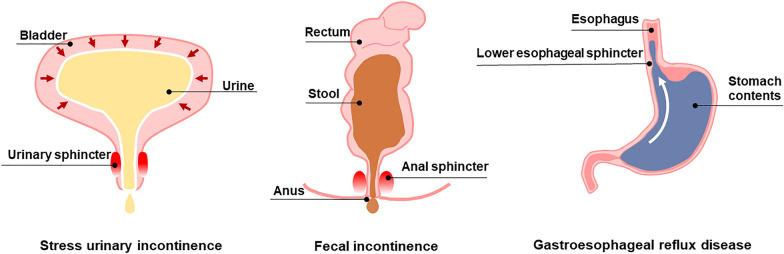
Sphincter dysfunction often occurs at the end of tubule organs such as the urethra, anus, or gastroesophageal sphincters. It is the primary consequence of neuromuscular impairment caused by trauma, inflammation, and aging. Despite intensive efforts to recover sphincter function, pharmacological treatments have not achieved significant improvement. Cell- or growth factor-based therapy is a promising approach for neuromuscular regeneration and the recovery of sphincter function. However, a decrease in cell retention and viability, or the short half-life and rapid degradation of growth factors after implantation, remain obstacles to the translation of these therapies to the clinic. Natural biomaterials provide unique tools for controlled growth factor delivery, which leads to better outcomes for sphincter function recovery in vivo when stem cells and growth factors are co-administrated, in comparison to the delivery of single therapies. In this review, we discuss the role of stem cells combined with the controlled release of growth factors, the methods used for delivery, their potential therapeutic role in neuromuscular repair, and the outcomes of preclinical studies using combination therapy, with the hope of providing new therapeutic strategies to treat incontinence or sphincter dysfunction of the urethra, anus, or gastroesophageal tissues, respectively.
括约肌功能障碍常发生在肾小管器官末端,如尿道、肛门或胃食管括约肌。它是由创伤、炎症和衰老引起的神经肌肉损伤的主要后果。尽管人们为恢复括约肌功能付出了巨大努力,但药物治疗并未取得显著改善。基于细胞或生长因子的疗法是神经肌肉再生和括约肌功能恢复的一种有前景的方法。然而,细胞保留率和活力的降低,或植入后生长因子的半衰期短和快速降解,仍然是这些疗法转化到临床的障碍。天然生物材料为生长因子的可控递送提供了独特工具,与单一疗法的递送相比,当干细胞和生长因子联合给药时,在体内可使括约肌功能恢复获得更好的结果。在这篇综述中,我们讨论了干细胞与生长因子控释相结合的作用、递送方法、它们在神经肌肉修复中的潜在治疗作用以及联合疗法的临床前研究结果,希望分别为治疗尿道、肛门或胃食管组织的尿失禁或括约肌功能障碍提供新的治疗策略。


 Zotero 插件