
鉴定一种新型药效终点,用于评估人源化小鼠的免疫检查点阻断作用。
Characterization of a novel potency endpoint for the evaluation of immune checkpoint blockade in humanized mice.
机构信息
Clinical Pharmacology and Safety Sciences, R&D, AstraZeneca, Cambridge, United Kingdom.
Early Oncology, R&D, AstraZeneca, Cambridge, United Kingdom.
出版信息
Front Immunol. 2023 Mar 3;14:1107848. doi: 10.3389/fimmu.2023.1107848. eCollection 2023.
INTRODUCTION
Humanized mice are emerging as valuable models to experimentally evaluate the impact of different immunotherapeutics on the human immune system. These immunodeficient mice are engrafted with human cells or tissues, that then mimic the human immune system, offering an alternative and potentially more predictive preclinical model. Immunodeficient NSG mice engrafted with human CD34+ cord blood stem cells develop human T cells educated against murine MHC. However, autoimmune graft versus host disease (GvHD), mediated by T cells, typically develops 1 year post engraftment.
METHODS
Here, we have used the development of GvHD in NSG mice, using donors with HLA alleles predisposed to autoimmunity (psoriasis) to weight in favor of GvHD, as an endpoint to evaluate the relative potency of monoclonal and BiSpecific antibodies targeting PD-1 and CTLA-4 to break immune tolerance.
RESULTS
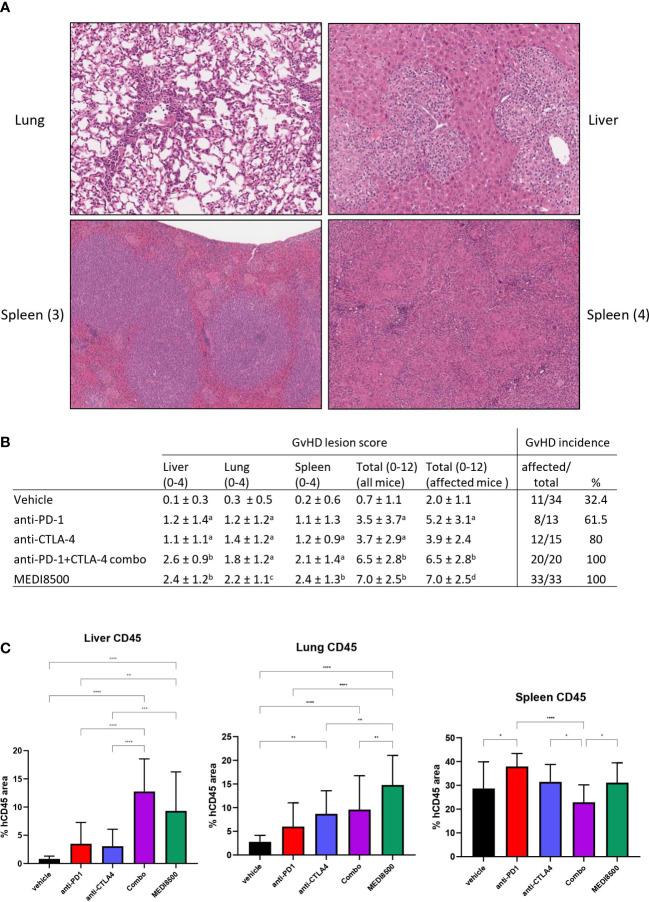
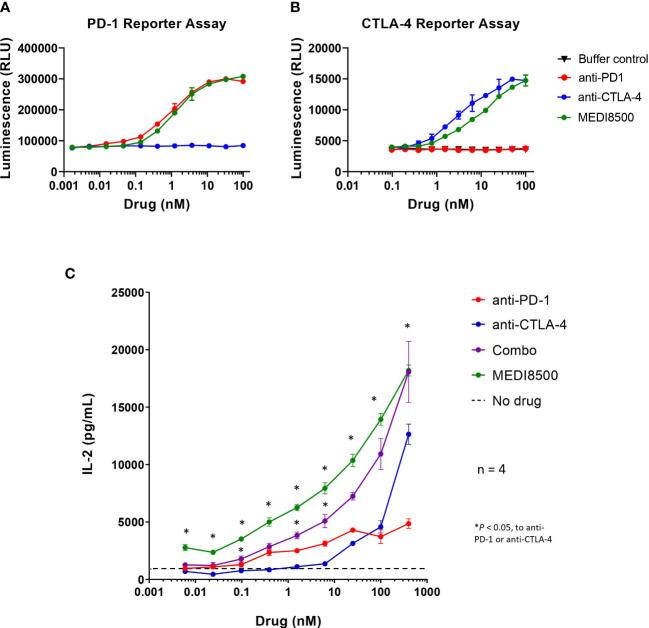
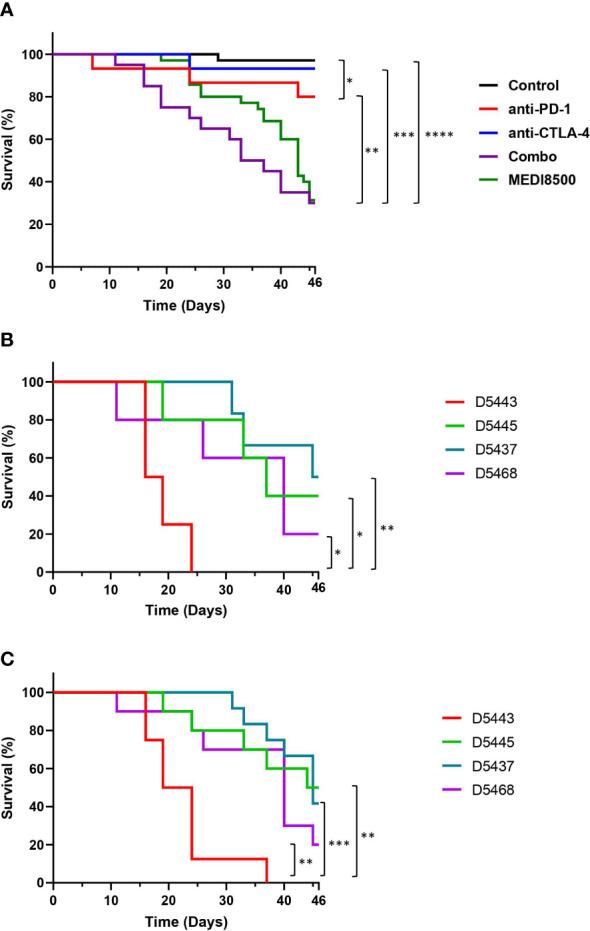
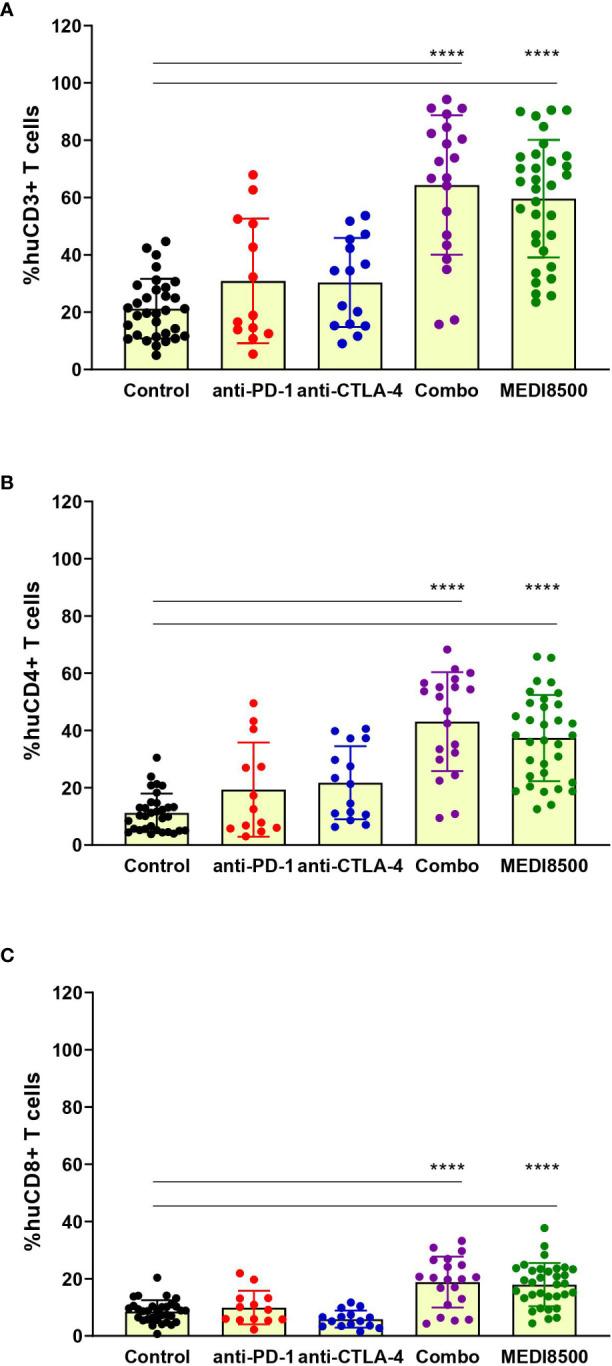
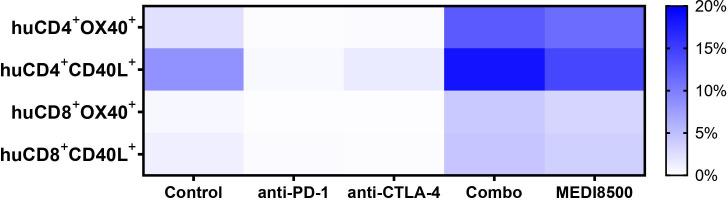
We found that treatment with either a combination of anti-PD-1 & anti-CTLA-4 mAbs or a quadrivalent anti-PD-1/CTLA-4 BiSpecific (MEDI8500), had enhanced potency compared to treatment with anti-PD-1 or anti-CTLA-4 monotherapies, increasing T cell activity both and . This resulted in accelerated development of GvHD and shorter survival of the humanized mice in these treatment groups commensurate with their on target activity.
DISCUSSION
Our findings demonstrate the potential of humanized mouse models for preclinical evaluation of different immunotherapies and combinations, using acceleration of GvHD development as a surrogate of aggravated antigenic T-cell response against host.
简介
人源化小鼠正成为评估不同免疫疗法对人类免疫系统影响的有价值模型。这些免疫缺陷小鼠被植入人类细胞或组织,从而模拟人类免疫系统,提供了替代方案,并可能具有更具预测性的临床前模型。用人类 CD34+脐带血干细胞移植的免疫缺陷 NSG 小鼠会产生针对鼠 MHC 的人类 T 细胞。然而,由 T 细胞介导的自身免疫性移植物抗宿主病(GvHD)通常在移植后 1 年发生。
方法
在这里,我们利用 NSG 小鼠中 GvHD 的发展,使用具有易患自身免疫(银屑病)的 HLA 等位基因的供体作为 GvHD 的终点,来评估针对 PD-1 和 CTLA-4 的单克隆和双特异性抗体的相对效力,以打破免疫耐受。
结果
我们发现,与单独使用抗 PD-1 或抗 CTLA-4 单药治疗相比,联合使用抗 PD-1 和抗 CTLA-4 mAb 或四价抗 PD-1/CTLA-4 双特异性(MEDI8500)治疗具有更高的效力,同时增加了 T 细胞的活性。这导致 GvHD 的发展加速,并且这些治疗组中人类化小鼠的存活率缩短,与它们的靶标活性一致。
讨论
我们的发现表明,人源化小鼠模型具有评估不同免疫疗法和组合的潜力,使用 GvHD 发展的加速作为针对宿主的抗原性 T 细胞反应加剧的替代物。
 Zotero 插件