
了解马拉维奇夸瓦区自给农民的抗菌药物使用情况及其对公众宣传活动的影响。
Understanding antimicrobial use in subsistence farmers in Chikwawa District Malawi, implications for public awareness campaigns.
作者信息
MacPherson Eleanor E, Reynolds Joanna, Sanudi Esnart, Nkaombe Alexander, Mankhomwa John, Dixon Justin, Chandler Clare I R
机构信息
Blantyre Malawi and Department of Clinical Sciences, Malawi-Liverpool-Wellcome Trust, Liverpool School of Tropical Medicine, Liverpool, United Kingdom.
Sheffield Hallam University and Capacity Q, Sheffield, United Kingdom.
出版信息
PLOS Glob Public Health. 2022 Jun 8;2(6):e0000314. doi: 10.1371/journal.pgph.0000314. eCollection 2022.
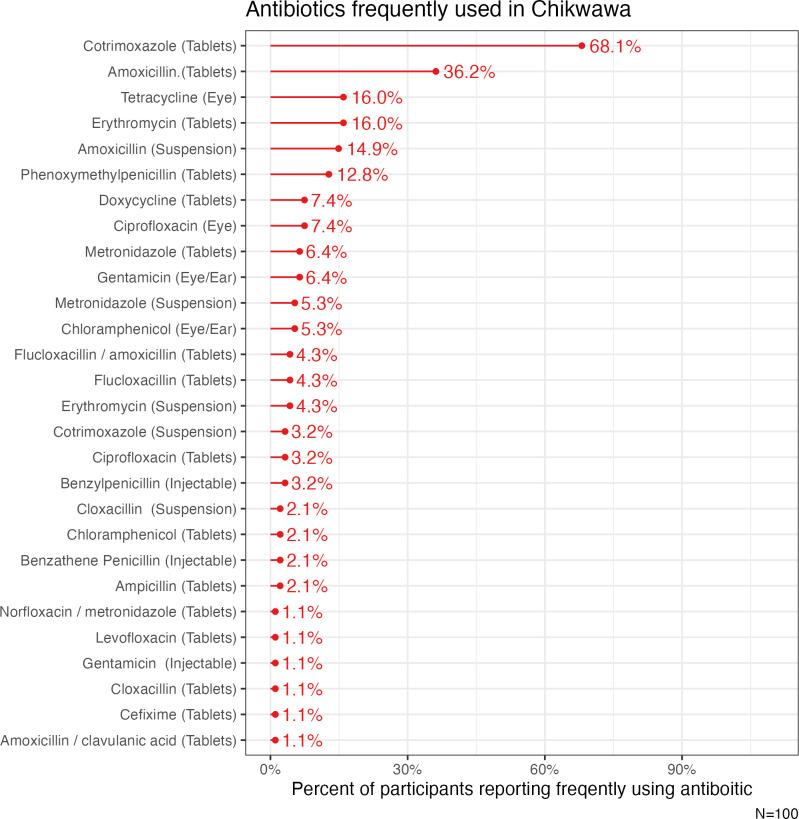
Drug resistant infections are increasing across the world and urgent action is required to preserve current classes of antibiotics. Antibiotic use practices in low-and-middle-income countries have gained international attention, especially as antibiotics are often accessed beyond the formal health system. Public awareness campaigns have gained popularity, often conceptualising antimicrobial resistance (AMR) as a problem of excess, precipitated by irrational behaviour. Insufficient attention has been paid to people's lived experiences of accessing medicines in low-income contexts. In Chikwawa District, Malawi, a place of extreme scarcity, our study aimed to understand the care and medicine use practices of households dependent on subsistence farming. Adopting an anthropological approach, we undertook medicine interviews (100), ethnographic fieldwork (six-month period) and key informant interviews (33) with a range of participants in two villages in rural Chikwawa. The most frequently used drugs were cotrimoxazole and amoxicillin, not considered to be of critical importance to human health. Participants recognised that keeping, sharing, and buying medicines informally was not the "right thing." However, they described using antibiotics and other medicines in these ways due to conditions of extreme precarity, the costs and limitations of seeking formal care in the public sector, and the inevitability of future illness. Our findings emphasise the need in contexts of extreme scarcity to equip policy actors with interventions to address AMR through strengthening health systems, rather than public awareness campaigns that foreground overuse and the dangers of using antibiotics beyond the formal sector.
耐药性感染在全球范围内不断增加,需要采取紧急行动来保护现有的抗生素类别。低收入和中等收入国家的抗生素使用情况已引起国际关注,特别是因为抗生素常常在正规卫生系统之外就能获取。提高公众意识的运动很受欢迎,人们常常将抗菌药物耐药性(AMR)概念化为一种由非理性行为引发的过度使用问题。人们对低收入环境下人们获取药品的实际生活经历关注不足。在极度贫困的马拉维奇夸瓦区,我们的研究旨在了解依赖自给农业的家庭的医疗保健和用药习惯。我们采用人类学方法,在奇夸瓦农村的两个村庄对一系列参与者进行了100次用药访谈、为期六个月的民族志田野调查以及33次关键 informant 访谈。最常用的药物是复方新诺明和阿莫西林,它们对人类健康的重要性不被认为至关重要。参与者认识到非正式地保存、分享和购买药品不是“正确的做法”。然而,他们描述由于极度不稳定的状况、在公共部门寻求正规医疗保健的成本和限制以及未来生病的不可避免性,所以会以这些方式使用抗生素和其他药物。我们的研究结果强调,在极度贫困的情况下,需要为政策制定者提供干预措施,通过加强卫生系统来应对抗菌药物耐药性,而不是开展强调过度使用以及在正规部门之外使用抗生素的危险的提高公众意识运动。
 Zotero 插件