
通过工程化的角质酶实现聚(己二酸丁二醇酯-对苯二甲酸酯)的完全生物降解。
Complete bio-degradation of poly(butylene adipate-co-terephthalate) via engineered cutinases.
机构信息
State Key Laboratory of Biocatalysis and Enzyme Engineering, Hubei Hongshan Laboratory, Hubei Collaborative Innovation Center for Green Transformation of Bio-Resources, Hubei Key Laboratory of Industrial Biotechnology, School of Life Sciences, Hubei University, 430062, Wuhan, People's Republic of China.
Hubei Key Laboratory of Polymer Materials, Key Laboratory for the Green Preparation and Application of Functional Materials (Ministry of Education), Hubei Collaborative Innovation Center for Advanced Organic Chemical Materials, School of Materials Science and Engineering, Hubei University, 430062, Wuhan, People's Republic of China.
出版信息
Nat Commun. 2023 Mar 24;14(1):1645. doi: 10.1038/s41467-023-37374-3.
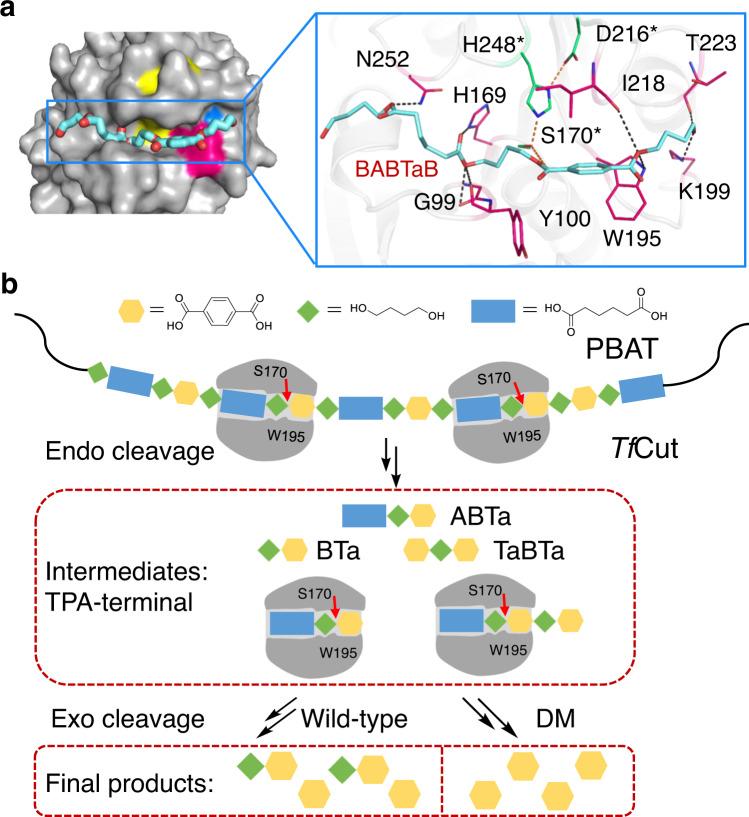
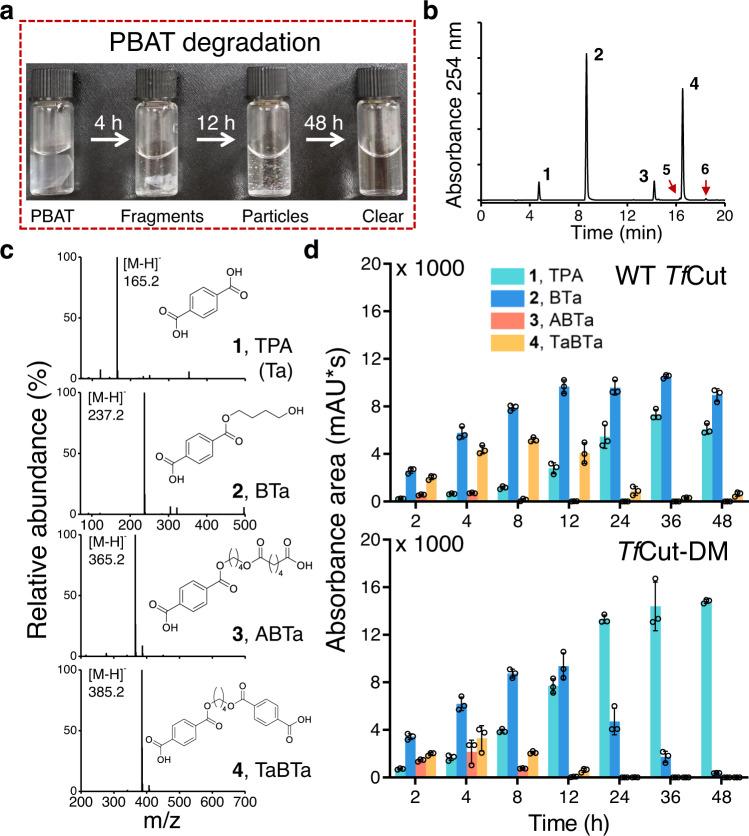
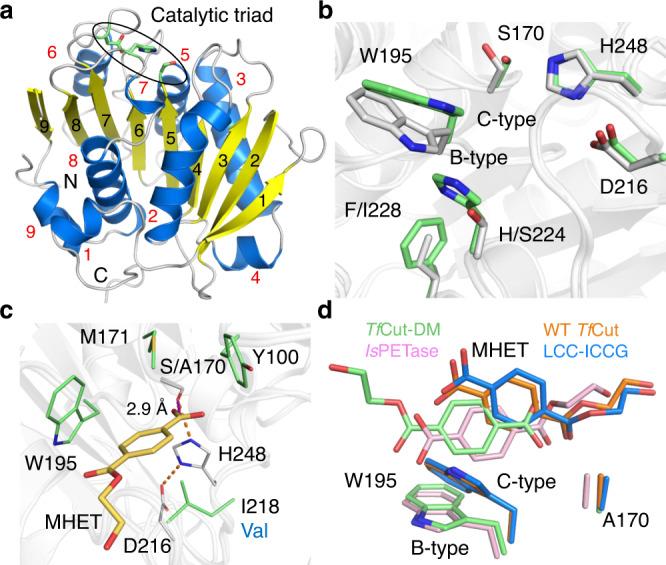
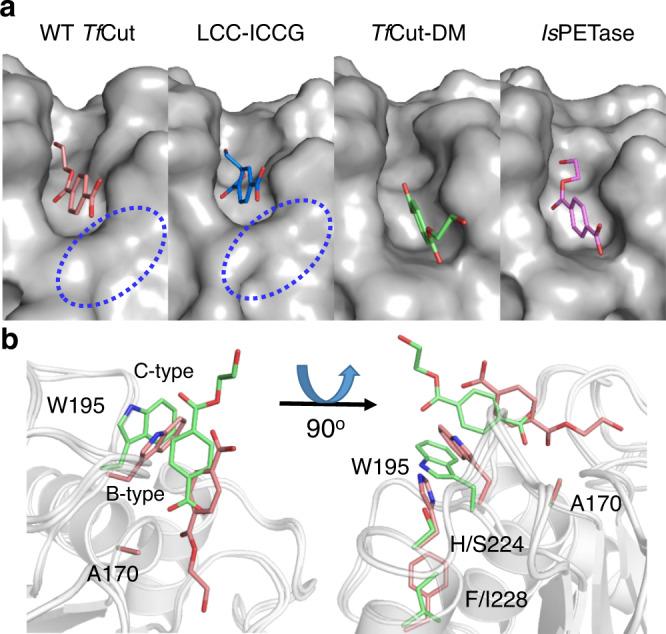
Poly(butylene adipate-co-terephthalate) (PBAT), a polyester made of terephthalic acid (TPA), 1,4-butanediol, and adipic acid, is extensively utilized in plastic production and has accumulated globally as environmental waste. Biodegradation is an attractive strategy to manage PBAT, but an effective PBAT-degrading enzyme is required. Here, we demonstrate that cutinases are highly potent enzymes that can completely decompose PBAT films in 48 h. We further show that the engineered cutinases, by applying a double mutation strategy to render a more flexible substrate-binding pocket exhibit higher decomposition rates. Notably, these variants produce TPA as a major end-product, which is beneficial feature for the future recycling economy. The crystal structures of wild type and double mutation of a cutinase from Thermobifida fusca in complex with a substrate analogue are also solved, elucidating their substrate-binding modes. These structural and biochemical analyses enable us to propose the mechanism of cutinase-mediated PBAT degradation.
聚己二酸/对苯二甲酸丁二醇酯(PBAT)是一种由对苯二甲酸(TPA)、1,4-丁二醇和己二酸制成的聚酯,广泛用于塑料生产,并在全球范围内作为环境废物积累。生物降解是管理 PBAT 的一种有吸引力的策略,但需要有效的 PBAT 降解酶。在这里,我们证明了角质酶是一种非常有效的酶,能够在 48 小时内完全分解 PBAT 薄膜。我们进一步表明,通过应用双突变策略使底物结合口袋更具柔韧性,工程化的角质酶表现出更高的分解速率。值得注意的是,这些变体主要产生 TPA 作为末端产物,这是未来循环经济的一个有益特征。还解决了来自嗜热放线菌的角质酶的野生型和双突变体与底物类似物复合物的晶体结构,阐明了它们的底物结合模式。这些结构和生化分析使我们能够提出角质酶介导的 PBAT 降解的机制。

 Zotero 插件