
类风湿关节炎中的丰富植物大麻素:使用综合生物信息学和网络药理学确定的治疗靶点和分子过程
The Abundant Phytocannabinoids in Rheumatoid Arthritis: Therapeutic Targets and Molecular Processes Identified Using Integrated Bioinformatics and Network Pharmacology.
作者信息
Nandi Arijit, Das Anwesha, Dey Yadu Nandan, Roy Kuldeep K
机构信息
Department of Pharmacology, Dr. B.C. Roy College of Pharmacy and Allied Health Sciences, Durgapur 713206, West Bengal, India.
Department of Medicinal Chemistry, National Institute of Pharmaceutical Education and Research, Ahmedabad, Palaj, Gandhinagar 382355, Gujarat, India.
出版信息
Life (Basel). 2023 Mar 5;13(3):700. doi: 10.3390/life13030700.
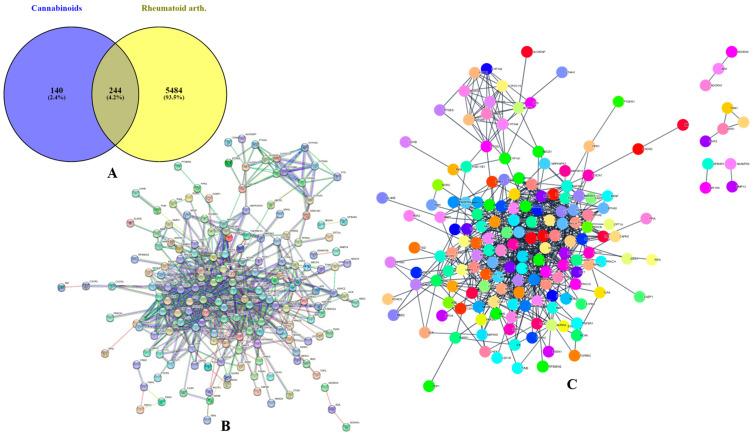
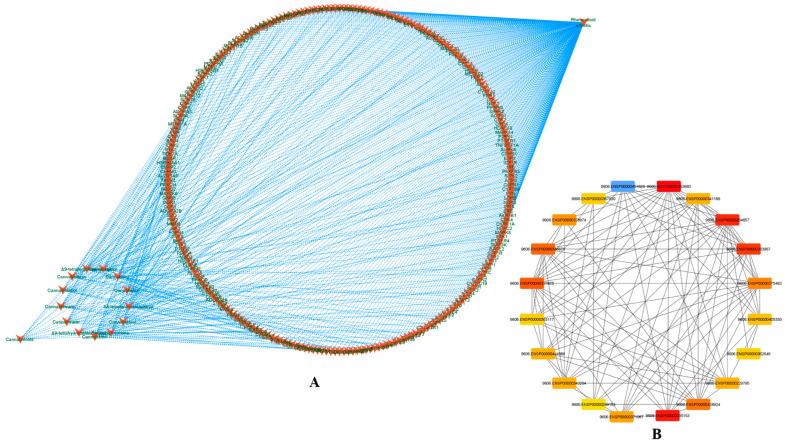
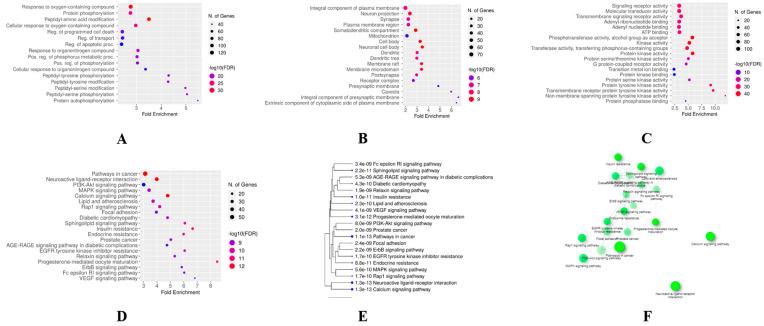
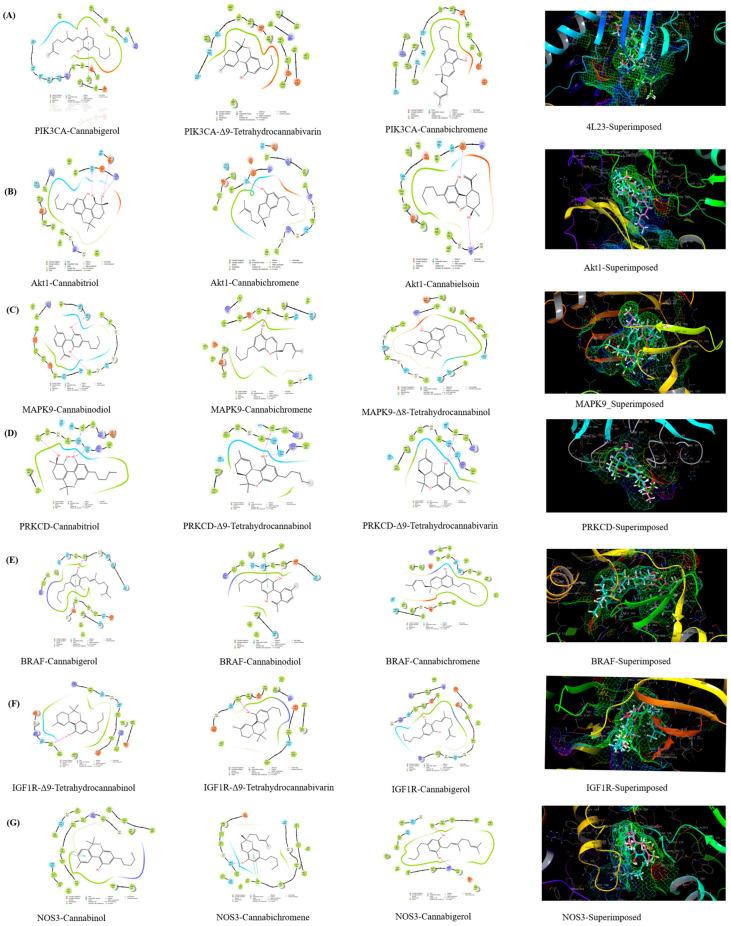
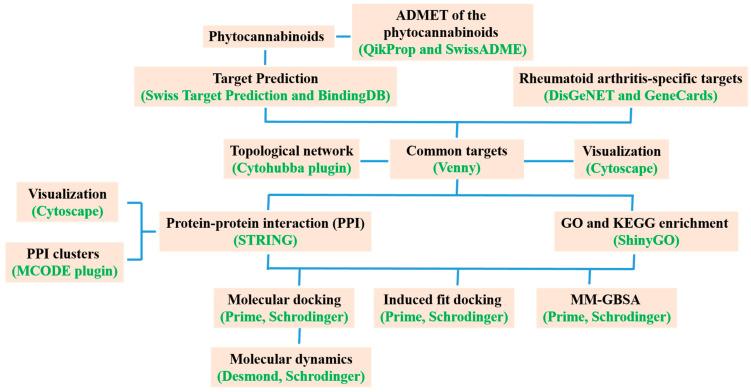
The endocannabinoid system consists of several phytocannabinoids, cannabinoid receptors, and enzymes that aid in numerous steps necessary to manifest any pharmacological activity. It is well known that the endocannabinoid system inhibits the pathogenesis of the inflammatory and autoimmune disease rheumatoid arthritis (RA). To the best of our knowledge, no research has been done that explains the network-pharmacology-based anti-rheumatic processes by focusing on the endocannabinoid system. Therefore, the purpose of this study is to further our understanding of the signaling pathways, associated proteins, and genes underlying RA based on the abundant natural endocannabinoids. The knowledge on how the phytocannabinoids in affect the endocannabinoid system was gathered from the literature. SwissTarget prediction and BindingDB databases were used to anticipate the targets for the phytocannabinoids. The genes related to RA were retrieved from the DisGeNET and GeneCards databases. Protein-protein interactions (high confidence > 0.7) were carried out with the aid of the string web server and displayed using Cytoscape. The Kyoto Encyclopedia of Genes and Genomes (KEGG) metabolic pathway analysis was used to perform enrichment analyses on the endocannabinoid-RA common targets. ShinyGO 0.76 was used to predict the biological processes listed in the Gene Ontology (GO) classification system. The binding affinity between the ligand and the receptors was precisely understood using molecular docking, induced-fit docking, and a molecular dynamics simulation. The network pharmacology analyses predicted that processes like response to oxygen-containing compounds and peptodyl-amino acid modification are related to the potential mechanisms of treatment for RA. These biological actions are coordinated by cancer, neuroactive ligand-receptor interaction, lipids and atherosclerosis, the calcium signaling pathway, and the Rap1 signaling pathway. According to the results of molecular docking, in the context of RA, phytocannabinoids may bind to important target proteins such PIK3CA, AKT1, MAPK9, PRKCD, BRAF, IGF1R, and NOS3. This entire study predicted the phytocannabinoids' systemic biological characteristics. Future experimental research is needed, however, to confirm the results so far.
内源性大麻素系统由几种植物大麻素、大麻素受体和酶组成,这些酶有助于实现任何药理活性所需的众多步骤。众所周知,内源性大麻素系统可抑制炎症和自身免疫性疾病类风湿性关节炎(RA)的发病机制。据我们所知,尚未有研究通过关注内源性大麻素系统来解释基于网络药理学的抗风湿过程。因此,本研究的目的是基于丰富的天然内源性大麻素,进一步了解RA潜在的信号通路、相关蛋白质和基因。从文献中收集了有关植物大麻素如何影响内源性大麻素系统的知识。使用SwissTarget预测和BindingDB数据库来预测植物大麻素的靶点。从DisGeNET和GeneCards数据库中检索与RA相关的基因。借助STRING网络服务器进行蛋白质-蛋白质相互作用(高置信度>0.7),并使用Cytoscape进行展示。使用京都基因与基因组百科全书(KEGG)代谢途径分析对内源性大麻素-RA共同靶点进行富集分析。使用ShinyGO 0.76预测基因本体(GO)分类系统中列出的生物学过程。通过分子对接、诱导契合对接和分子动力学模拟精确了解配体与受体之间的结合亲和力。网络药理学分析预测,对含氧化合物的反应和肽基氨基酸修饰等过程与RA的潜在治疗机制有关。这些生物学作用由癌症、神经活性配体-受体相互作用、脂质与动脉粥样硬化、钙信号通路和Rap1信号通路协调。根据分子对接结果,在RA的背景下,植物大麻素可能与PIK3CA、AKT1、MAPK9、PRKCD、BRAF、IGF1R和NOS3等重要靶蛋白结合。本研究整体预测了植物大麻素的全身生物学特性。然而,目前还需要未来的实验研究来证实这些结果。



 Zotero 插件