
肥胖与伤口愈合:聚焦间充质干细胞
Obesity and Wound Healing: Focus on Mesenchymal Stem Cells.
作者信息
Alma Antonio, Marconi Guya Diletta, Rossi Elena, Magnoni Cristina, Paganelli Alessia
机构信息
Dipartimento Chirurgico, Medico, Odontoiatrico e di Scienze Morfologiche con Interesse Trapiantologico, Oncologico e di Medicina Rigenerativa, University of Modena and Reggio Emilia, 41124 Modena, Italy.
Department of Innovative Technologies in Medicine & Dentistry, University "G. d'Annunzio" Chieti-Pescara, 66100 Chieti, Italy.
出版信息
Life (Basel). 2023 Mar 6;13(3):717. doi: 10.3390/life13030717.
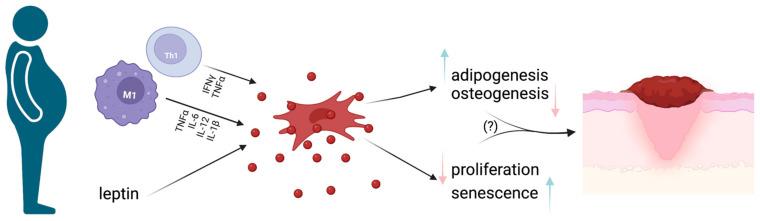
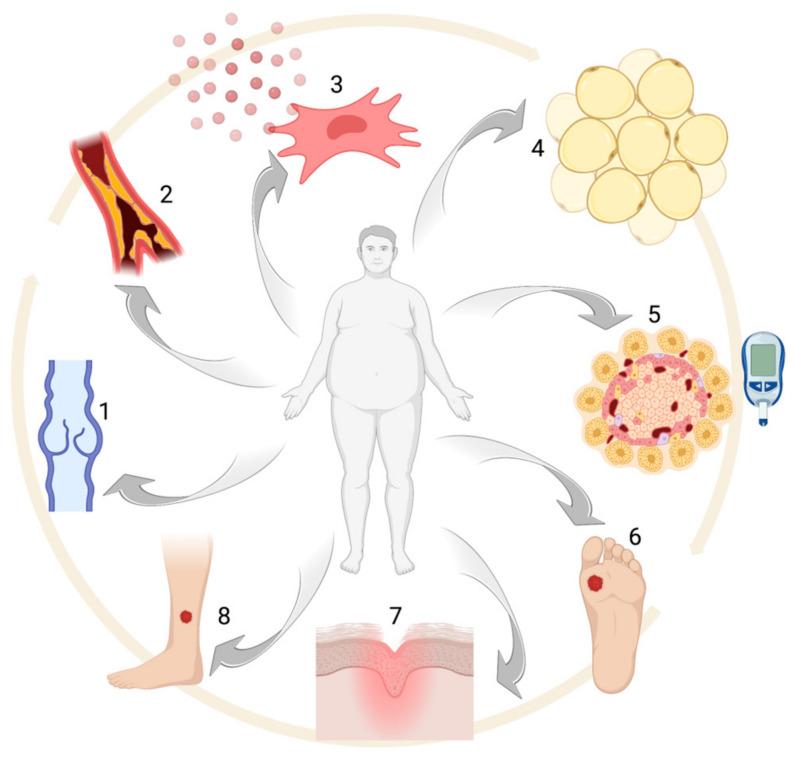
Chronic wounds represent nowadays a major challenge for both clinicians and researchers in the regenerative setting. Obesity represents one of the major comorbidities in patients affected by chronic ulcers and therefore diverse studies aimed at assessing possible links between these two morbid conditions are currently ongoing. In particular, adipose tissue has recently been described as having metabolic and endocrine functions rather than serving as a mere fat storage deposit. In this setting, adipose-derived stem cells, a peculiar subset of mesenchymal stromal/stem cells (MSCs) located in adipose tissue, have been demonstrated to possess regenerative and immunological functions with a key role in regulating both adipocyte function and skin regeneration. The aim of the present review is to give an overview of the most recent findings on wound healing, with a special focus on adipose tissue biology and obesity.
如今,慢性伤口对再生医学领域的临床医生和研究人员来说都是一项重大挑战。肥胖是慢性溃疡患者的主要合并症之一,因此目前正在进行多项研究,旨在评估这两种病症之间可能存在的联系。特别是,脂肪组织最近被描述为具有代谢和内分泌功能,而不仅仅是一个单纯的脂肪储存库。在这种情况下,脂肪来源的干细胞是位于脂肪组织中的间充质基质/干细胞(MSCs)的一个特殊亚群,已被证明具有再生和免疫功能,在调节脂肪细胞功能和皮肤再生方面发挥关键作用。本综述的目的是概述伤口愈合的最新研究结果,特别关注脂肪组织生物学和肥胖问题。

 Zotero 插件