
小窝蛋白介导Fmoc-FF纳米凝胶在乳腺癌细胞系中的内化作用
Caveolin-Mediated Internalization of Fmoc-FF Nanogels in Breast Cancer Cell Lines.
作者信息
Smaldone Giovanni, Rosa Elisabetta, Gallo Enrico, Diaferia Carlo, Morelli Giancarlo, Stornaiuolo Mariano, Accardo Antonella
机构信息
IRCCS Synlab SDN, Via Gianturco 113, 80143 Naples, Italy.
Department of Pharmacy and Research Centre on Bioactive Peptides (CIRPeB), University of Naples "Federico II", 80131 Naples, Italy.
出版信息
Pharmaceutics. 2023 Mar 22;15(3):1026. doi: 10.3390/pharmaceutics15031026.
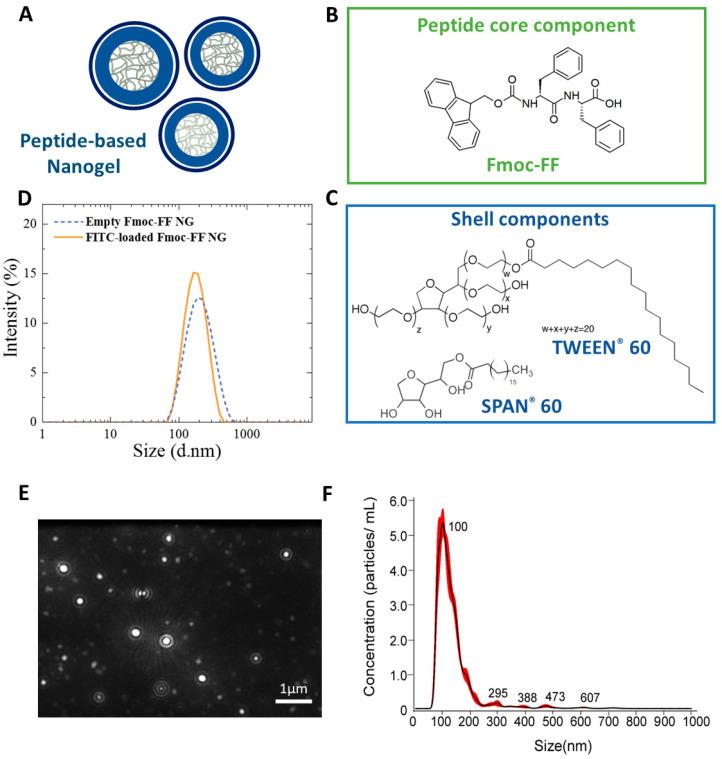
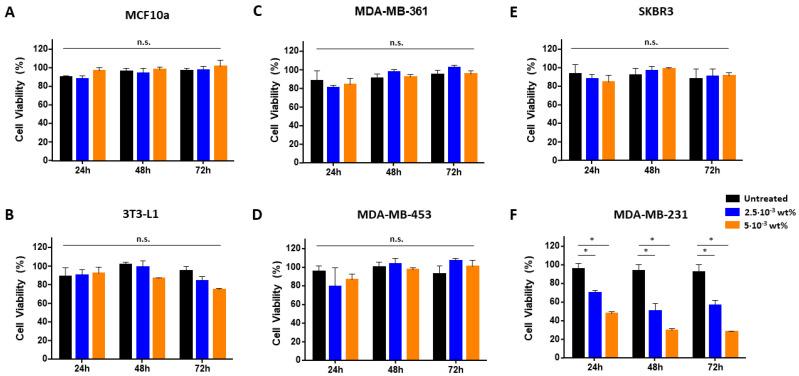
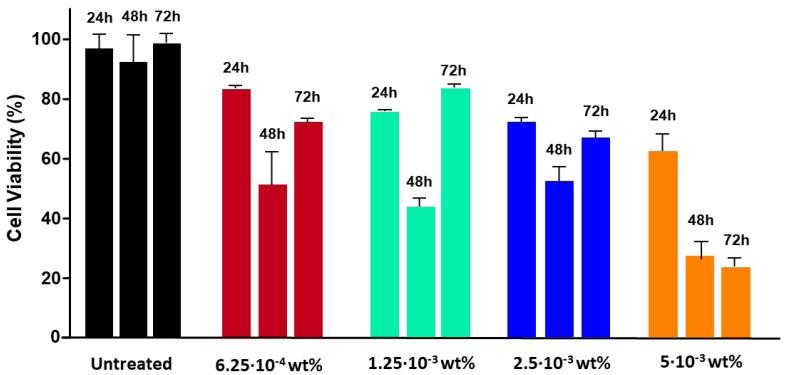
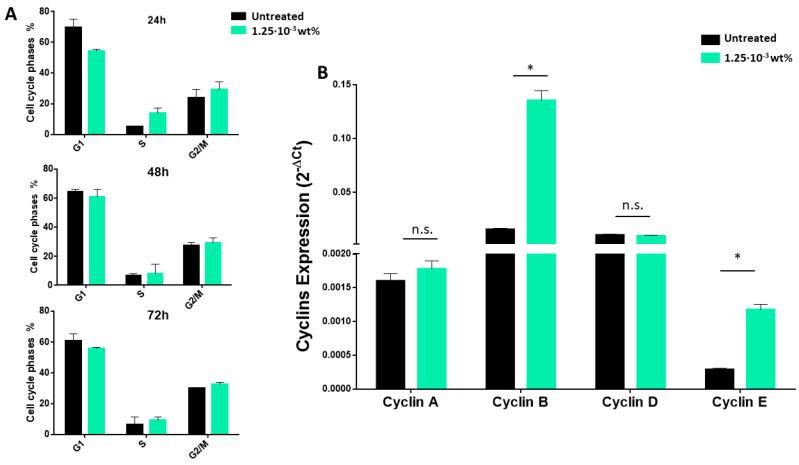
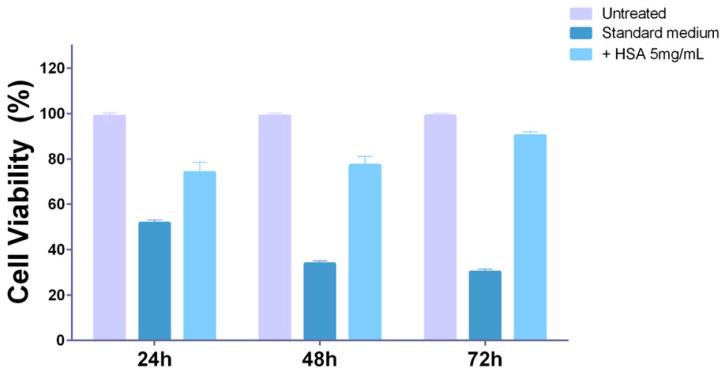
Hydrogel nanoparticles, also known as nanogels (NGs), have been recently proposed as alternative supramolecular vehicles for the delivery of biologically relevant molecules like anticancer drugs and contrast agents. The inner compartment of peptide based NGs can be opportunely modified according to the chemical features of the cargo, thus improving its loading and release. A full understanding of the intracellular mechanism involved in nanogel uptake by cancer cells and tissues would further contribute to the potential diagnostic and clinical applications of these nanocarriers, allowing the fine tuning of their selectivity, potency, and activity. The structural characterization of nanogels were assessed by Dynamic Light Scattering (DLS) and Nanoparticles Tracking Analysis (NTA) analysis. Cells viability of Fmoc-FF nanogels was evaluated by MTT assay on six breast cancer cell lines at different incubation times (24, 48, and 72 h) and peptide concentrations (in the range 6.25 × 10 ÷ 5·10 × wt%). The cell cycle and mechanisms involved in Fmoc-FF nanogels intracellular uptake were evaluated using flow cytometry and confocal analysis, respectively. Fmoc-FF nanogels, endowed with a diameter of ~130 nm and a zeta potential of ~-20.0/-25.0 mV, enter cancer cells via caveolae, mostly those responsible for albumin uptake. The specificity of the machinery used by Fmoc-FF nanogels confers a selectivity toward cancer cell lines overexpressing the protein caveolin1 and efficiently performing caveolae-mediated endocytosis.
水凝胶纳米颗粒,也被称为纳米凝胶(NGs),最近被提议作为一种替代超分子载体,用于递送抗癌药物和造影剂等生物相关分子。基于肽的纳米凝胶的内部隔室可以根据货物的化学特性进行适当修饰,从而提高其负载和释放。全面了解癌细胞和组织摄取纳米凝胶所涉及的细胞内机制,将进一步有助于这些纳米载体的潜在诊断和临床应用,从而能够对其选择性、效力和活性进行微调。通过动态光散射(DLS)和纳米颗粒跟踪分析(NTA)分析对纳米凝胶进行结构表征。通过MTT法在六种乳腺癌细胞系上,于不同孵育时间(24、48和72小时)和肽浓度(6.25×10÷5·10×wt%范围内)评估Fmoc-FF纳米凝胶的细胞活力。分别使用流式细胞术和共聚焦分析评估Fmoc-FF纳米凝胶细胞内摄取所涉及的细胞周期和机制。直径约为130nm、ζ电位约为-20.0/-25.0mV的Fmoc-FF纳米凝胶通过小窝进入癌细胞,主要是那些负责摄取白蛋白的小窝。Fmoc-FF纳米凝胶所使用机制的特异性赋予了对过表达小窝蛋白1且有效进行小窝介导的内吞作用的癌细胞系的选择性。


 Zotero 插件