
在一项针对精神障碍患者的纵向监测研究中,智能手表数字表型可预测阳性和阴性症状的变化。
Smartwatch digital phenotypes predict positive and negative symptom variation in a longitudinal monitoring study of patients with psychotic disorders.
作者信息
Kalisperakis Emmanouil, Karantinos Thomas, Lazaridi Marina, Garyfalli Vasiliki, Filntisis Panagiotis P, Zlatintsi Athanasia, Efthymiou Niki, Mantas Asimakis, Mantonakis Leonidas, Mougiakos Theodoros, Maglogiannis Ilias, Tsanakas Panayotis, Maragos Petros, Smyrnis Nikolaos
机构信息
Laboratory of Cognitive Neuroscience and Sensorimotor Control, University Mental Health, Neurosciences and Precision Medicine Research Institute "COSTAS STEFANIS", Athens, Greece.
1st Department of Psychiatry, Eginition Hospital, Medical School, National and Kapodistrian University of Athens, Athens, Greece.
出版信息
Front Psychiatry. 2023 Mar 13;14:1024965. doi: 10.3389/fpsyt.2023.1024965. eCollection 2023.
INTRODUCTION
Monitoring biometric data using smartwatches (digital phenotypes) provides a novel approach for quantifying behavior in patients with psychiatric disorders. We tested whether such digital phenotypes predict changes in psychopathology of patients with psychotic disorders.
METHODS
We continuously monitored digital phenotypes from 35 patients (20 with schizophrenia and 15 with bipolar spectrum disorders) using a commercial smartwatch for a period of up to 14 months. These included 5-min measures of total motor activity from an accelerometer (TMA), average Heart Rate (HRA) and heart rate variability (HRV) from a plethysmography-based sensor, walking activity (WA) measured as number of total steps per day and sleep/wake ratio (SWR). A self-reporting questionnaire (IPAQ) assessed weekly physical activity. After pooling phenotype data, their monthly mean and variance was correlated within each patient with psychopathology scores (PANSS) assessed monthly.
RESULTS
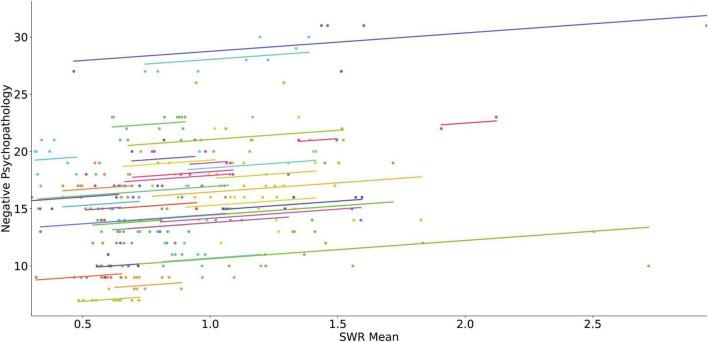
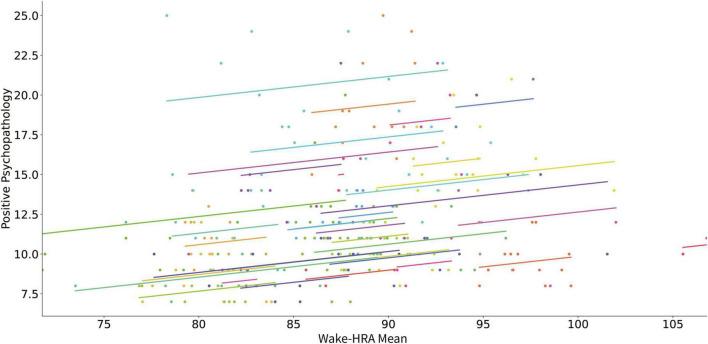
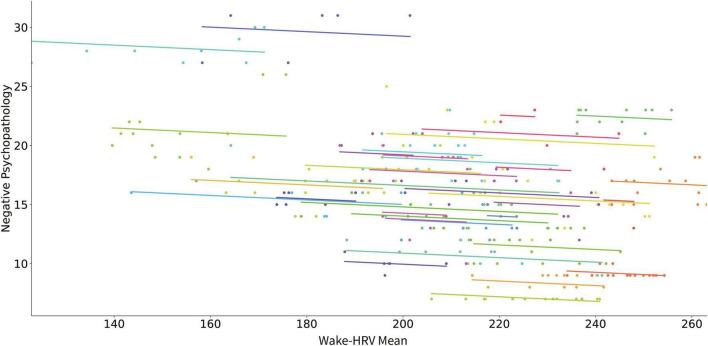
Our results indicate that increased HRA during wakefulness and sleep correlated with increases in positive psychopathology. Besides, decreased HRV and increase in its monthly variance correlated with increases in negative psychopathology. Self-reported physical activity did not correlate with changes in psychopathology. These effects were independent from demographic and clinical variables as well as changes in antipsychotic medication dose.
DISCUSSION
Our findings suggest that distinct digital phenotypes derived passively from a smartwatch can predict variations in positive and negative dimensions of psychopathology of patients with psychotic disorders, over time, providing ground evidence for their potential clinical use.
引言
使用智能手表监测生物特征数据(数字表型)为量化精神疾病患者的行为提供了一种新方法。我们测试了这种数字表型是否能预测精神障碍患者精神病理学的变化。
方法
我们使用一款商用智能手表对35名患者(20名精神分裂症患者和15名双相谱系障碍患者)的数字表型进行了长达14个月的持续监测。这些数据包括通过加速度计测量的5分钟总运动活动(TMA)、基于体积描记法的传感器测量的平均心率(HRA)和心率变异性(HRV)、以每日总步数衡量的步行活动(WA)以及睡眠/觉醒比(SWR)。一份自我报告问卷(IPAQ)评估每周的身体活动情况。汇总表型数据后,将每位患者每月的均值和方差与每月评估的精神病理学评分(PANSS)进行相关性分析。
结果
我们的结果表明,清醒和睡眠期间HRA的增加与阳性精神病理学的增加相关。此外,HRV的降低及其每月方差的增加与阴性精神病理学的增加相关。自我报告的身体活动与精神病理学的变化无关。这些影响独立于人口统计学和临床变量以及抗精神病药物剂量的变化。
讨论
我们的研究结果表明,从智能手表被动获取的不同数字表型可以预测精神障碍患者精神病理学阳性和阴性维度随时间的变化,为其潜在的临床应用提供了有力证据。


 Zotero 插件