
印度东部产时尊重产妇护理实践及其障碍
Intrapartum respectful maternity care practices and its barriers in Eastern India.
作者信息
Yadav Pooja, Smitha Moonjelly Vijayan, Jacob Jaison, Begum Jasmina
机构信息
College of Nursing, All India Institute of Medical Sciences, Bhubaneswar, Odisha, India.
Department of Obstetrics and Gynecology, All India Institute of Medical Sciences, Bhubaneswar, Odisha, India.
出版信息
J Family Med Prim Care. 2022 Dec;11(12):7657-7663. doi: 10.4103/jfmpc.jfmpc_1032_22. Epub 2023 Jan 17.
BACKGROUND
Respectful maternal care (RMC) is increasingly recognized globally as critical to improving the quality of maternity care as women deserve respectful and dignified care. Numerous women face disrespectful maternal care during labor and delivery, especially in low- and middle-income countries, which dissuades them from seeking institutional care. Women, the consumers of care, are better positioned to report on the level of respectful care they receive. Health care workers' perspectives on barriers to delivering respective maternity care are seldom explored. Thus, this study aims to assess the levels of respectful maternity care and its barriers.
METHODS
This cross-sectional study assesses the level of RMC and its barriers in the labor room of tertiary care hospital in Odisha among 246 women selected by consecutive sampling technique by a questionnaire.
RESULTS
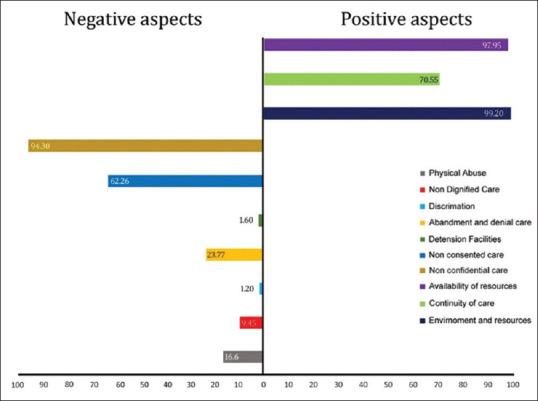
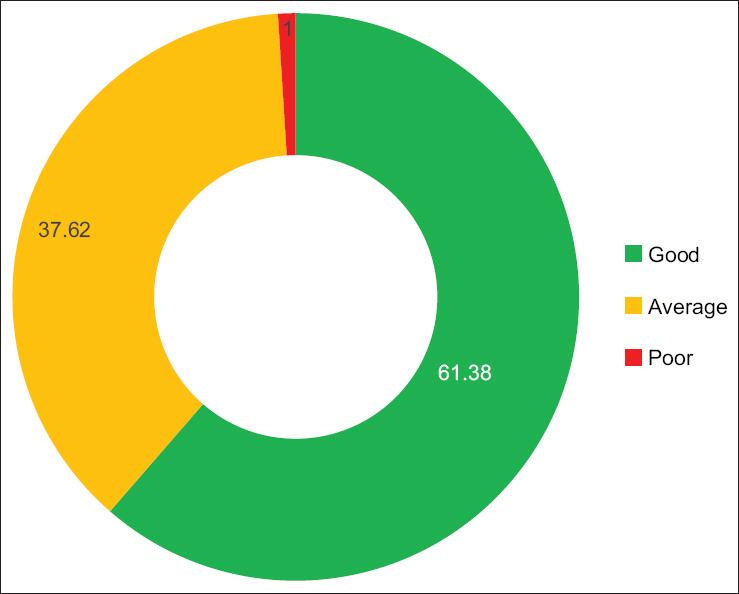
More than one-third of women reported good RMC. Although women rated high in domains of environment, resources, dignified care, and non-discrimination, non-consented care and non-confidential care were poorly rated. Barriers that adversely affect the delivery of RMC perceived by health care workers were lack of resources, staffing, uncooperative mother, communication issues, privacy issues, lack of policies, workload, and language problems. There was a significant association of RMC with age, education, occupation, and income. In contrast, residence, marital status, number of children, antenatal visit, type of institute of antenatal care, mode of delivery, and gender of health care provider were not associated with RMC.
CONCLUSION
Given the above findings, we recommend vigorous efforts to improve the institutional policies, resources, training, and supervision of health care professionals on women's rights during childbirth to strengthen the quality of care for positive birth experiences.
背景
尊重产妇护理(RMC)在全球范围内日益被视为提高孕产妇护理质量的关键,因为妇女理应得到尊重和有尊严的护理。许多妇女在分娩期间面临不尊重产妇护理的情况,尤其是在低收入和中等收入国家,这使她们不愿寻求机构护理。作为护理的消费者,妇女更有能力报告她们所接受的尊重护理水平。很少有人探讨医护人员对提供尊重产妇护理的障碍的看法。因此,本研究旨在评估尊重产妇护理的水平及其障碍。
方法
本横断面研究通过问卷调查,采用连续抽样技术,对奥里萨邦一家三级护理医院产房的246名妇女进行评估,以确定RMC的水平及其障碍。
结果
超过三分之一的妇女报告称接受了良好的RMC。尽管妇女在环境、资源、有尊严的护理和非歧视等方面评分较高,但未经同意的护理和非保密护理的评分较低。医护人员认为对提供RMC有不利影响的障碍包括资源缺乏、人员配备不足、产妇不合作、沟通问题、隐私问题、缺乏政策、工作量大和语言问题。RMC与年龄、教育程度、职业和收入之间存在显著关联。相比之下,居住地、婚姻状况、子女数量、产前检查、产前护理机构类型、分娩方式和医护人员性别与RMC无关。
结论
鉴于上述研究结果,我们建议大力努力改善机构政策、资源、培训,并加强对医护人员在分娩期间妇女权利方面的监督,以提高护理质量,实现积极的分娩体验。
 Zotero 插件