
暴露于必需和非必需微量元素与先天性心脏缺陷风险:一项叙述性综述。
Exposure to essential and non-essential trace elements and risks of congenital heart defects: A narrative review.
作者信息
Liang Yipu, Pan Zijian, Zhu Mingzheng, Gao Ruonan, Wang Yijue, Cheng Yijuan, Zhang Nannan
机构信息
National Center for Birth Defect Monitoring, Key Laboratory of Birth Defects and Related Diseases of Women and Children, Ministry of Education, West China Second University Hospital, Sichuan University, Chengdu, China.
West China Hospital of Stomatology, Sichuan University, Chengdu, China.
出版信息
Front Nutr. 2023 Mar 14;10:1121826. doi: 10.3389/fnut.2023.1121826. eCollection 2023.
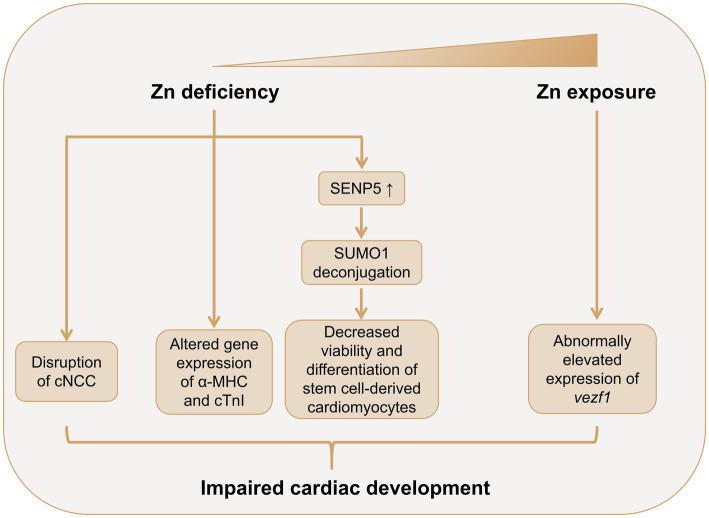
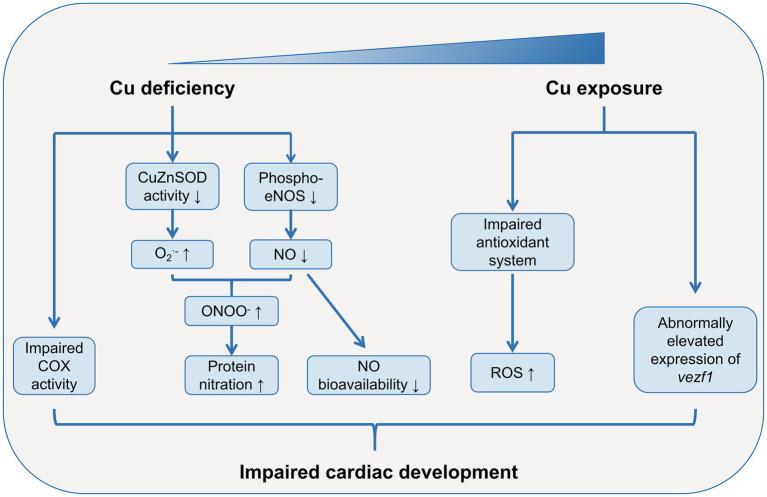
Congenital heart defects (CHDs) are congenital abnormalities involving the gross structures of the heart and large blood vessels. Environmental factors, genetic factors and their interactions may contribute to the pathogenesis of CHDs. Generally, trace elements can be classified into essential trace elements and non-essential trace elements. Essential trace elements such as copper (Cu), zinc (Zn), iron (Fe), selenium (Se), and manganese (Mn) play important roles in human biological functions such as metabolic function, oxidative stress regulation, and embryonic development. Non-essential trace elements such as cadmium (Cd), arsenic (As), lead (Pb), nickle (Ni), barium (Ba), chromium (Cr) and mercury (Hg) are harmful to health even at low concentrations. Recent studies have revealed the potential involvement of these trace elements in the pathogenesis of CHDs. In this review, we summarized current studies exploring exposure to essential and non-essential trace elements and risks of CHDs, in order to provide further insights for the pathogenesis and prevention of CHDs.
先天性心脏病(CHD)是涉及心脏和大血管总体结构的先天性异常。环境因素、遗传因素及其相互作用可能导致先天性心脏病的发病机制。一般来说,微量元素可分为必需微量元素和非必需微量元素。必需微量元素如铜(Cu)、锌(Zn)、铁(Fe)、硒(Se)和锰(Mn)在人体生物功能如代谢功能、氧化应激调节和胚胎发育中发挥重要作用。非必需微量元素如镉(Cd)、砷(As)、铅(Pb)、镍(Ni)、钡(Ba)、铬(Cr)和汞(Hg)即使在低浓度下也对健康有害。最近的研究揭示了这些微量元素在先天性心脏病发病机制中的潜在作用。在本综述中,我们总结了目前关于接触必需和非必需微量元素与先天性心脏病风险的研究,以便为先天性心脏病的发病机制和预防提供进一步的见解。
 Zotero 插件