
用于癌症诊疗应用的纳米构建体:增强递送的挑战与策略
Nanoconstructs for theranostic application in cancer: Challenges and strategies to enhance the delivery.
作者信息
Mishra Shivani, Bhatt Tanvi, Kumar Hitesh, Jain Rupshee, Shilpi Satish, Jain Vikas
机构信息
Department of Pharmaceutics, JSS College of Pharmacy, JSS Academy of Higher Education and Research, Mysuru, India.
Department of Pharmaceutical Chemistry, JSS College of Pharmacy, JSS Academy of Higher Education and Research, Mysuru, India.
出版信息
Front Pharmacol. 2023 Mar 15;14:1101320. doi: 10.3389/fphar.2023.1101320. eCollection 2023.
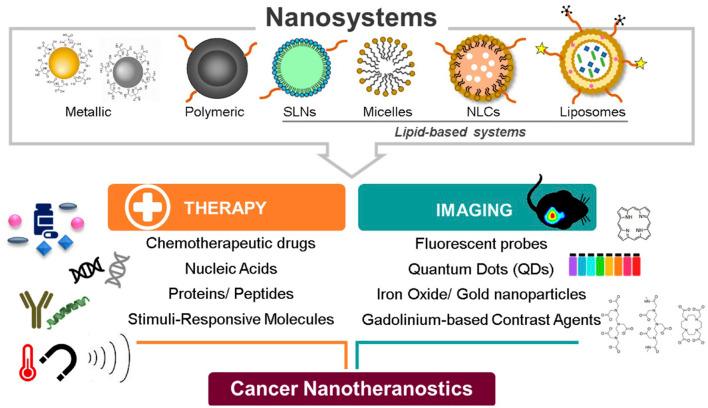
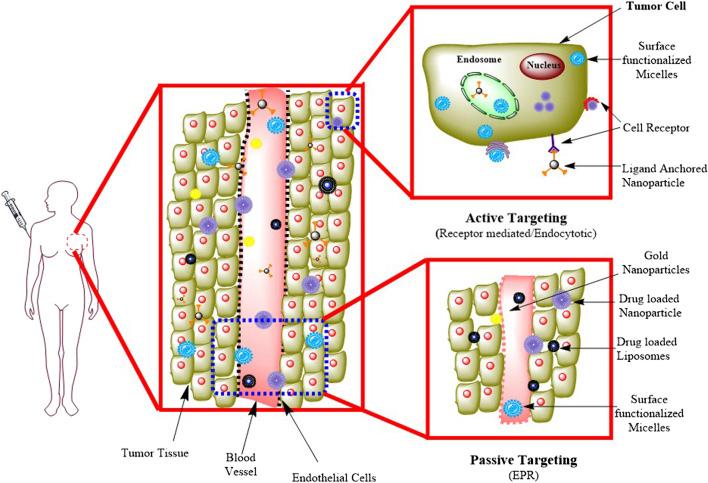
Nanoconstructs are made up of nanoparticles and ligands, which can deliver the loaded cargo at the desired site of action. Various nanoparticulate platforms have been utilized for the preparation of nanoconstructs, which may serve both diagnostic as well as therapeutic purposes. Nanoconstructs are mostly used to overcome the limitations of cancer therapies, such as toxicity, nonspecific distribution of the drug, and uncontrolled release rate. The strategies employed during the design of nanoconstructs help improve the efficiency and specificity of loaded theranostic agents and make them a successful approach for cancer therapy. Nanoconstructs are designed with a sole purpose of targeting the requisite site, overcoming the barriers which hinders its right placement for desired benefit. Therefore, instead of classifying modes for delivery of nanoconstructs as actively or passively targeted systems, they are suitably classified as autonomous and nonautonomous types. At large, nanoconstructs offer numerous benefits, however they suffer from multiple challenges, too. Hence, to overcome such challenges computational modelling methods and artificial intelligence/machine learning processes are being explored. The current review provides an overview on attributes and applications offered by nanoconstructs as theranostic agent in cancer.
纳米结构体由纳米颗粒和配体组成,能够将负载的物质递送至所需的作用部位。各种纳米颗粒平台已被用于制备纳米结构体,其可用于诊断和治疗目的。纳米结构体主要用于克服癌症治疗的局限性,如毒性、药物的非特异性分布以及不受控制的释放速率。在设计纳米结构体过程中采用的策略有助于提高负载的诊疗剂的效率和特异性,并使其成为一种成功的癌症治疗方法。纳米结构体的设计目的是靶向所需部位,克服阻碍其正确定位以获得预期益处的障碍。因此,与其将纳米结构体的递送模式分类为主动或被动靶向系统,不如将它们适当地分类为自主型和非自主型。总体而言,纳米结构体有诸多益处,但也面临多重挑战。因此,为了克服这些挑战,人们正在探索计算建模方法和人工智能/机器学习过程。本综述概述了纳米结构体作为癌症诊疗剂的特性和应用。


 Zotero 插件