
储存式钙内流调节因子通过下丘脑途径以年龄依赖的方式改变小鼠的代谢状态。
Store-operated Ca entry regulatory factor alters murine metabolic state in an age-dependent manner via hypothalamic pathways.
作者信息
Gataulin Diana, Kuperman Yael, Tsoory Michael, Biton Inbal E, Nataniel Tomer, Palty Raz, Karbat Izhar, Meshcheriakova Anna, Reuveny Eitan
机构信息
Department of Biomolecular Sciences, Weizmann Institute of Science, Rehovot 760001, Israel.
Department of Veterinary Resources, Weizmann Institute of Science, Rehovot 760001, Israel.
出版信息
PNAS Nexus. 2023 Mar 4;2(3):pgad068. doi: 10.1093/pnasnexus/pgad068. eCollection 2023 Mar.
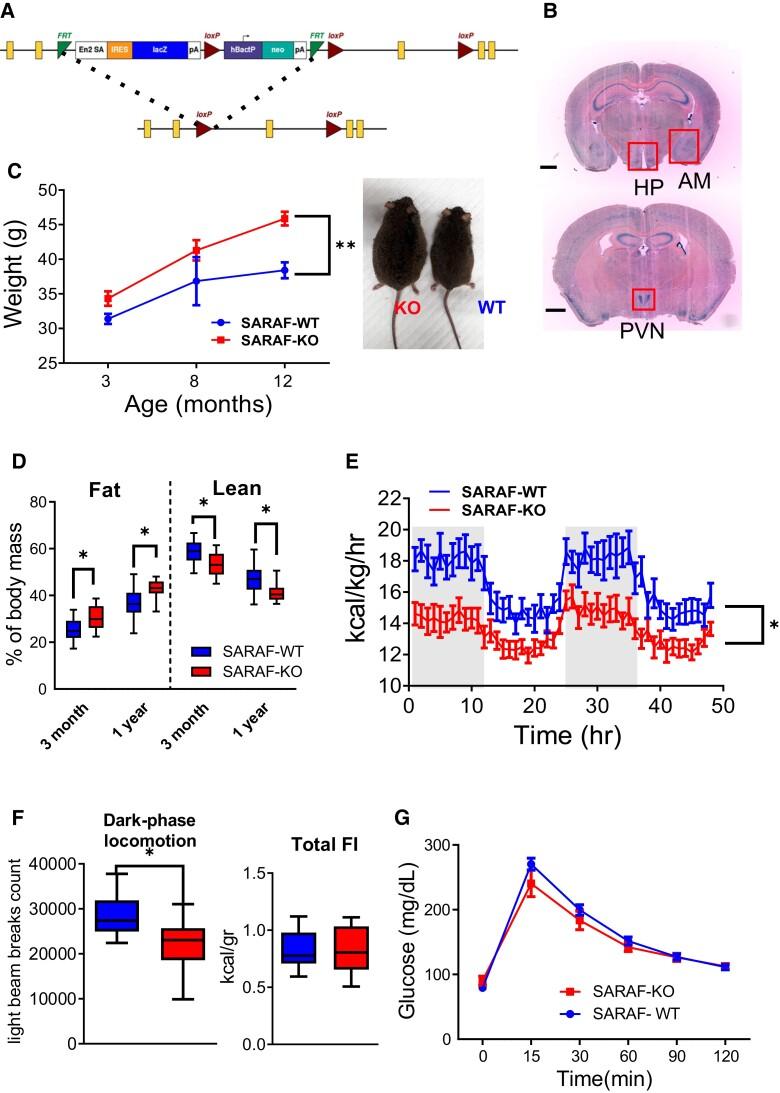
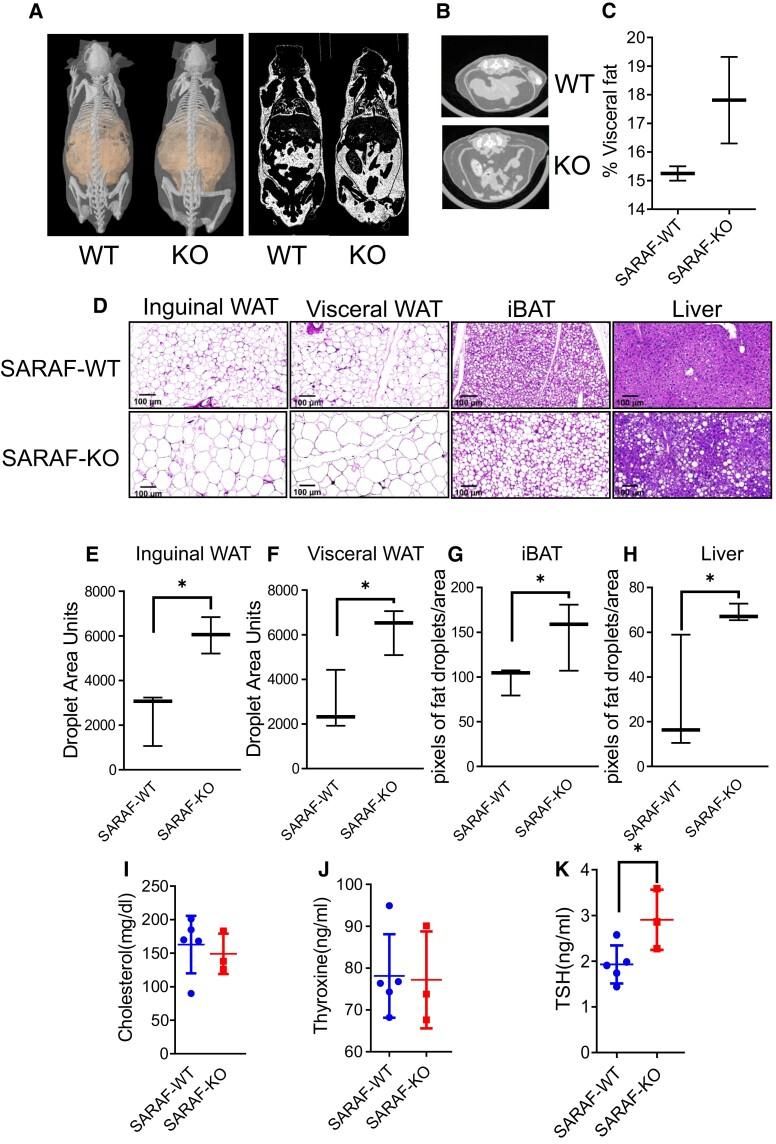
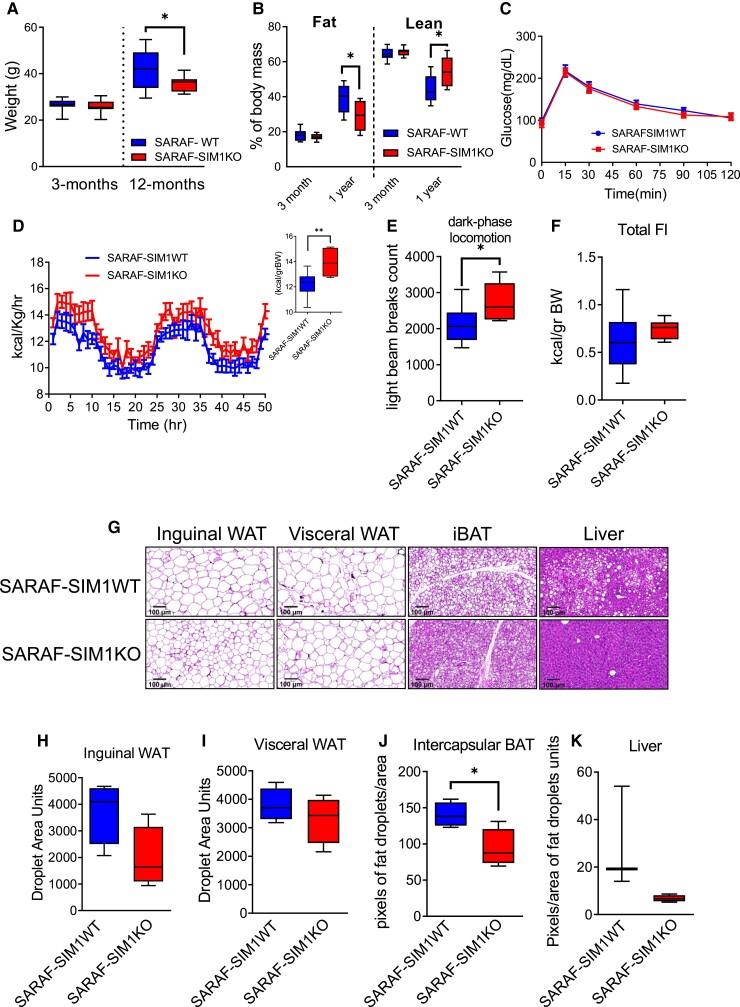
Store-operated calcium entry (SOCE) is a vital process aimed at refilling cellular internal Ca stores and a primary cellular signaling driver for transcription factors' entry to the nucleus. SOCE-associated regulatory factor (SARAF)/TMEM66 is an endoplasmic reticulum (ER)-resident transmembrane protein that promotes SOCE inactivation and prevents Ca overfilling of the cell. Here, we demonstrate that mice deficient in SARAF develop age-dependent sarcopenic obesity with decreased energy expenditure, lean mass, and locomotion without affecting food consumption. Moreover, SARAF ablation reduces hippocampal proliferation, modulates the activity of the hypothalamus-pituitary-adrenal (HPA) axis, and mediates changes in anxiety-related behaviors. Interestingly, selective SARAF ablation in the hypothalamus's paraventricular nucleus (PVN) neurons reduces old age-induced obesity and preserves locomotor activity, lean mass, and energy expenditure, suggesting a possible central control with a site-specific role for SARAF. At the cellular level, SARAF ablation in hepatocytes leads to elevated SOCE, elevated vasopressin-induced Ca oscillations, and an increased mitochondrial spare respiratory capacity (SPC), thus providing insights into the cellular mechanisms that may affect the global phenotypes. These effects may be mediated via the liver X receptor (LXR) and IL-1 signaling metabolic regulators explicitly altered in SARAF ablated cells. In short, our work supports both central and peripheral roles of SARAF in regulating metabolic, behavioral, and cellular responses.
钙库操纵性钙内流(SOCE)是一个至关重要的过程,旨在补充细胞内的钙储存,并且是转录因子进入细胞核的主要细胞信号驱动因素。SOCE相关调节因子(SARAF)/跨膜蛋白66(TMEM66)是一种驻留在内质网(ER)的跨膜蛋白,可促进SOCE失活并防止细胞内钙过载。在此,我们证明,缺乏SARAF的小鼠会出现年龄依赖性的肌肉减少性肥胖,能量消耗、瘦体重和运动能力下降,但不影响食物摄入量。此外,SARAF缺失会减少海马体增殖,调节下丘脑-垂体-肾上腺(HPA)轴的活性,并介导焦虑相关行为的变化。有趣的是,在下丘脑室旁核(PVN)神经元中选择性敲除SARAF可减轻老年引起的肥胖,并保留运动活性、瘦体重和能量消耗,这表明SARAF可能具有位点特异性的中枢控制作用。在细胞水平上,肝细胞中SARAF的缺失会导致SOCE升高、血管加压素诱导的钙振荡增强以及线粒体备用呼吸能力(SPC)增加,从而为可能影响整体表型的细胞机制提供了见解。这些效应可能是通过在敲除SARAF的细胞中明显改变的肝脏X受体(LXR)和白细胞介素-1信号代谢调节因子介导的。简而言之,我们的研究支持了SARAF在调节代谢、行为和细胞反应方面的中枢和外周作用。

 Zotero 插件