
香豆素衍生物对铜绿假单胞菌PAO1的群体感应抑制及抗生物膜活性:来自[具体研究1]和[具体研究2]的见解
Anti-quorum sensing and antibiofilm activity of coumarin derivatives against PAO1: Insights from and studies.
作者信息
Tajani Amineh Sadat, Amiri Tehranizadeh Zeinab, Pourmohammad Arianoosh, Pourmohammad Armin, Iranshahi Milad, Farhadi Faegheh, Soheili Vahid, Fazly Bazzaz Bibi Sedigheh
机构信息
Department of Pharmaceutical Control, School of Pharmacy, Mashhad University of Medical Sciences, Mashhad, Iran.
Department of Medicinal Chemistry, School of Pharmacy, Mashhad University of Medical Sciences, Mashhad, Iran.
出版信息
Iran J Basic Med Sci. 2023 Apr;26(4):445-452. doi: 10.22038/IJBMS.2023.69016.15047.
OBJECTIVES
Biofilm-associated infections are challenging to manage or treat since the biofilm matrix is impenetrable to most antibiotics. Therefore, the best approach to deal with biofilm infections is to interrupt the construction during the initial levels. Biofilm formation has been regulated through the quorum sensing (QS) network, making it an attractive target for any antibacterial therapy.
MATERIALS AND METHODS
Here, some coumarin members, including umbelliprenin, 4-farnesyloxycoumarin, gummosin, samarcandin, farnesifrol A, B, C, and auraptan, have been assessed as QS inhibitors and Their potential inhibitory effects on biofilm formation and virulence factor production of PAO1 were evaluated.
RESULTS
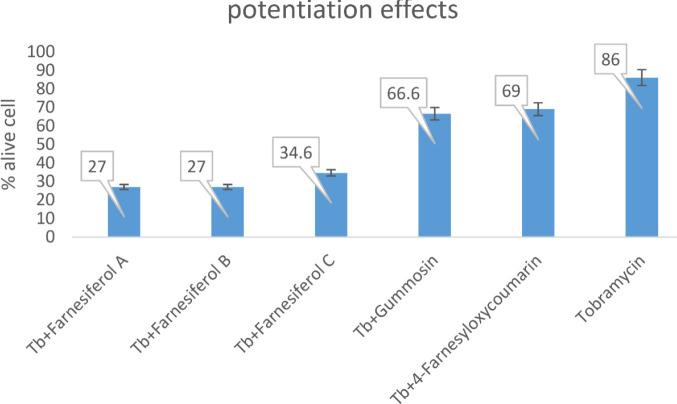
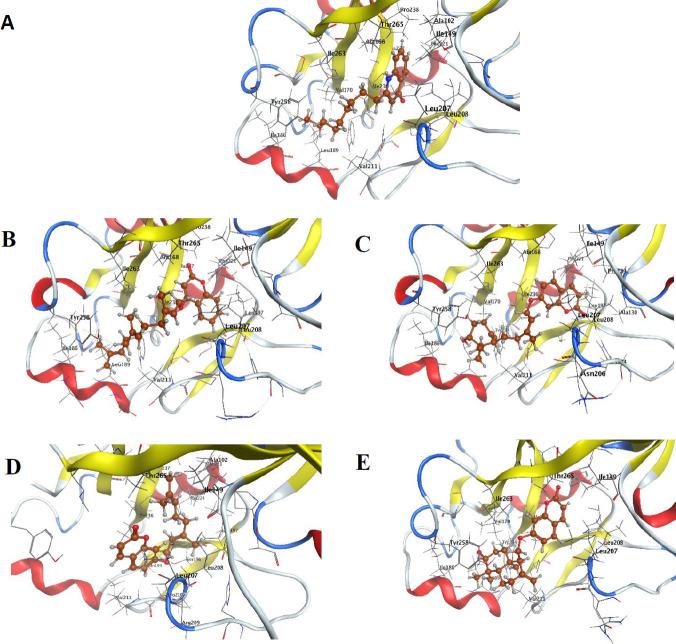
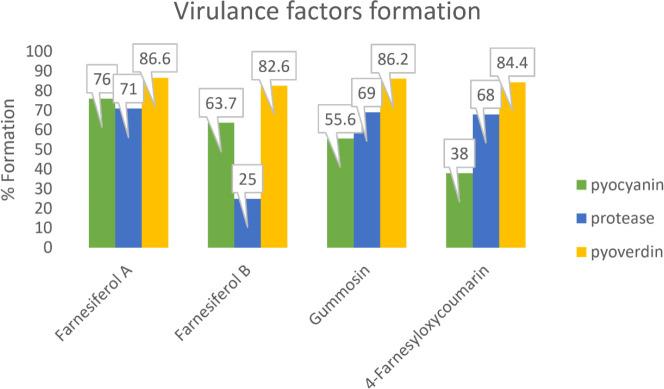
First, the interaction of these compounds was investigated against one of the major transcriptional regulator proteins, PqsR, using molecular docking and structural analysis methodology. After that, evaluations indicated that 4-farnesyloxycoumarin and farnesifrol B showed considerable reduction in biofilm formation (62% and 56%, respectively), virulence factor production, and synergistic effects with tobramycin. Moreover, 4-farnesyloxycoumarin significantly (99.5%) reduced gene expression.
CONCLUSION
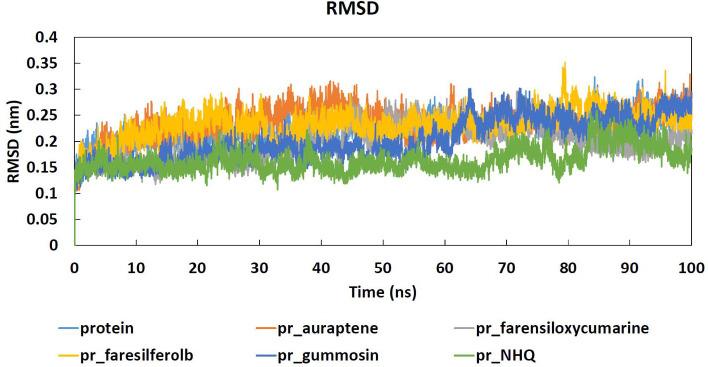
The biofilm formation test, virulence factors production assays, gene expression analysis, and molecular dynamic simulations data demonstrated that coumarin derivatives are a potential anti-QS family through PqsR inhibition.
目的
生物膜相关感染难以管理或治疗,因为生物膜基质对大多数抗生素具有不可渗透性。因此,应对生物膜感染的最佳方法是在初始阶段阻断其形成。生物膜的形成受群体感应(QS)网络调控,这使其成为抗菌治疗的一个有吸引力的靶点。
材料与方法
在此,已评估了一些香豆素成员,包括伞形前胡素、4-法尼基氧基香豆素、古莫辛、萨马坎丁、法尼基醇A、B、C和奥拉普坦作为QS抑制剂,并评估了它们对PAO1生物膜形成和毒力因子产生的潜在抑制作用。
结果
首先,使用分子对接和结构分析方法研究了这些化合物与主要转录调节蛋白之一PqsR的相互作用。此后,评估表明4-法尼基氧基香豆素和法尼基醇B在生物膜形成(分别为62%和56%)、毒力因子产生以及与妥布霉素的协同作用方面有显著降低。此外,4-法尼基氧基香豆素显著(99.5%)降低了基因表达。
结论
生物膜形成试验、毒力因子产生测定、基因表达分析和分子动力学模拟数据表明,香豆素衍生物通过抑制PqsR是一种潜在的抗QS家族。



 Zotero 插件