
药物发现中的大环化合物——从过去中学习,为未来而创新。
Macrocycles in Drug Discovery─Learning from the Past for the Future.
机构信息
Department of Chemistry-BMC, Uppsala University, Box 576, SE-751 23 Uppsala, Sweden.
Department of Molecular Biotechnology and Health Sciences, University of Torino, Quarello 15, 10135 Torino, Italy.
出版信息
J Med Chem. 2023 Apr 27;66(8):5377-5396. doi: 10.1021/acs.jmedchem.3c00134. Epub 2023 Apr 5.
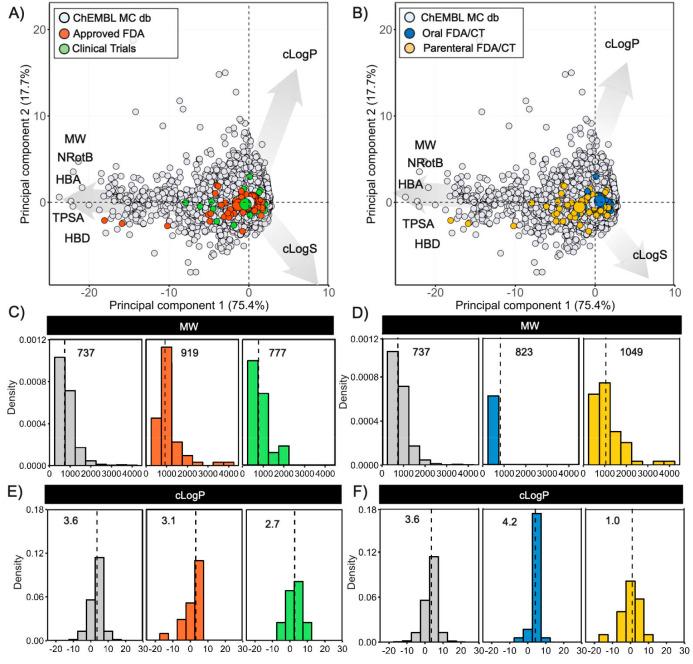
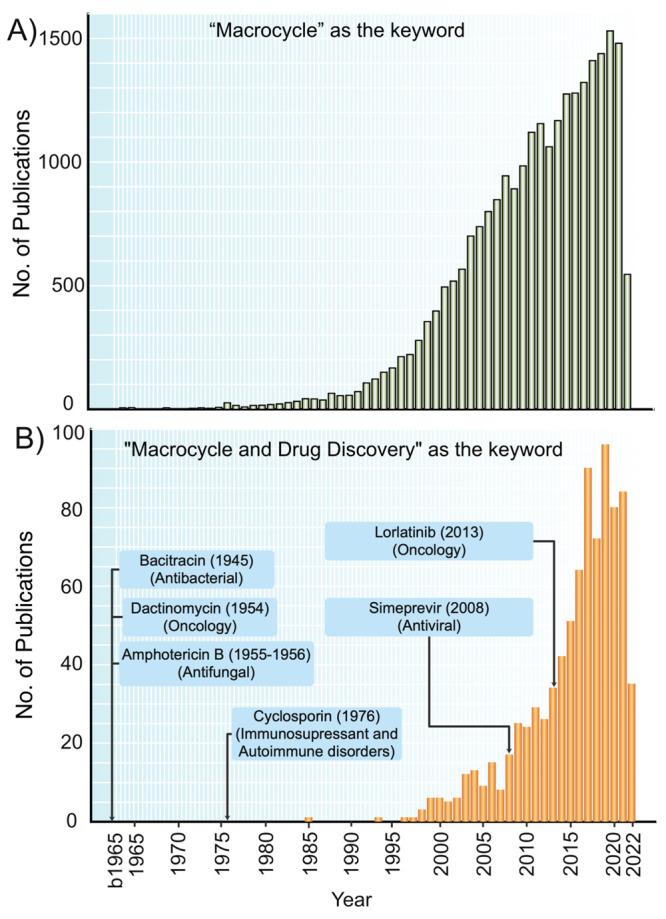
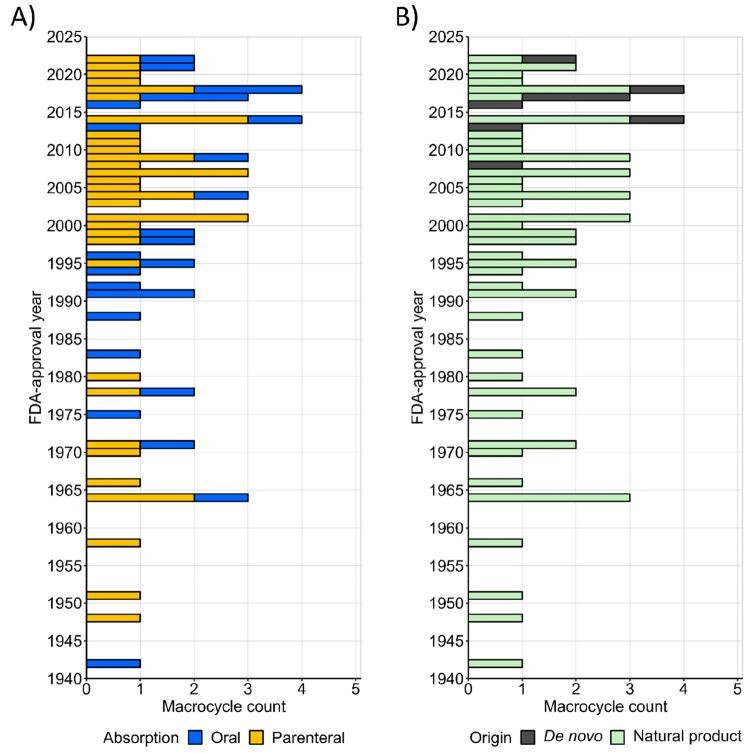
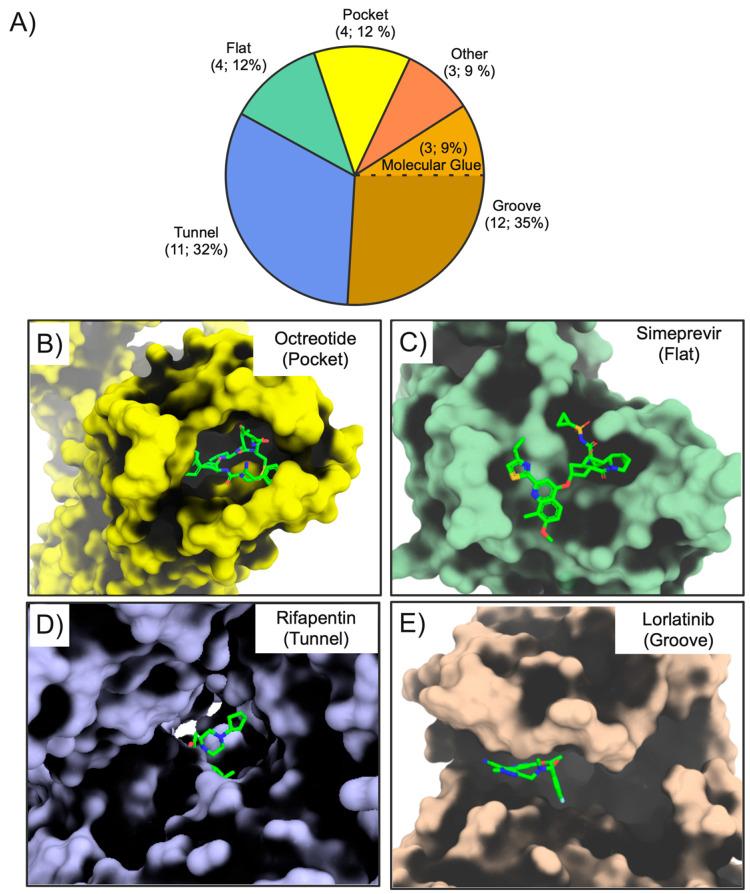
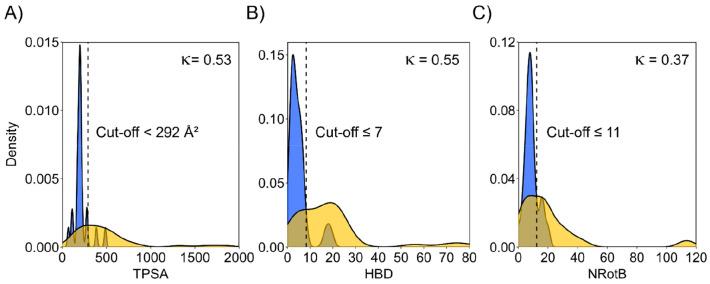
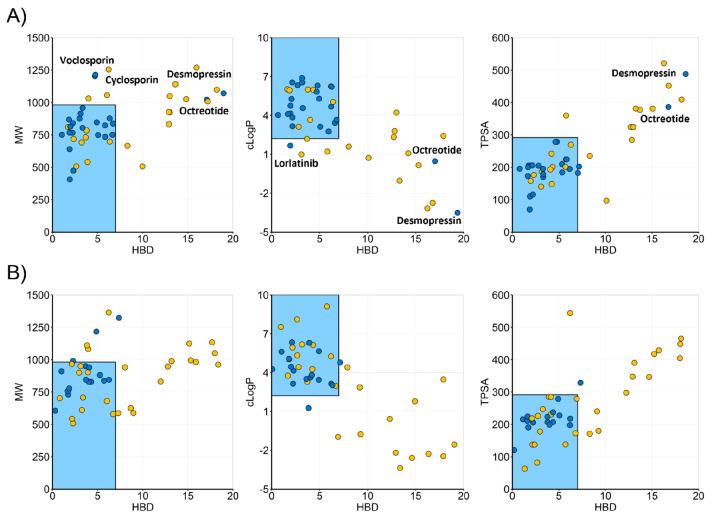
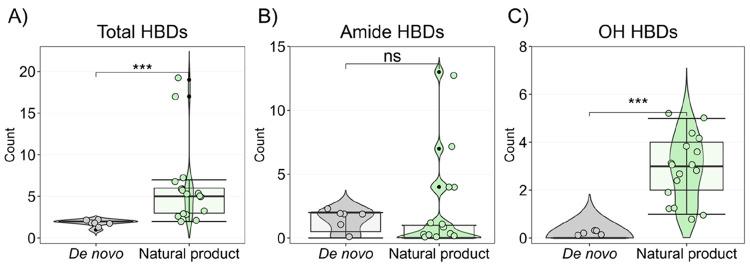
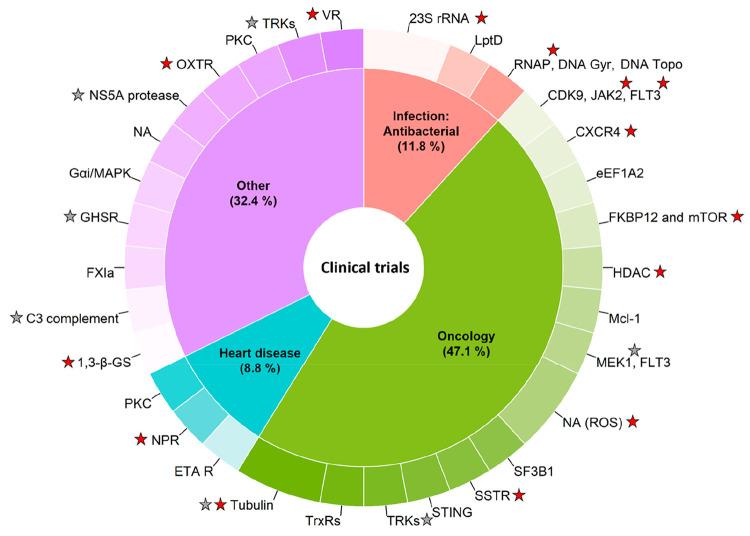
We have analyzed FDA-approved macrocyclic drugs, clinical candidates, and the recent literature to understand how macrocycles are used in drug discovery. Current drugs are mainly used in infectious disease and oncology, while oncology is the major indication for the clinical candidates and in the literature Most macrocyclic drugs bind to targets that have difficult to drug binding sites. Natural products have provided 80-90% of the drugs and clinical candidates, whereas macrocycles in ChEMBL have less complex structures. Macrocycles usually reside in the beyond the Rule of 5 chemical space, but 30-40% of the drugs and clinical candidates are orally bioavailable. Simple bi-descriptor models, i.e., HBD ≤ 7 in combination with either MW < 1000 Da or cLogP > 2.5, distinguished orals from parenterals and can be used as filters in design. We propose that recent breakthroughs in conformational analysis and inspiration from natural products will further improve the de novo design of macrocycles.
我们分析了 FDA 批准的大环药物、临床候选药物和近期文献,以了解大环药物在药物发现中的应用。目前的药物主要用于传染病和肿瘤学,而肿瘤学是临床候选药物和文献中的主要适应症。大多数大环药物与结合部位难以成药的靶点结合。天然产物提供了 80-90%的药物和临床候选药物,而 ChEMBL 中的大环具有较少的复杂结构。大环通常位于 Rule of 5 化学空间之外,但 30-40%的药物和临床候选药物具有口服生物利用度。简单的双描述符模型,即 HBD ≤ 7 与 MW < 1000 Da 或 cLogP > 2.5 相结合,可区分口服和注射药物,并可在设计中用作筛选器。我们提出,构象分析的最新突破和从天然产物中获得的灵感将进一步改进大环的从头设计。



 Zotero 插件