
生物农药暴露不会导致蚊子产生抗药性。
Biopesticide Exposure Does Not Select for Resistance in Mosquitoes.
机构信息
W. Harry Feinstone Department of Molecular Microbiology and Immunology, Bloomberg School of Public Health, Johns Hopkins University, Baltimore, Maryland, USA.
Florida Medical Entomology Laboratory, Department of Entomology & Nematology, Institute of Food & Agricultural Sciences, University of Florida, Vero Beach, Florida, USA.
出版信息
mBio. 2023 Apr 25;14(2):e0048023. doi: 10.1128/mbio.00480-23. Epub 2023 Apr 5.
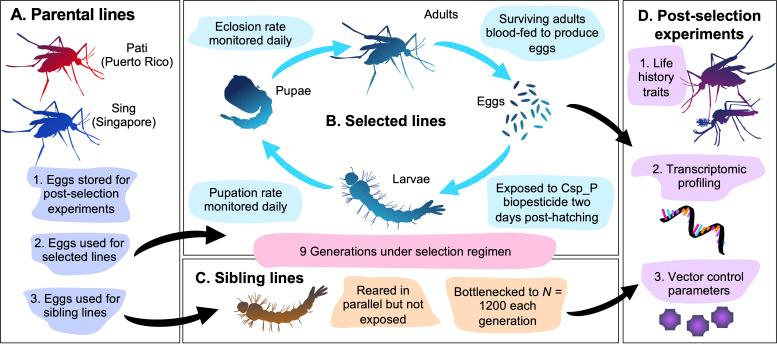
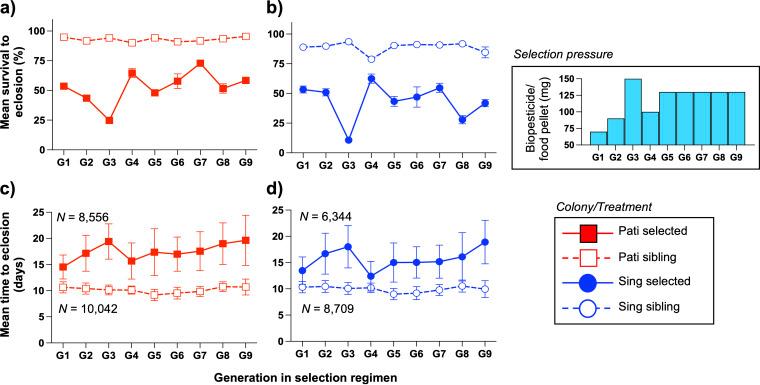
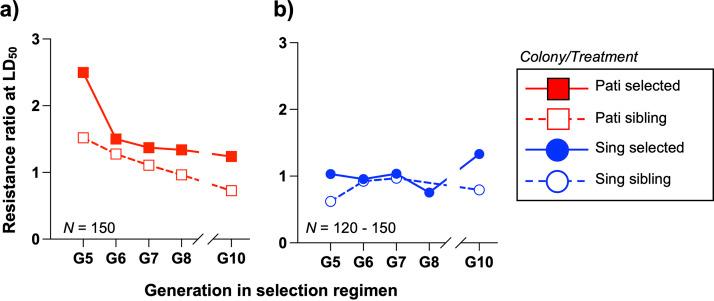
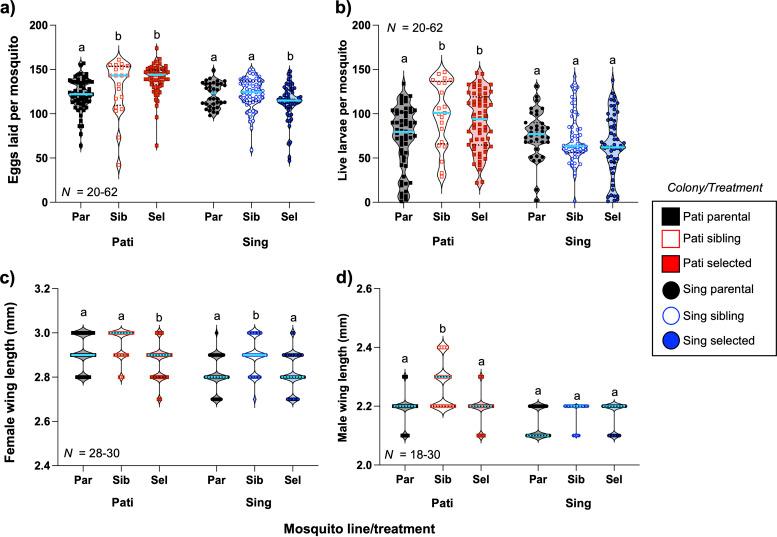
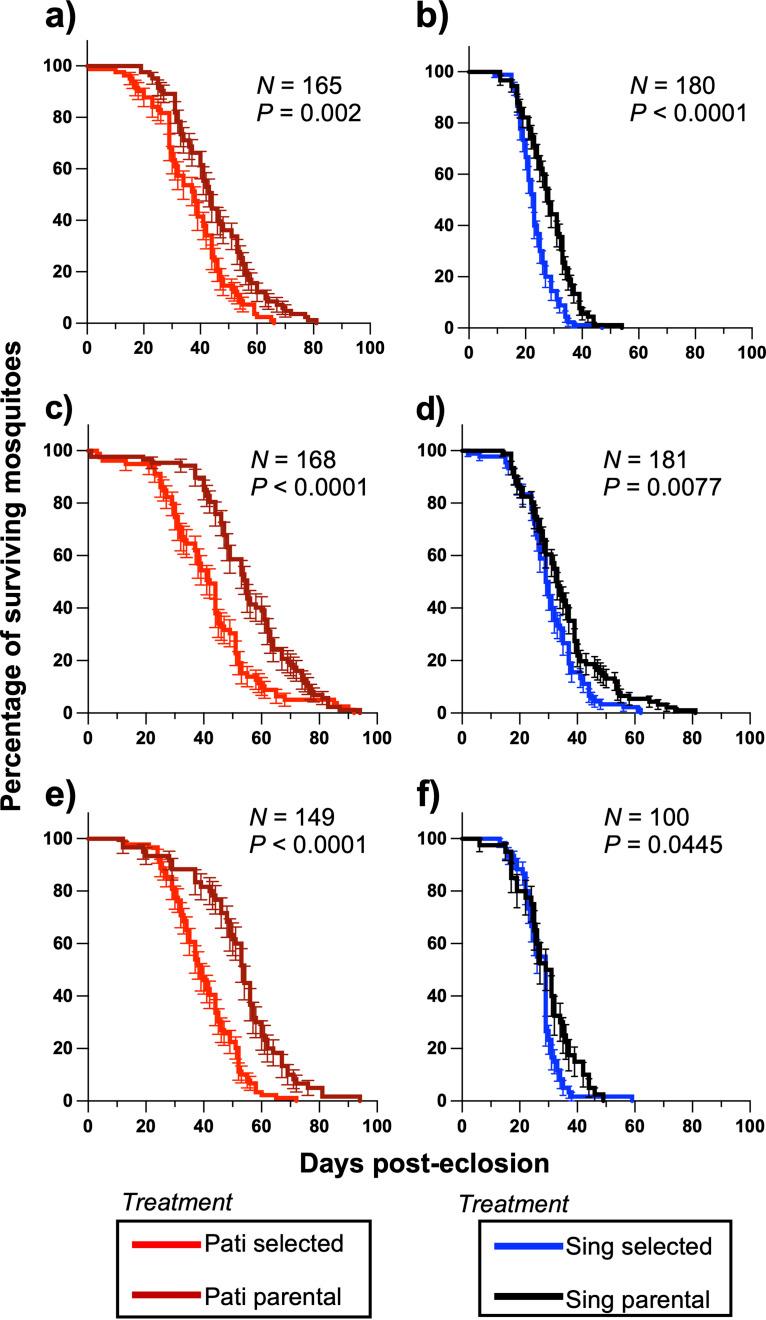
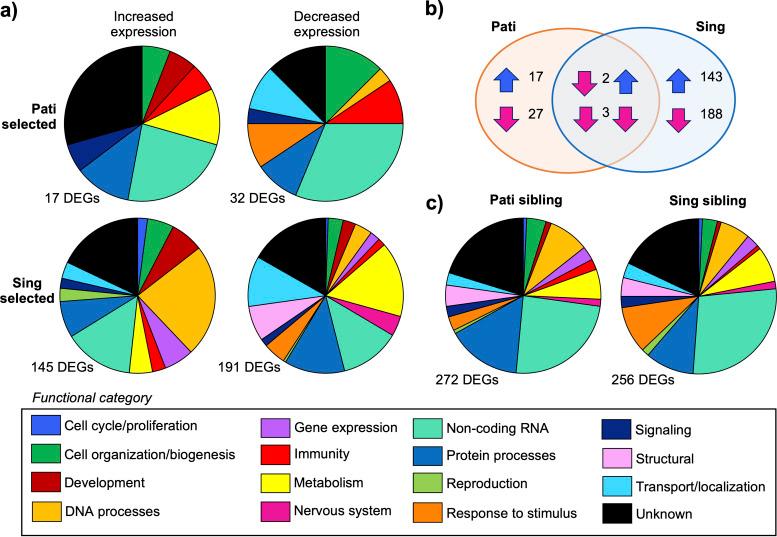
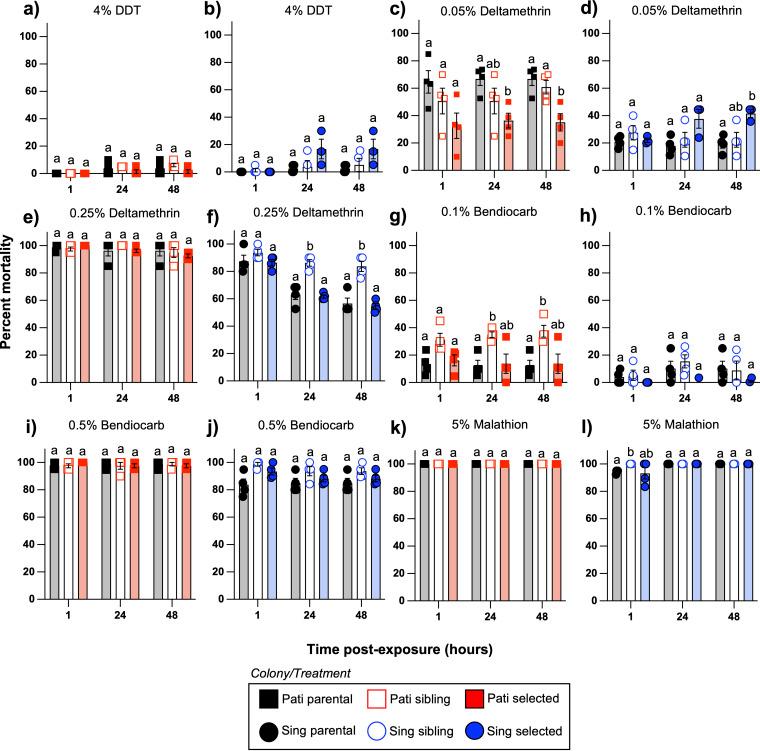
Developing effective tools to control mosquito populations is essential for reducing the incidence of diseases like malaria and dengue. Biopesticides of microbial origin are a rich, underexplored source of mosquitocidal compounds. We previously developed a biopesticide from the bacterium Chromobacterium sp. Panama that rapidly kills vector mosquito larvae, including Aedes aegypti and Anopheles gambiae. Here, we demonstrate that two independent Ae. aegypti colonies exposed to a sublethal dose of that biopesticide over consecutive generations persistently exhibited high mortality and developmental delays, indicating that resistance did not develop during the study period. Critically, the descendants of biopesticide-exposed mosquitoes experienced decreased longevity and did not display increased susceptibility to dengue virus or decreased susceptibility to common chemical insecticides. Through RNA sequencing, we observed no link between biopesticide exposure and the increased activity of xenobiotic metabolism and detoxification genes typically associated with insecticide resistance. These findings indicate that the Chromobacterium biopesticide is an exciting, emerging mosquito control tool. Vector control is an essential part of mitigating diseases caused by pathogens that mosquitoes spread. Modern vector control is highly reliant on using synthetic insecticides to eliminate mosquito populations before they can cause disease. However, many of these populations have become resistant to commonly used insecticides. There is a strong need to explore alternative vector control strategies that aim to mitigate disease burden. Biopesticides, insecticides of biological origin, can have unique mosquitocidal activities, meaning they can effectively kill mosquitoes that are already resistant to other insecticides. We previously developed a highly effective mosquito biopesticide from the bacterium Chromobacterium sp. Csp_P. Here, we investigate whether exposure to a sublethal dose of this Csp_P biopesticide over 9 to 10 generations causes resistance to arise in Aedes aegypti mosquitoes. We find no evidence of resistance at the physiological or molecular levels, confirming that the Csp_P biopesticide is a highly promising new tool for controlling mosquito populations.
开发有效的控制蚊虫种群的工具对于降低疟疾和登革热等疾病的发病率至关重要。微生物源生物农药是一种丰富但尚未充分开发的杀蚊化合物来源。我们之前开发了一种源自巴拿马 Chromobacterium sp. 的生物农药,它可以快速杀死包括埃及伊蚊和冈比亚按蚊在内的病媒蚊幼虫。在这里,我们证明,连续几代暴露于亚致死剂量的生物农药的两个独立的埃及伊蚊种群持续表现出高死亡率和发育延迟,表明在研究期间没有产生抗药性。至关重要的是,暴露于生物农药的蚊子的后代寿命缩短,并且对登革热病毒的敏感性没有增加,对常见的化学杀虫剂的敏感性也没有降低。通过 RNA 测序,我们没有发现生物农药暴露与通常与杀虫剂抗性相关的外来生物代谢和解毒基因活性增加之间的联系。这些发现表明,Chromobacterium 生物农药是一种令人兴奋的新兴蚊子控制工具。
病媒控制是减轻由蚊子传播的病原体引起的疾病的重要组成部分。现代病媒控制高度依赖于使用合成杀虫剂在蚊子引起疾病之前消灭蚊子种群。然而,许多这些种群已经对常用杀虫剂产生了抗性。强烈需要探索旨在减轻疾病负担的替代病媒控制策略。生物农药,即生物来源的杀虫剂,可以具有独特的杀蚊活性,这意味着它们可以有效地杀死已经对其他杀虫剂产生抗性的蚊子。我们之前从 Chromobacterium sp. Csp_P 细菌中开发了一种非常有效的蚊子生物农药。在这里,我们研究了在 9 到 10 代中暴露于亚致死剂量的这种 Csp_P 生物农药是否会导致埃及伊蚊产生抗药性。我们在生理或分子水平上都没有发现抗药性的证据,这证实了 Csp_P 生物农药是一种非常有前途的控制蚊子种群的新工具。

 Zotero 插件