
成年斑马鱼(Danio rerio)在预测的环境相关浓度下暴露于 SARS-CoV-2 :扩散警告对淡水鱼类的生态毒理学风险。
Exposure of adult zebrafish (Danio rerio) to SARS-CoV-2 at predicted environmentally relevant concentrations: Outspreading warns about ecotoxicological risks to freshwater fish.
机构信息
Laboratory of Toxicology Applied to the Environment, Goiano Federal Institute, Urutaí, GO, Brazil; Post-Graduation Program in Conservation of Cerrado Natural Resources, Goiano Federal Institute, Urutaí, GO, Brazil.
Laboratory of Toxicology Applied to the Environment, Goiano Federal Institute, Urutaí, GO, Brazil.
出版信息
Sci Total Environ. 2023 Jul 1;880:163269. doi: 10.1016/j.scitotenv.2023.163269. Epub 2023 Apr 5.
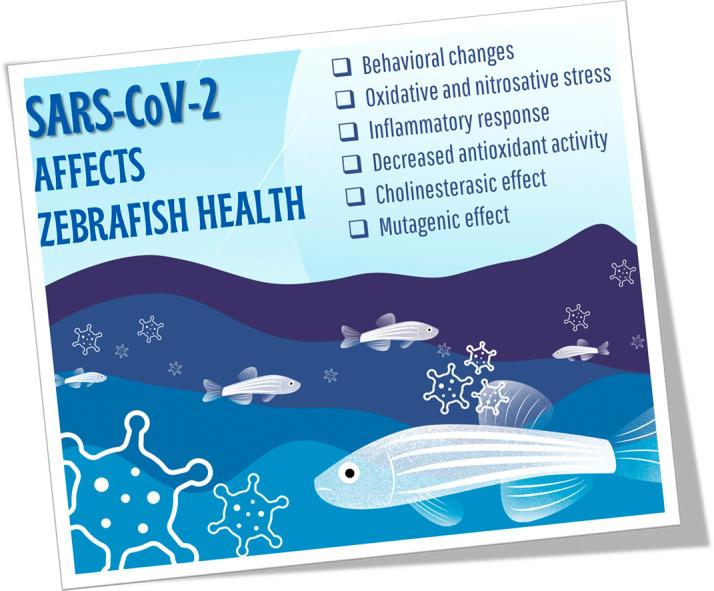
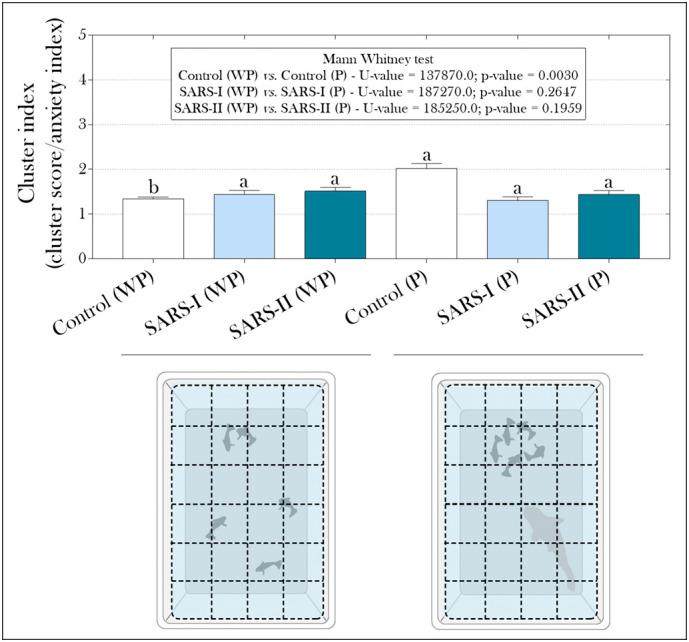
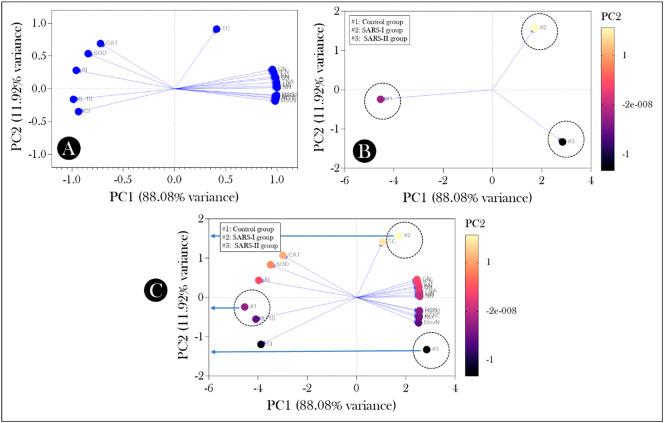
While the multifaceted social, economic, and public health impacts associated with the COVID-19 pandemic are known, little is known about its effects on non-target aquatic ecosystems and organisms. Thus, we aimed to evaluate the potential ecotoxicity of SARS-CoV-2 lysate protein (SARS.CoV2/SP02.2020.HIAE.Br) in adult zebrafish (Danio rerio) at predicted environmentally relevant concentrations (0.742 and 2.226 pg/L), by 30 days. Although our data did not show locomotor alterations or anxiety-like or/and anxiolytic-like behavior, we noticed that exposure to SARS-CoV-2 negatively affected habituation memory and social aggregation of animals in response to a potential aquatic predator (Geophagus brasiliensis). An increased frequency of erythrocyte nuclear abnormalities was also observed in animals exposed to SARS-CoV-2. Furthermore, our data suggest that such changes were associated with a redox imbalance [↑ROS (reactive oxygen species), ↑HO (hydrogen peroxide), ↓SOD (superoxide dismutase), and ↓CAT (catalase)], cholinesterasic effect [↑AChE (acetylcholinesterase) activity], as well as the induction of an inflammatory immune response [↑NO (nitric oxide), ↑IFN-γ (interferon-gamma), and ↓IL-10 (interleukin-10)]. For some biomarkers, we noticed that the response of the animals to the treatments was not concentration-dependent. However, principal component analysis (PCA) and the "Integrated Biomarker Response" index (IBRv2) indicated a more prominent ecotoxicity of SARS-CoV-2 at 2.226 pg/L. Therefore, our study advances knowledge about the ecotoxicological potential of SARS-CoV-2 and reinforces the presumption that the COVID-19 pandemic has negative implications beyond its economic, social, and public health impacts.
虽然已知与 COVID-19 大流行相关的多方面的社会、经济和公共卫生影响,但对于其对非目标水生生态系统和生物的影响知之甚少。因此,我们旨在评估 SARS-CoV-2 裂解蛋白(SARS.CoV2/SP02.2020.HIAE.Br)在预测的环境相关浓度(0.742 和 2.226 pg/L)下对成年斑马鱼(Danio rerio)的潜在生态毒性,持续 30 天。尽管我们的数据并未显示出运动改变或焦虑样或/和抗焦虑样行为,但我们注意到,暴露于 SARS-CoV-2 会对动物的习惯记忆和对潜在水生捕食者(Geophagus brasiliensis)的社交聚集产生负面影响。还观察到暴露于 SARS-CoV-2 的动物的红细胞核异常的频率增加。此外,我们的数据表明,这些变化与氧化还原失衡有关[↑ROS(活性氧),↑HO(过氧化氢),↓SOD(超氧化物歧化酶)和↓CAT(过氧化氢酶)],胆碱酯酶作用[↑AChE(乙酰胆碱酯酶)活性],以及诱导炎症免疫反应[↑NO(一氧化氮),↑IFN-γ(干扰素-γ)和↓IL-10(白细胞介素-10)]。对于一些生物标志物,我们注意到动物对处理的反应不是浓度依赖性的。但是,主成分分析(PCA)和“综合生物标志物反应”指数(IBRv2)表明 SARS-CoV-2 在 2.226 pg/L 时具有更明显的生态毒性。因此,我们的研究增进了对 SARS-CoV-2 生态毒性潜力的认识,并强化了 COVID-19 大流行除了对经济、社会和公共卫生的影响之外,还具有负面影响的假设。




 Zotero 插件