
通过 Toll 样受体 4 对抗实验内脏利什曼病,解析 sp. 衍生蛋白蛋白酶抑制剂对巨噬细胞再极化潜能的作用机制。
Unwinding the mechanism of macrophage repolarization potential of sp. -derived protein protease inhibitor through Toll-like receptor 4 against experimental visceral leishmaniasis.
机构信息
Department of Biotechnology, School of Chemical and Biotechnology, SASTRA Deemed to be University, Thanjavur, India.
Department of Paramedical and Allied Health Sciences, Midnapore City College, Midnapore, India.
出版信息
Front Cell Infect Microbiol. 2023 Mar 22;13:1120888. doi: 10.3389/fcimb.2023.1120888. eCollection 2023.
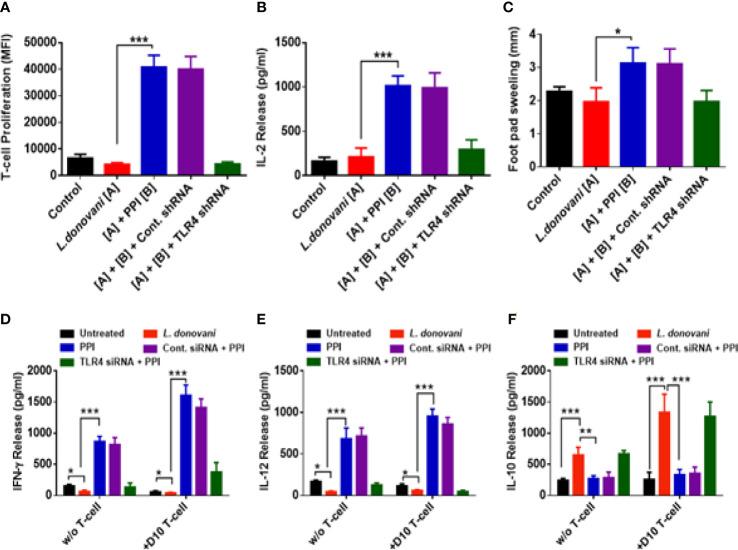
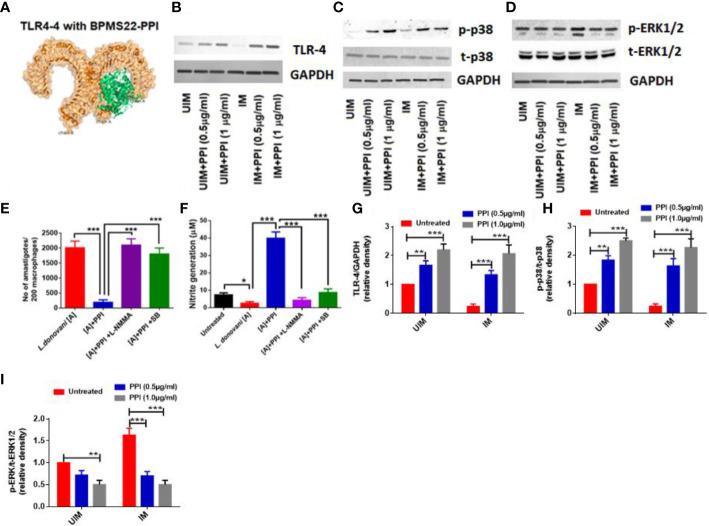
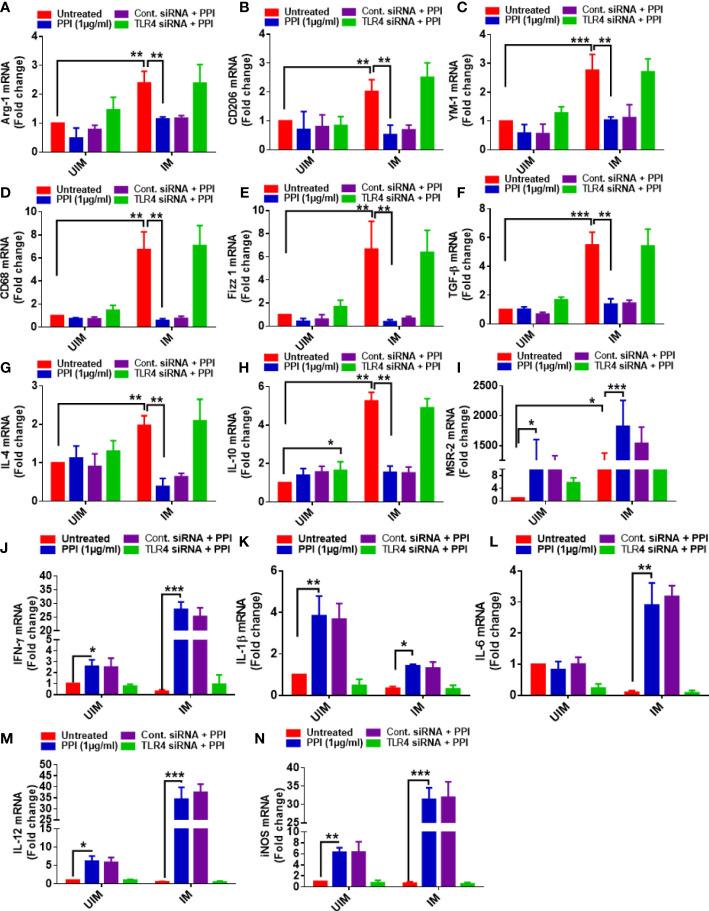
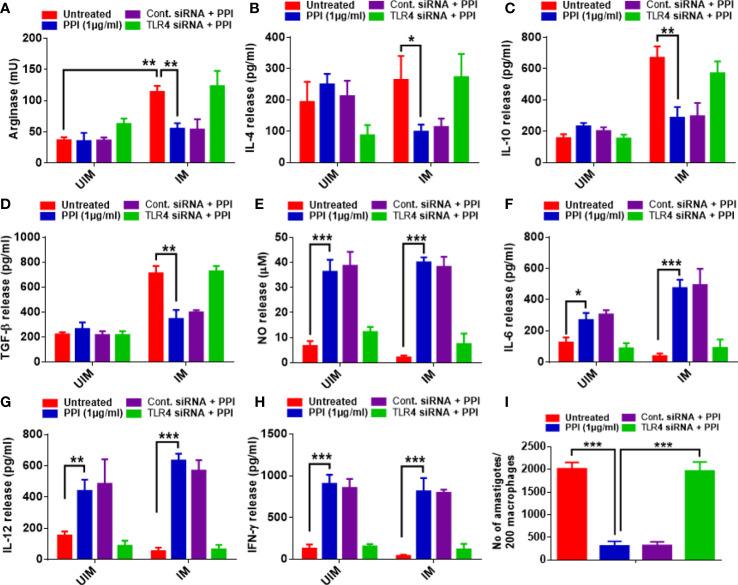
The sp. -derived protein protease inhibitor (PPI) has been proven to shift macrophages towards an inflammatory state and reduce infection and . The current study explored and validated the mechanistic aspects of the PPI and Toll-like receptor (TLR) interaction. The PPI exhibited the upregulation of TLR2, TLR4, and TLR6 during treatment which was proven to orchestrate parasite clearance effectively. An study confirmed the high interaction with TLR4 and PPI. Immune blotting confirmed the significant upregulation of TLR4 in macrophages irrespective of infection. Pharmacological inhibition and immune blot study confirmed the involvement of the PPI in TLR4-mediated phosphorylation of p38 MAPK and dephosphorylation of ERK1/2, repolarizing to pro-inflammatory macrophage state against experimental visceral leishmaniasis. In addition, in TLR4 knockdown condition, PPI treatment failed to diminish M2 phenotypical markers (CD68, Fizz1, Ym1, CD206, and MSR-2) and anti-inflammatory cytokines (IL-4, IL-10, and TGF-β). Simultaneously, the PPI failed to upregulate the M1 phenotypical markers and pro-inflammatory cytokines (IL-1β, IL-6, IL-12, and IFN-γ) ( < 0.001) during the TLR4 knockdown condition. In the absence of TLR4, the PPI also failed to reduce the parasite load and T-cell proliferation and impaired the delayed-type hypersensitivity response. The absence of pro-inflammatory cytokines was observed during a co-culture study with PPI-treated macrophages (in the TLR4 knockdown condition) with day 10 T-cell obtained from -infected mice. This study supports the immunotherapeutic potential of the PPI as it interacted with TLR4 and promoted macrophage repolarization (M2-M1) to restrict the parasite burden and helps in the mounting immune response against experimental visceral leishmaniasis.
该种衍生的蛋白蛋白酶抑制剂(PPI)已被证明可使巨噬细胞向炎症状态转变,并减少感染和。本研究探讨并验证了 PPI 与 Toll 样受体(TLR)相互作用的机制方面。在治疗过程中,PPI 表现出 TLR2、TLR4 和 TLR6 的上调,这被证明能有效地协调寄生虫清除。一项研究证实了它与 TLR4 的高相互作用。免疫印迹法证实,无论是否存在感染,巨噬细胞中 TLR4 的表达显著上调。药理抑制和免疫印迹研究证实,PPI 参与 TLR4 介导的 p38 MAPK 磷酸化和 ERK1/2 去磷酸化,使巨噬细胞向促炎表型极化,从而抵抗实验性内脏利什曼病。此外,在 TLR4 敲低的情况下,PPI 处理未能减少 M2 表型标志物(CD68、Fizz1、Ym1、CD206 和 MSR-2)和抗炎细胞因子(IL-4、IL-10 和 TGF-β)。同时,在 TLR4 敲低的情况下,PPI 也未能上调 M1 表型标志物和促炎细胞因子(IL-1β、IL-6、IL-12 和 IFN-γ)(<0.001)。在没有 TLR4 的情况下,PPI 也未能减少寄生虫负荷和 T 细胞增殖,并损害迟发型超敏反应。在与用 PPI 处理的巨噬细胞(在 TLR4 敲低的情况下)进行共培养研究时,观察到缺乏促炎细胞因子,这些巨噬细胞是用从感染的小鼠获得的第 10 天 T 细胞。这项研究支持 PPI 的免疫治疗潜力,因为它与 TLR4 相互作用,促进巨噬细胞重极化(M2-M1),以限制寄生虫负担,并有助于对实验性内脏利什曼病产生免疫反应。


 Zotero 插件