
偏头痛症状、医疗资源利用和波兰大规模偏头痛队列的疾病负担:来自“波兰偏头痛”全国性横断面调查的结果。
Migraine symptoms, healthcare resources utilization and disease burden in a large Polish migraine cohort : Results from 'Migraine in Poland'-a nationwide cross-sectional survey.
机构信息
Department of Neurology, Wrocław Medical University, Borowska 213 Str., 50-556, Wrocław, Poland.
Department of Family Medicine and Infectious Diseases, University of Warmia and Mazury, Olsztyn, Poland.
出版信息
J Headache Pain. 2023 Apr 11;24(1):40. doi: 10.1186/s10194-023-01575-4.
BACKGROUND
The Migraine in Poland study is the first large scale nationwide cross-sectional online survey of symptoms, approaches to management, treatment patterns, quality of life, and sociodemographic characteristics of the Polish migraine patients' cohort, conducted from August 2021 to June 2022.
METHODS
A cross-sectional online survey was designed based on the American Migraine Prevalence and Prevention (AMPP) Study. Participants were recruited through broad advertisement through various channels. The survey included questions allowing for the diagnosis of migraine without aura (MwoA) based on the third edition of the International Classification of Headache Disorders (ICHD-3). Moreover, the questionnaire assessed sociodemographic and headache features, comorbidities, consultation rates with medical professionals, as well as the use of abortive or preventive treatment, including non-pharmacological methods, psychological symptoms and the burden of migraine.
RESULTS
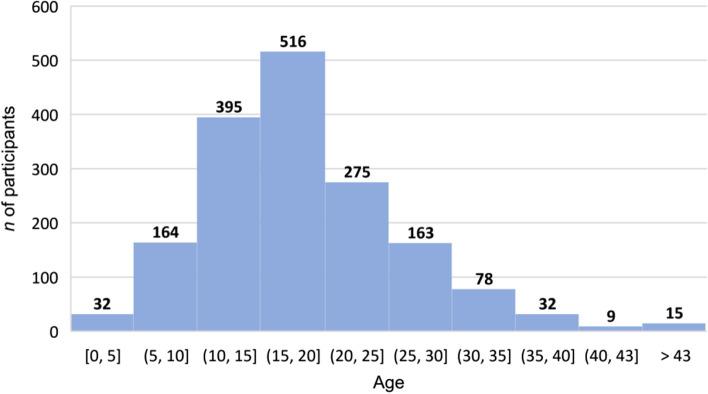
A structured online questionnaire was submitted by 3225 respondents aged 13 to 80 (mean age 38.9, 87.1% women). In this group 1679 (52.7%) of participants fulfilled ICHD-3 diagnostic criteria for MwoA, which was in most cases (88.3%) confirmed by a medical professional in the past. In this group the average number of monthly headache days was 4.7, while 47.8% of participants had at least 4 migraine days per month. Mean Migraine Disability Assessment score was 42.65 (median 32). Among MwoA respondents, 1571 (93.6%) had consulted their headache with a medical professional in the past - mostly neurologists (n = 1450 (83.4%) and primary care physicians (n = 1393 (82.9%). In the MwoA cohort, 1553 (92.5%) of participants declared the current use of some form of treatment, although only 193 (11.5%) respondents were currently on preventive medications. The most prevalent comorbidities included: chronic rhinitis (37.1%), allergies (35.9%) and low blood pressure (26.9%). Anxiety (20.4%) and depression (21.3%) were highly prevalent among participants.
CONCLUSIONS
People with migraine in Poland face similar difficulties as their peers in other countries. Despite relatively high access to neurologist consultations and good diagnosis accuracy, migraine still poses diagnostic and therapeutic difficulties. In this context, migraine undertreatment in Polish population must be underlined, especially in context of high disease burden.
背景
波兰偏头痛研究是首次对波兰偏头痛患者的症状、管理方法、治疗模式、生活质量和社会人口特征进行的全国性、大规模、横断面在线调查,于 2021 年 8 月至 2022 年 6 月进行。
方法
基于美国偏头痛患病率和预防(AMPP)研究设计了一项横断面在线调查。通过各种渠道广泛宣传招募参与者。该调查包括允许根据第三版国际头痛疾病分类(ICHD-3)诊断无先兆偏头痛(MwoA)的问题。此外,问卷评估了社会人口统计学和头痛特征、合并症、与医疗专业人员的咨询率,以及使用治标或预防性治疗,包括非药物治疗、心理症状和偏头痛负担。
结果
3225 名年龄在 13 至 80 岁(平均年龄 38.9,87.1%为女性)的参与者提交了一份结构化的在线问卷。在这一组中,1679 名(52.7%)参与者符合 ICHD-3 的 MwoA 诊断标准,其中大多数(88.3%)在过去曾由医疗专业人员确认。在这一组中,每月头痛天数的平均值为 4.7,而 47.8%的参与者每月至少有 4 天偏头痛。平均偏头痛残疾评估评分 42.65(中位数 32)。在 MwoA 受访者中,1571 名(93.6%)在过去曾就头痛咨询过医疗专业人员——大多数是神经科医生(n=1450(83.4%)和初级保健医生(n=1393(82.9%)。在 MwoA 队列中,1553 名(92.5%)参与者表示目前正在使用某种形式的治疗,但只有 193 名(11.5%)参与者目前正在使用预防性药物。最常见的合并症包括:慢性鼻炎(37.1%)、过敏(35.9%)和低血压(26.9%)。参与者中焦虑(20.4%)和抑郁(21.3%)的患病率很高。
结论
波兰的偏头痛患者与其他国家的同龄人面临着类似的困难。尽管相对容易获得神经科医生的咨询和较高的诊断准确性,但偏头痛仍然存在诊断和治疗方面的困难。在这种情况下,必须强调波兰人群中偏头痛治疗不足的问题,尤其是在疾病负担较高的情况下。
 Zotero 插件