
巨噬细胞在镰状细胞病红细胞吞噬和红细胞生成中的作用。
Role of Macrophages in Sickle Cell Disease Erythrophagocytosis and Erythropoiesis.
机构信息
Hematology and Hemotherapy Center, University of Campinas, UNICAMP, Campinas 13083-878, Brazil.
出版信息
Int J Mol Sci. 2023 Mar 28;24(7):6333. doi: 10.3390/ijms24076333.
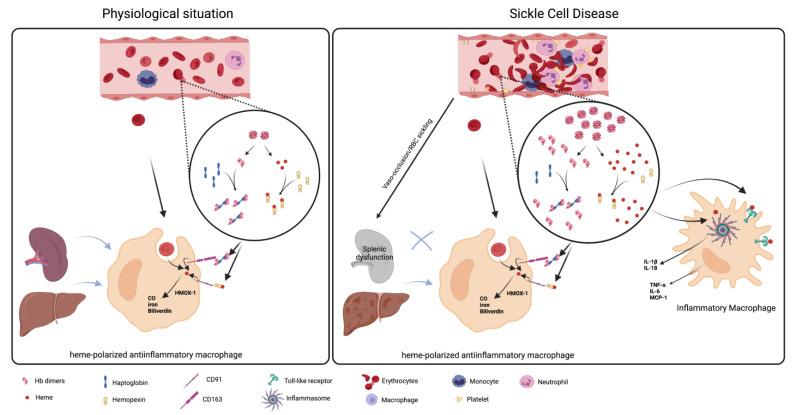
Sickle cell disease (SCD) is an inherited blood disorder caused by a β-globin gene point mutation that results in the production of sickle hemoglobin that polymerizes upon deoxygenation, causing the sickling of red blood cells (RBCs). RBC deformation initiates a sequence of events leading to multiple complications, such as hemolytic anemia, vaso-occlusion, chronic inflammation, and tissue damage. Macrophages participate in extravascular hemolysis by removing damaged RBCs, hence preventing the release of free hemoglobin and heme, and triggering inflammation. Upon erythrophagocytosis, macrophages metabolize RBC-derived hemoglobin, activating mechanisms responsible for recycling iron, which is then used for the generation of new RBCs to try to compensate for anemia. In the bone marrow, macrophages can create specialized niches, known as erythroblastic islands (EBIs), which regulate erythropoiesis. Anemia and inflammation present in SCD may trigger mechanisms of stress erythropoiesis, intensifying RBC generation by expanding the number of EBIs in the bone marrow and creating new ones in extramedullary sites. In the current review, we discuss the distinct mechanisms that could induce stress erythropoiesis in SCD, potentially shifting the macrophage phenotype to an inflammatory profile, and changing their supporting role necessary for the proliferation and differentiation of erythroid cells in the disease. The knowledge of the soluble factors, cell surface and intracellular molecules expressed by EBI macrophages that contribute to begin and end the RBC's lifespan, as well as the understanding of their signaling pathways in SCD, may reveal potential targets to control the pathophysiology of the disease.
镰状细胞病 (SCD) 是一种遗传性血液疾病,由β-球蛋白基因突变引起,导致异常血红蛋白的产生,脱氧后聚合,导致红细胞 (RBC) 镰变。红细胞变形引发一系列事件,导致多种并发症,如溶血性贫血、血管阻塞、慢性炎症和组织损伤。巨噬细胞通过去除受损的 RBC 参与血管外溶血,从而防止游离血红蛋白和血红素的释放,并引发炎症。在红细胞吞噬作用下,巨噬细胞代谢 RBC 衍生的血红蛋白,激活负责回收铁的机制,然后将铁用于生成新的 RBC,以尝试补偿贫血。在骨髓中,巨噬细胞可以创建专门的龛位,称为成红细胞岛 (EBI),调节红细胞生成。SCD 中的贫血和炎症可能引发应激性红细胞生成的机制,通过增加骨髓中 EBI 的数量并在骨髓外部位创建新的 EBI 来增强 RBC 的生成。在当前的综述中,我们讨论了可能在 SCD 中诱导应激性红细胞生成的不同机制,这些机制可能使巨噬细胞表型向炎症表型转变,并改变其在疾病中增殖和分化成红细胞所必需的支持作用。了解 EBI 巨噬细胞表达的可溶性因子、细胞表面和细胞内分子,这些因子有助于开始和结束 RBC 的寿命,以及了解它们在 SCD 中的信号通路,可能揭示控制疾病病理生理学的潜在靶点。

 Zotero 插件