
南非一家三级医院妇科肿瘤病房在当地 COVID-19 大流行期间及之后对医疗必需、时间敏感的分诊评分的评估。
Evaluation of the medically necessary, time sensitive triage score during and beyond the local COVID-19 pandemic in the Gynaecologic Oncology Unit of a tertiary hospital in South Africa.
机构信息
Department of Obstetrics and Gynaecology, Gynaecologic Oncology Unit, University of Pretoria, Pretoria, South Africa.
Department of Obstetrics and Gynaecology, Gynaecologic Oncology Unit, Steve Biko Academic Hospital, Pretoria, South Africa.
出版信息
PLoS One. 2023 Apr 13;18(4):e0284177. doi: 10.1371/journal.pone.0284177. eCollection 2023.
OBJECTIVE
The main objective of this study was to evaluate the Medically Necessary Time Sensitive (MeNTS) scoring system in triaging gynaecologic oncologic surgery during and beyond the COVID-19 pandemic.
MATERIAL AND METHODS
This was a retrospective cross-sectional study including 209 patients who either had surgery (151) or surgery postponed (58) between the 26th March and 30th September 2020 in an academic hospital in South Africa. The MeNTS score was used to independently score each patient three times by two observers.
RESULTS
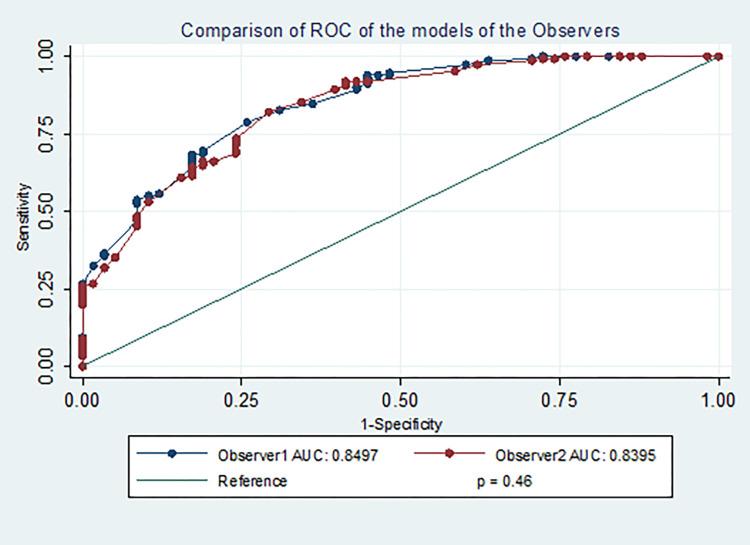
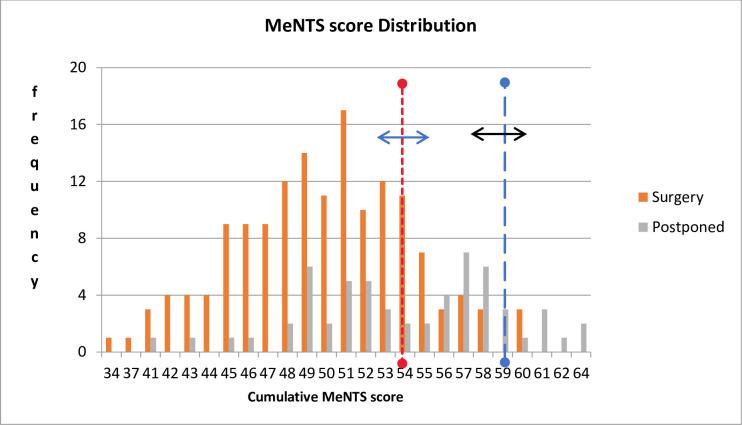
The mean age of the participants was 46.6 ± 15 years and the cumulative mean MeNTS score was 51.0 ± 5.1. Over two-thirds of the cases had surgery. There was no significant difference between the first and second observers' cumulative scores, 51.0 vs 51.1 (p 0.77). The cumulative score among those who had surgery was significantly lower than that for those whose surgeries were postponed, 49.8 vs 54.1 (p <0.0001). The intra-observer and inter-observer reliability were 0.78 and 0.74 respectively. After adjusting for confounding variables, those with low cumulative MeNTS scores were about 5 times more likely to have surgery than those with high scores (Adj. OR = 4.67, 95% CI: 1.92-11.4, p <0.001. Patients with malignant diagnosis were also 5 times more likely to be operated than those with benign diagnosis (Adj. OR = 5.03, 95% CI: 1.73-14.6, p <0.001. The area under the curve (AUC) was 0.85 suggesting an excellent discriminatory power between those who were operated and those who were postponed.
CONCLUSION
The study provided some insight into the potential usefulness of MeNTS score in prioritizing patients for surgery in gynaecologic oncologic sub-specialty. The score performed well across a range of gynaecologic conditions and procedures with good intra-observer and inter-observer consistency and reliability. This is a prioritization tool that is dynamically adaptable to accommodate changes in resources availability and operating theatre capacity.
目的
本研究的主要目的是评估 Medically Necessary Time Sensitive(MeNTS)评分系统在 COVID-19 大流行期间和之后对妇科肿瘤手术的分诊作用。
材料与方法
这是一项回顾性的横断面研究,纳入了 209 名于 2020 年 3 月 26 日至 9 月 30 日在南非一家学术医院接受手术(151 例)或手术推迟(58 例)的患者。MeNTS 评分由两位观察者分别对每位患者进行三次独立评分。
结果
参与者的平均年龄为 46.6 ± 15 岁,累计平均 MeNTS 评分为 51.0 ± 5.1。超过三分之二的病例进行了手术。第一和第二观察者的累计评分无显著差异,分别为 51.0 分和 51.1 分(p=0.77)。进行手术的患者的累计评分明显低于手术推迟的患者,分别为 49.8 分和 54.1 分(p<0.0001)。观察者内和观察者间的可靠性分别为 0.78 和 0.74。在调整混杂变量后,累积 MeNTS 评分较低的患者进行手术的可能性约为评分较高患者的 5 倍(调整后的 OR=4.67,95%CI:1.92-11.4,p<0.001)。诊断为恶性肿瘤的患者进行手术的可能性也比诊断为良性肿瘤的患者高 5 倍(调整后的 OR=5.03,95%CI:1.73-14.6,p<0.001)。曲线下面积(AUC)为 0.85,表明该评分在区分手术和推迟手术的患者方面具有良好的区分能力。
结论
本研究为 MeNTS 评分在妇科肿瘤亚专科中优先安排手术提供了一些见解。该评分在各种妇科疾病和手术中表现良好,具有良好的观察者内和观察者间一致性和可靠性。这是一种优先级工具,可根据资源可用性和手术室容量的变化进行动态调整。
 Zotero 插件