
影响登革热蚊媒数量的关键气象因素的相对重要性。
The relative importance of key meteorological factors affecting numbers of mosquito vectors of dengue fever.
机构信息
School of Mathematics and Statistics, Shaanxi Normal University, Xi'an, Shaanxi, China.
Natural Resources Institute, University of Greenwich at Medway, Chatham Maritime, Chatham, United Kingdom.
出版信息
PLoS Negl Trop Dis. 2023 Apr 13;17(4):e0011247. doi: 10.1371/journal.pntd.0011247. eCollection 2023 Apr.
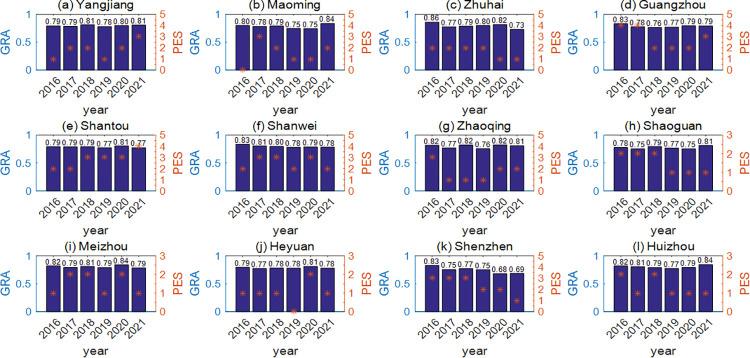
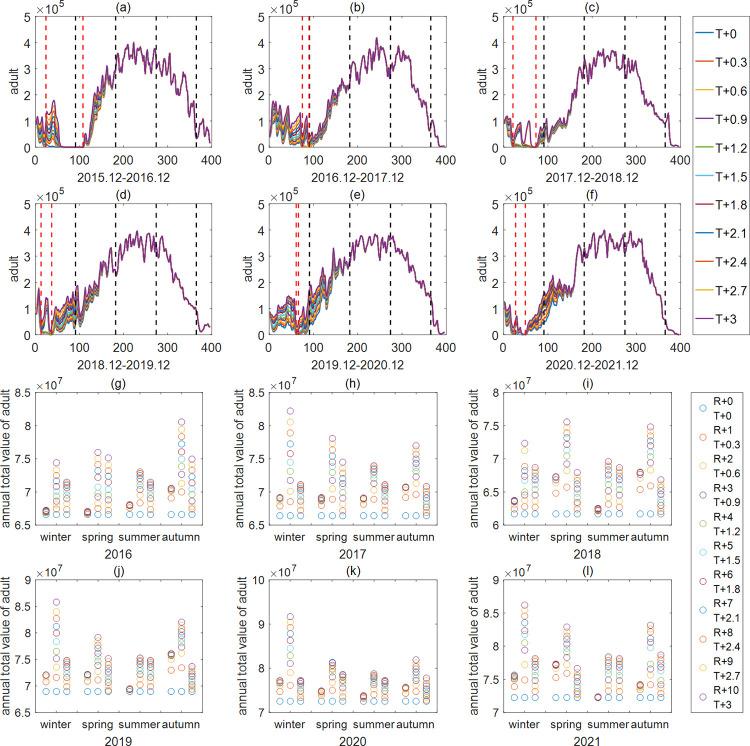
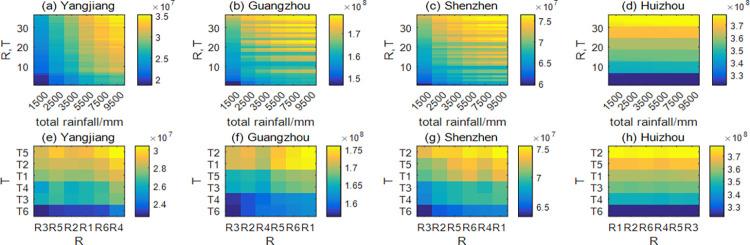
Although single factors such as rainfall are known to affect the population dynamics of Aedes albopictus, the main vector of dengue fever in Eurasia, the synergistic effects of different meteorological factors are not fully understood. To address this topic, we used meteorological data and mosquito-vector association data including Breteau and ovitrap indices in key areas of dengue outbreaks in Guangdong Province, China, to formulate a five-stage mathematical model for Aedes albopictus population dynamics by integrating multiple meteorological factors. Unknown parameters were estimated using a genetic algorithm, and the results were analyzed by k-Shape clustering, random forest and grey correlation analysis. In addition, the population density of mosquitoes in 2022 was predicted and used for evaluating the effectiveness of the model. We found that there is spatiotemporal heterogeneity in the effects of temperature and rainfall and their distribution characteristics on the diapause period, the numbers of peaks in mosquito densities in summer and the annual total numbers of adult mosquitoes. Moreover, we identified the key meteorological indicators of the mosquito quantity at each stage and that rainfall (seasonal rainfall and annual total rainfall) was more important than the temperature distribution (seasonal average temperature and temperature index) and the uniformity of rainfall annual distribution (coefficient of variation) for most of the areas studied. The peak rainfall during the summer is the best indicator of mosquito population development. The results provide important theoretical support for the future design of mosquito vector control strategies and early warnings of mosquito-borne diseases.
虽然已知降雨等单一因素会影响白纹伊蚊的种群动态,白纹伊蚊是欧亚大陆登革热的主要传播媒介,但不同气象因素的协同效应尚未完全了解。为解决这一问题,我们利用气象数据和蚊虫媒介关联数据,包括布雷图指数和诱卵器指数,整合多种气象因素,制定了一个五阶段的白纹伊蚊种群动态数学模型。采用遗传算法估计未知参数,并通过 k-均值聚类、随机森林和灰色关联分析对结果进行分析。此外,还预测了 2022 年蚊子的种群密度,用于评估模型的有效性。我们发现,温度和降雨量及其对滞育期、夏季蚊虫密度峰值数和全年成蚊总数的分布特征存在时空异质性。此外,我们还确定了各阶段蚊虫数量的关键气象指标,结果表明,在大多数研究区域,降雨量(季节性降雨量和年总降雨量)比温度分布(季节性平均温度和温度指数)和降雨量年分布均匀性(变异系数)更为重要。夏季的峰值降雨是蚊虫种群发展的最佳指标。研究结果为未来蚊虫媒介控制策略的设计和蚊虫传播疾病的预警提供了重要的理论支持。





 Zotero 插件