
父母对季节性流感疫苗犹豫不决的决定因素:在东地中海地区的一项横断面研究。
Determinants of parental seasonal influenza vaccine hesitancy in the Eastern Mediterranean region: A cross-sectional study.
机构信息
Department of Family Health, High Institute of Public Health, Alexandria University, Alexandria, Egypt.
Office of Health Affairs, Ministry of Health, Muscat, Oman.
出版信息
Front Public Health. 2023 Mar 28;11:1132798. doi: 10.3389/fpubh.2023.1132798. eCollection 2023.
BACKGROUND
Seasonal influenza vaccine can reduce the risk of influenza-associated hospitalizations and deaths among children. Given that parents are the primary decision makers, this study examined the parental attitude toward childhood influenza vaccine and identified determinants of vaccine hesitancy (VH) in the Eastern Mediterranean region (EMR).
METHODS
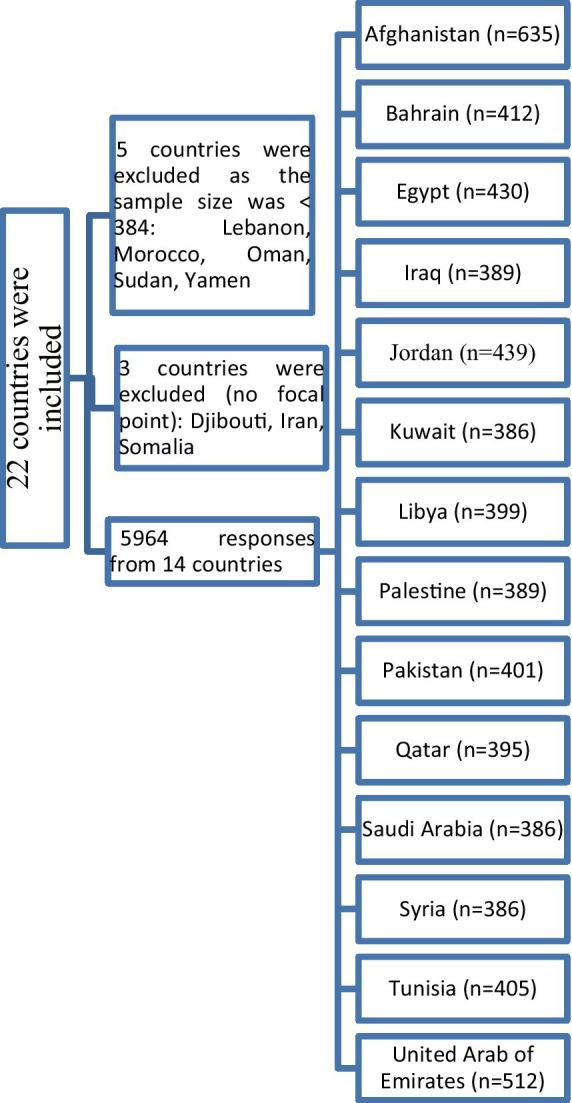
A cross-sectional study was conducted using an anonymous online survey in 14 EMR countries. Parents of children aged 6 months to 18 years were included. The Parent Attitude about Childhood Vaccines (PACV) was used to assess VH. Chi square test and independent t-test were used to test for association of qualitative and quantitative variables, respectively. A structural equations model (SEM) was used to identify direct and indirect determinants of parental VH.
RESULTS
Almost half of the parents were hesitant about vaccinating their children against influenza (50.8%). Parental VH was significantly higher among older mothers (37.06 ± 8.8 years, = 0.006), rural residents (53.6%, < 0.001), high-income countries residents (50.6%, < 0.001), and mothers with higher educational levels (52.1%, < 0.001). Parents of school-aged children (5-9 years) (55.6%, < 0.001), children free from any comorbidities (52.5%, < 0.001), children who did not receive routine vaccination at all (51.5%, = 0.03), children who were not vaccinated against COVID-19 (54.3%, < 0.001), in addition to parents who were not vaccinated against influenza (57.1%, < 0.001) were significantly associated with increased likelihood of VH. Parents who were depending on healthcare provider as a source of information regarding vaccines were less likely to report VH (47.9%, < 0.001), meanwhile those who used social media as their source of health information showed a significantly higher VH (57.2%, < 0.001). The SEM suggested that mother's age, residence, country income level, child gender, total number of children and source of information regarding vaccines had a direct effect on VH. Meanwhile, parents vaccinated against influenza, children completely or partially vaccinated with routine vaccines and children vaccinated against Coronavirus disease 2019 (COVID-19) had an indirect effect on VH.
CONCLUSION
A high proportion of included parents were hesitant to vaccinate their children against seasonal influenza. This attitude is due to many modifiable and non-modifiable factors that can be targeted to improve vaccination coverage.
背景
季节性流感疫苗可降低儿童因流感而住院和死亡的风险。由于父母是主要决策者,本研究调查了父母对儿童流感疫苗的态度,并确定了在东地中海地区(EMR)疫苗犹豫(VH)的决定因素。
方法
使用 14 个 EMR 国家的匿名在线调查进行了一项横断面研究。纳入年龄在 6 个月至 18 岁之间的儿童的父母。使用父母对儿童疫苗的态度(PACV)评估 VH。卡方检验和独立 t 检验分别用于检验定性和定量变量的相关性。结构方程模型(SEM)用于确定父母 VH 的直接和间接决定因素。
结果
近一半的父母对接种儿童流感疫苗犹豫不决(50.8%)。年龄较大的母亲(37.06±8.8 岁,=0.006)、农村居民(53.6%,<0.001)、高收入国家居民(50.6%,<0.001)和教育程度较高的母亲(52.1%,<0.001)中 VH 明显更高。学龄儿童(5-9 岁)的父母(55.6%,<0.001)、无任何合并症的儿童(52.5%,<0.001)、未接受常规疫苗接种的儿童(51.5%,=0.03)、未接种 COVID-19 疫苗的儿童(54.3%,<0.001)以及未接种流感疫苗的父母(57.1%,<0.001)与 VH 的可能性增加显著相关。依赖医疗保健提供者作为疫苗相关信息来源的父母不太可能报告 VH(47.9%,<0.001),而将社交媒体作为健康信息来源的父母则表现出明显更高的 VH(57.2%,<0.001)。SEM 表明,母亲的年龄、居住地、国家收入水平、孩子的性别、孩子的总数以及疫苗相关信息的来源对 VH 有直接影响。同时,接种流感疫苗、完全或部分接种常规疫苗和接种 2019 年冠状病毒病(COVID-19)疫苗的儿童对 VH 有间接影响。
结论
很大一部分被纳入的父母对接种季节性流感疫苗犹豫不决。这种态度是由于许多可改变和不可改变的因素造成的,可以针对这些因素来提高疫苗接种率。

 Zotero 插件