
PRL3-zumab 在晚期难治性实体瘤和血液恶性肿瘤中的 I 期首次人体研究。
A Phase I, First-in-Human Study of PRL3-zumab in Advanced, Refractory Solid Tumors and Hematological Malignancies.
机构信息
Department of Hematology-Oncology, National University Cancer Institute, Singapore (NCIS), 1E Kent Ridge Road, NUHS Tower Block Level 7, Singapore, 119228, Singapore.
Yong Loo Lin School of Medicine, National University of Singapore, Singapore, Singapore.
出版信息
Target Oncol. 2023 May;18(3):391-402. doi: 10.1007/s11523-023-00962-w. Epub 2023 Apr 15.
BACKGROUND
Phosphatase of regenerating liver-3 (PRL-3) is involved in cellular processes driving metastasis, cell proliferation, invasion, motility and survival. It has been shown to be upregulated and overexpressed in cancer tissue, in contrast to low or no expression in most normal tissue. PRL3-zumab is a first-in-class humanized antibody that specifically binds to PRL-3 oncotarget with high affinity and has been shown to reduce tumor growth and increase survival.
OBJECTIVE
In the study, we aimed to determine the safety and efficacy of PRL3-zumab in patients with advanced solid tumors and hematological malignancies.
METHODS
We conducted a phase I, first-in-human study in advanced solid tumors and hematological malignancies to investigate the safety, tolerability and efficacy of PRL3-zumab. Response rates were evaluated using the Response Evaluation Criteria in Solid Tumors (RECIST) guideline (version 1.1) for solid tumors. For acute myeloid leukemia (AML) patients, bone marrow response criteria based on the European Leukaemia Network (ELN) 2017 guidelines for AML were used. We also explored the pharmacokinetics and pharmacodynamic relationships of PRL3-zumab in patients. This study was registered with ClinicalTrials.gov: NCT03191682.
RESULTS
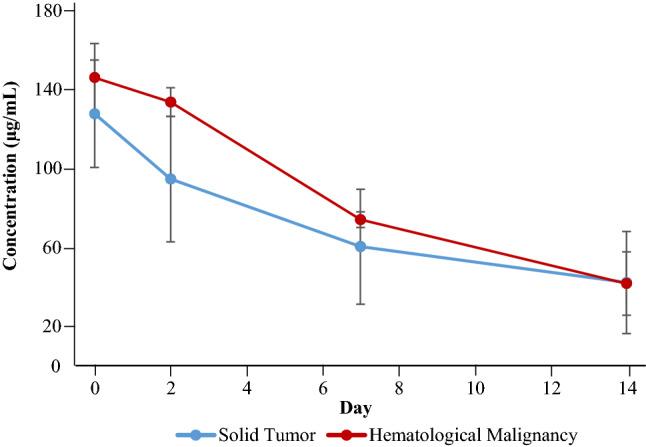
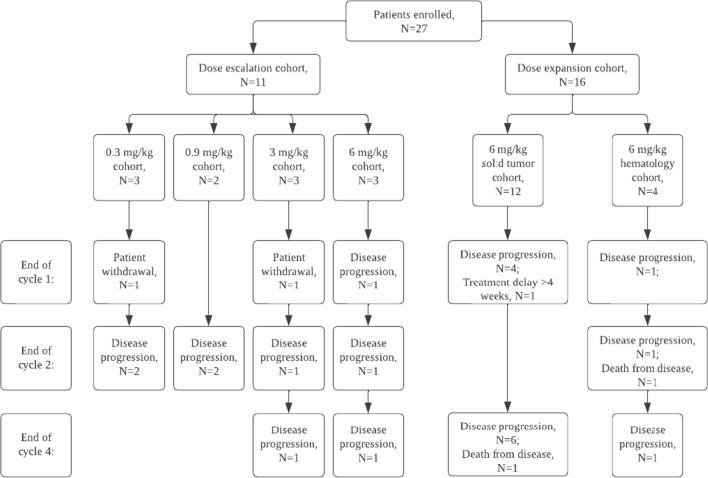
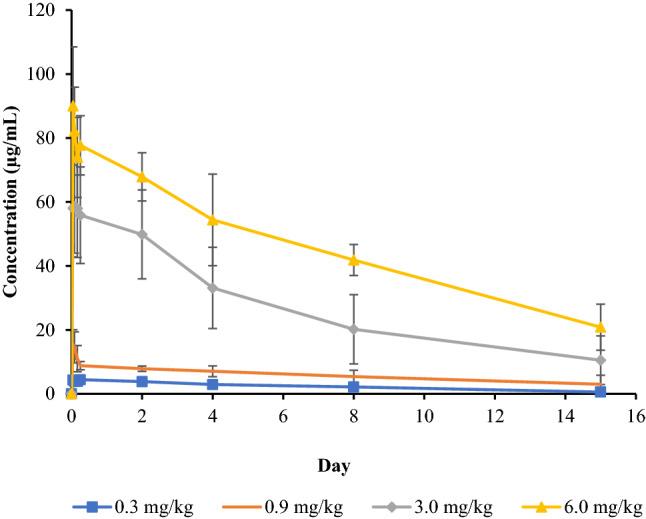
In the dose-escalation cohort, 11 patients with advanced solid tumors were enrolled into the study. An additional 12 patients with solid tumors and four patients with AML were enrolled in the dose-expansion cohort. Maximum tolerability was not achieved in this study, as there were no dose-limiting toxicities. Potential treatment-emergent adverse events were grade 1 increased stoma output and fatigue and grade 2 vomiting. Best response observed was stable disease in three solid-tumor patients (11.1%). The pharmacokinetics of PRL3-zumab were dose proportional, consistent with an IgG type monoclonal antibody.
CONCLUSIONS
PRL3-zumab, a first-in-class humanized antibody, was safe and tolerable in solid tumors and hematological malignancies.
背景
肝再生磷酸酶-3(PRL-3)参与驱动转移、细胞增殖、侵袭、运动和存活的细胞过程。已表明其在癌症组织中上调和过表达,而在大多数正常组织中低表达或不表达。PRL3-单抗是一种首创的人源化抗体,特异性地以高亲和力结合 PRL-3 致癌靶点,已被证明可减少肿瘤生长并提高存活率。
目的
本研究旨在确定 PRL3-单抗在晚期实体瘤和血液恶性肿瘤患者中的安全性和疗效。
方法
我们进行了一项 I 期、首个人体研究,以研究 PRL3-单抗在晚期实体瘤和血液恶性肿瘤患者中的安全性、耐受性和疗效。根据实体瘤的实体瘤反应评价标准(RECIST)指南(版本 1.1)评估反应率。对于急性髓系白血病(AML)患者,使用基于欧洲白血病网络(ELN)2017 年 AML 指南的骨髓反应标准。我们还探索了 PRL3-单抗在患者中的药代动力学和药效学关系。本研究在 ClinicalTrials.gov 上注册:NCT03191682。
结果
在剂量递增队列中,招募了 11 名晚期实体瘤患者。在剂量扩展队列中,还招募了 12 名实体瘤患者和 4 名 AML 患者。本研究未达到最大耐受剂量,因为没有剂量限制毒性。潜在的治疗相关不良事件为 1 级增加造口输出和疲劳,以及 2 级呕吐。在 3 名实体瘤患者中观察到最佳反应为疾病稳定(11.1%)。PRL3-单抗的药代动力学呈剂量比例关系,与 IgG 型单克隆抗体一致。
结论
PRL3-单抗是一种首创的人源化抗体,在实体瘤和血液恶性肿瘤中安全且耐受良好。
 Zotero 插件