
针对青少年特发性脊柱侧弯的生物力学设计的特定曲线矫正运动在成人中取得显著效果:一例病例报告。
Biomechanically designed Curve Specific Corrective Exercise for Adolescent Idiopathic Scoliosis gives significant outcomes in an Adult: A case report.
作者信息
Maharathi Sujata, Iyengar Raju, Chandrasekhar Patnala
机构信息
Deptartment of Orthopaedics, Nizam's Institute of Medical Sciences, Hyderabad, India.
Swami Vivekananda National Institute of Rehabilitation Training and Research, Olatpur, Cuttack, Odisha, India.
出版信息
Front Rehabil Sci. 2023 Mar 30;4:1127222. doi: 10.3389/fresc.2023.1127222. eCollection 2023.
BACKGROUND
This study presents findings on improvements to the Frontal and Sagittal Cobb angle, Global Spinal balance, and lung function parameters (FEV1, PEF) in an adult male with idiopathic scoliosis suffering from pain during ADL and sports activities who was treated with a biomechanically designed exercise protocol.
CASE PRESENTATION
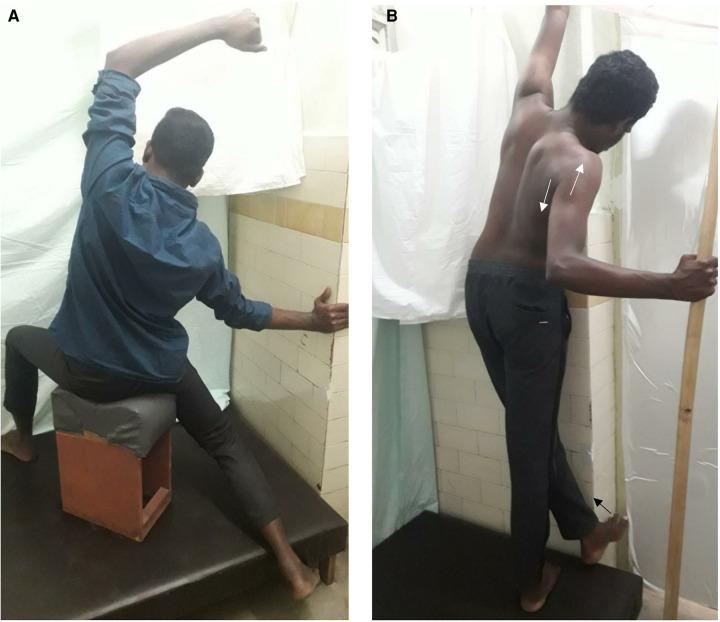
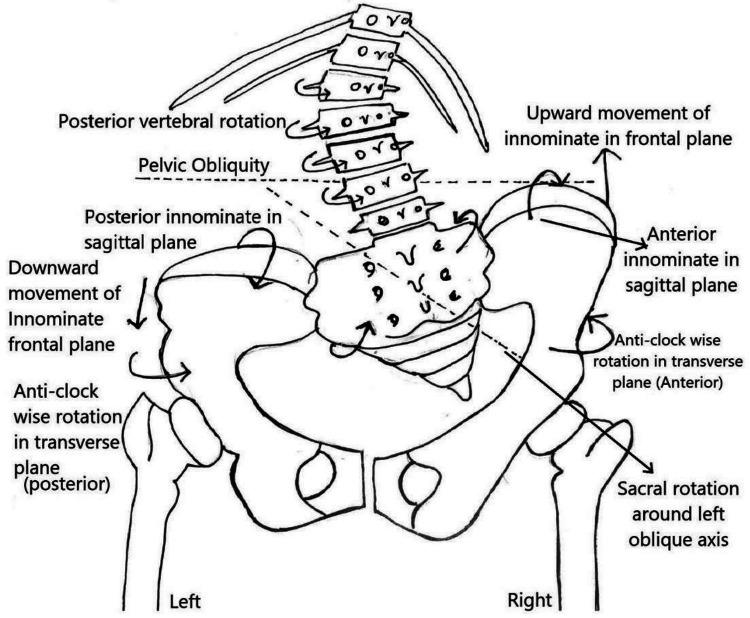
The 26-year-old male reported upper and middle back pain which worsened when playing cricket. Whole spine standing x-Ray AP view revealed a right thoracic Scoliosis (Lenke 1 curve) of Cobb angle 48.6° with left lumbar compensatory curve of 24.7°, Thoracic hypo kyphosis of 9.9°, and VAS rating for pain of 8. The patient was treated with myofascial release, stretching, aerobics, strengthening exercises, "Breathing with core" for stabilization, and biomechanically designed curve specific corrective exercises.
RESULTS
Re-assessment 32 weeks post intervention demonstrated significant reduction in the major Cobb angle by 13.8°, minor Cobb angle by 9.5°, Thoracic hypokyphosis normalized to 37.8°, Coronal balance improved by 17.4 mm, Sagittal balance regained by 4.2 mm, Spine ROM improved by a total of 6.5 cm, Enhancement of pulmonary function of FEV1 by 7% and PEF by 18 litres/min, and dramatic improvement in aesthetics and pain perception.
CONCLUSION
The biomechanically designed exercise protocol helped straighten the curve through curve specific corrective exercises and stabilized the curve by "Breathing with core". It also treated the associated signs and symptoms of spinal pain syndrome by myofascial release and proper ergonomics, pulmonary dysfunction by aerobics, and muscle tightness and weakness (due to altered length-tension) by stretching and strengthening.
背景
本研究展示了一名患有特发性脊柱侧凸的成年男性在日常生活活动(ADL)和体育活动中疼痛,接受了生物力学设计的运动方案治疗后,其额状面和矢状面Cobb角、整体脊柱平衡以及肺功能参数(第一秒用力呼气容积[FEV1]、呼气峰值流速[PEF])的改善情况。
病例介绍
该26岁男性报告中上背部疼痛,在打板球时疼痛加剧。全脊柱站立位X线正位片显示右胸段脊柱侧凸(Lenke 1型曲线),Cobb角为48.6°,左腰段代偿性曲线为24.7°,胸段后凸减少9.9°,疼痛视觉模拟评分(VAS)为8分。患者接受了肌筋膜松解、拉伸、有氧运动、强化训练、“核心呼吸”以稳定脊柱,以及生物力学设计的针对特定曲线的矫正训练。
结果
干预32周后的重新评估显示,主要Cobb角显著减小13.8°,次要Cobb角减小9.5°,胸段后凸恢复正常至37.8°,冠状面平衡改善17.4毫米,矢状面平衡恢复4.2毫米,脊柱活动度总共提高6.5厘米,肺功能FEV1提高7%,PEF提高18升/分钟,美观度和疼痛感知有显著改善。
结论
生物力学设计的运动方案通过针对特定曲线的矫正训练帮助矫正曲线,并通过“核心呼吸”稳定曲线。它还通过肌筋膜松解和适当的人体工程学治疗脊柱疼痛综合征的相关体征和症状,通过有氧运动治疗肺功能障碍,通过拉伸和强化训练治疗肌肉紧张和无力(由于长度 - 张力改变)。


 Zotero 插件