
新型氮芥类化合物用于骨肉瘤的3D和2D-QSAR模型研究及分子对接
3D- and 2D-QSAR models' study and molecular docking of novel nitrogen-mustard compounds for osteosarcoma.
作者信息
Zhuo Wenkun, Lian Zheng, Bai Wenzhe, Chen Yanrong, Xia Huanling
机构信息
Department of Orthopedics, The 960th Hospital of the Chinese People's Liberation Army, Jinan, China.
Department of Orthopaedics, Affiliated Hospital of Shandong University of Traditional Chinese Medicine, Jinan, Shandong, China.
出版信息
Front Mol Biosci. 2023 Mar 29;10:1164349. doi: 10.3389/fmolb.2023.1164349. eCollection 2023.
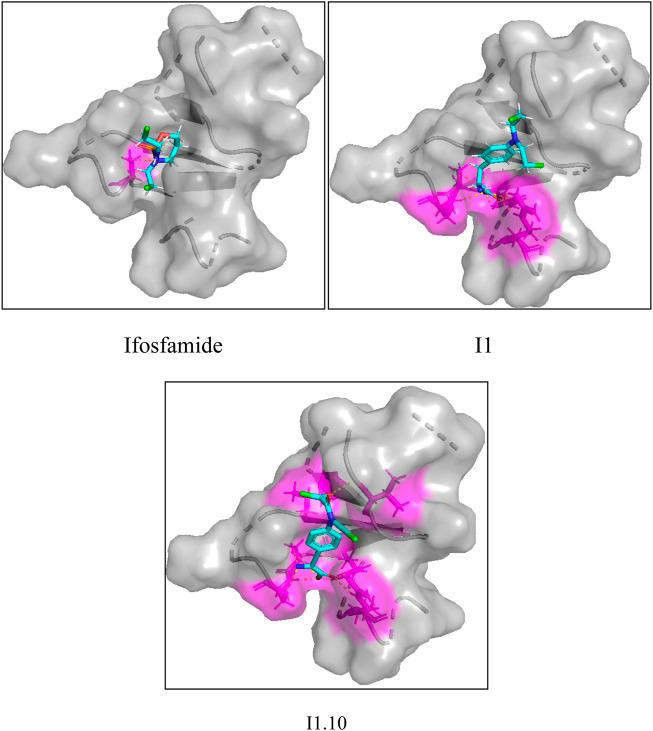
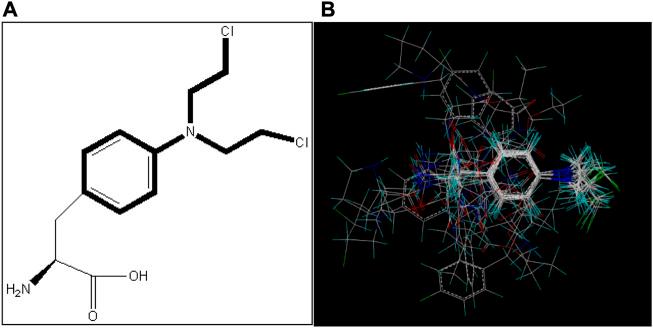
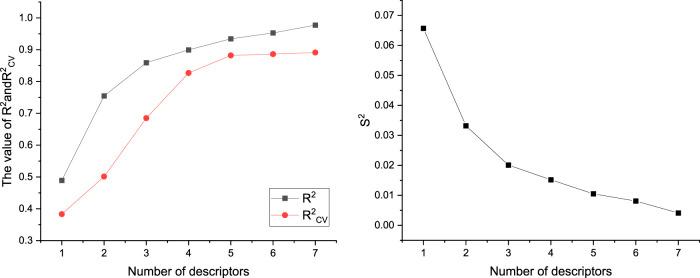
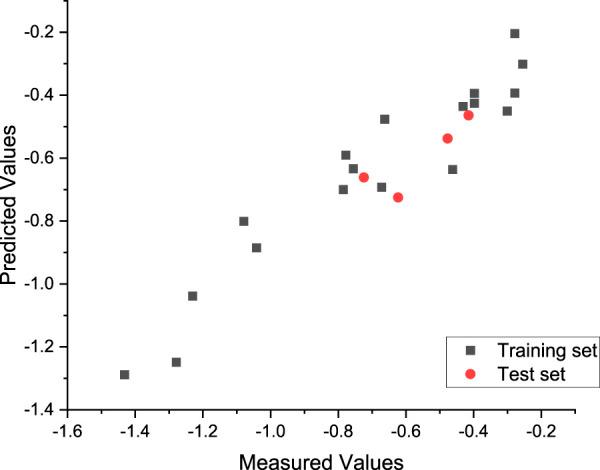
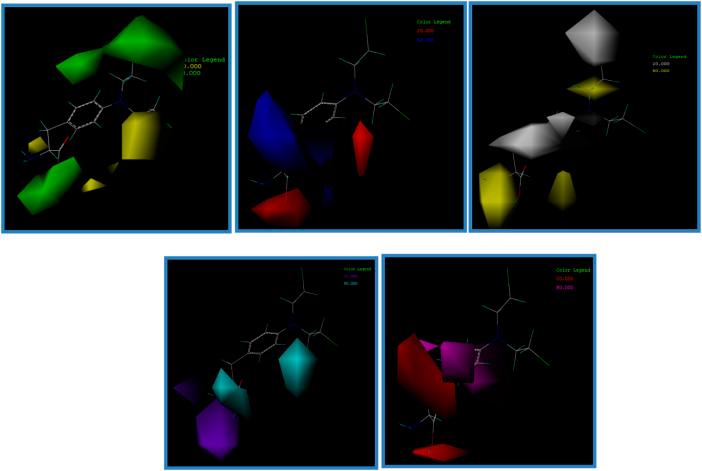
The dipeptide-alkylated nitrogen-mustard compound is a new kind of nitrogen-mustard derivative with a strong anti-tumor activity, which can be used as a potential anti-osteosarcoma chemotherapy drug. 2D- and 3D-QSAR (structure-activity relationship quantification) models were established to predict the anti-tumor activity of dipeptide-alkylated nitrogen-mustard compounds. In this study, a linear model was established using a heuristic method (HM) and a non-linear model was established using the gene expression programming (GEP) algorithm, but there were more limitations in the 2D model, so a 3D-QSAR model was introduced and established through the CoMSIA method. Finally, a series of new dipeptide-alkylated nitrogen-mustard compounds were redesigned using the 3D-QSAR model; docking experiments were carried out on several compounds with the highest activity against tumors. The 2D- and 3D-QSAR models obtained in this experiment were satisfactory. A linear model with six descriptors was obtained in this experiment using the HM through CODESSA software, where the descriptor "Min electroph react index for a C atom" has the greatest effect on the compound activity; a reliable non-linear model was obtained using the GEP algorithm model (the best model was generated in the 89th generation cycle, with a correlation coefficient of 0.95 and 0.87 for the training and test set, respectively, and a mean error of 0.02 and 0.06, respectively). Finally, 200 new compounds were designed by combining the contour plots of the CoMSIA model with each other, together with the descriptors in the 2D-QSAR, among which compound I1.10 had a high anti-tumor and docking ability. Through the model established in this study, the factors influencing the anti-tumor activity of dipeptide-alkylated nitrogen-thaliana compounds were revealed, providing direction and guidance for the further design of efficient chemotherapy drugs against osteosarcoma.
二肽烷基化氮芥化合物是一类新型的具有较强抗肿瘤活性的氮芥衍生物,可作为一种潜在的抗骨肉瘤化疗药物。建立了二维和三维定量构效关系(QSAR)模型来预测二肽烷基化氮芥化合物的抗肿瘤活性。在本研究中,使用启发式方法(HM)建立了线性模型,使用基因表达编程(GEP)算法建立了非线性模型,但二维模型存在较多局限性,因此引入并通过比较分子相似性指数分析(CoMSIA)方法建立了三维QSAR模型。最后,利用三维QSAR模型重新设计了一系列新的二肽烷基化氮芥化合物;对几种抗肿瘤活性最高的化合物进行了对接实验。本实验获得的二维和三维QSAR模型令人满意。本实验通过CODESSA软件使用HM获得了一个具有六个描述符的线性模型,其中描述符“C原子的最小电子反应指数”对化合物活性的影响最大;使用GEP算法模型获得了一个可靠的非线性模型(最佳模型在第89代循环中生成,训练集和测试集的相关系数分别为0.95和0.87,平均误差分别为0.02和0.06)。最后,通过将CoMSIA模型的等高线图相互结合,并结合二维QSAR中的描述符,设计了200种新化合物,其中化合物I1.10具有较高的抗肿瘤和对接能力。通过本研究建立的模型,揭示了影响二肽烷基化氮芥化合物抗肿瘤活性的因素,为进一步设计高效抗骨肉瘤化疗药物提供了方向和指导。



 Zotero 插件